11 questions, short answers
Scottsdale Landscaping FAQ
The 11 landscaping questions Scottsdale homeowners ask most, answered with the local detail. Every number or rule names its source.
Costs
How much does landscaping cost an hour?
Labor runs $50 to $100 an hour, according to a national cost guide that separates physical labor from design work. That rate is a starting point, not a bill. In this soil an hour of digging through caliche and an hour of setting plants into prepared ground are different jobs at the same rate, which is why work larger than a repair is often quoted as a job rather than by the hour. The bill also depends on 2 things: whether there is a one hour minimum, and whether travel or a trip charge sits on top of the hourly figure. Under a one hour minimum, a 20 minute valve replacement is billed as an hour.
Costs
How much does it cost to landscape a front yard in Scottsdale?
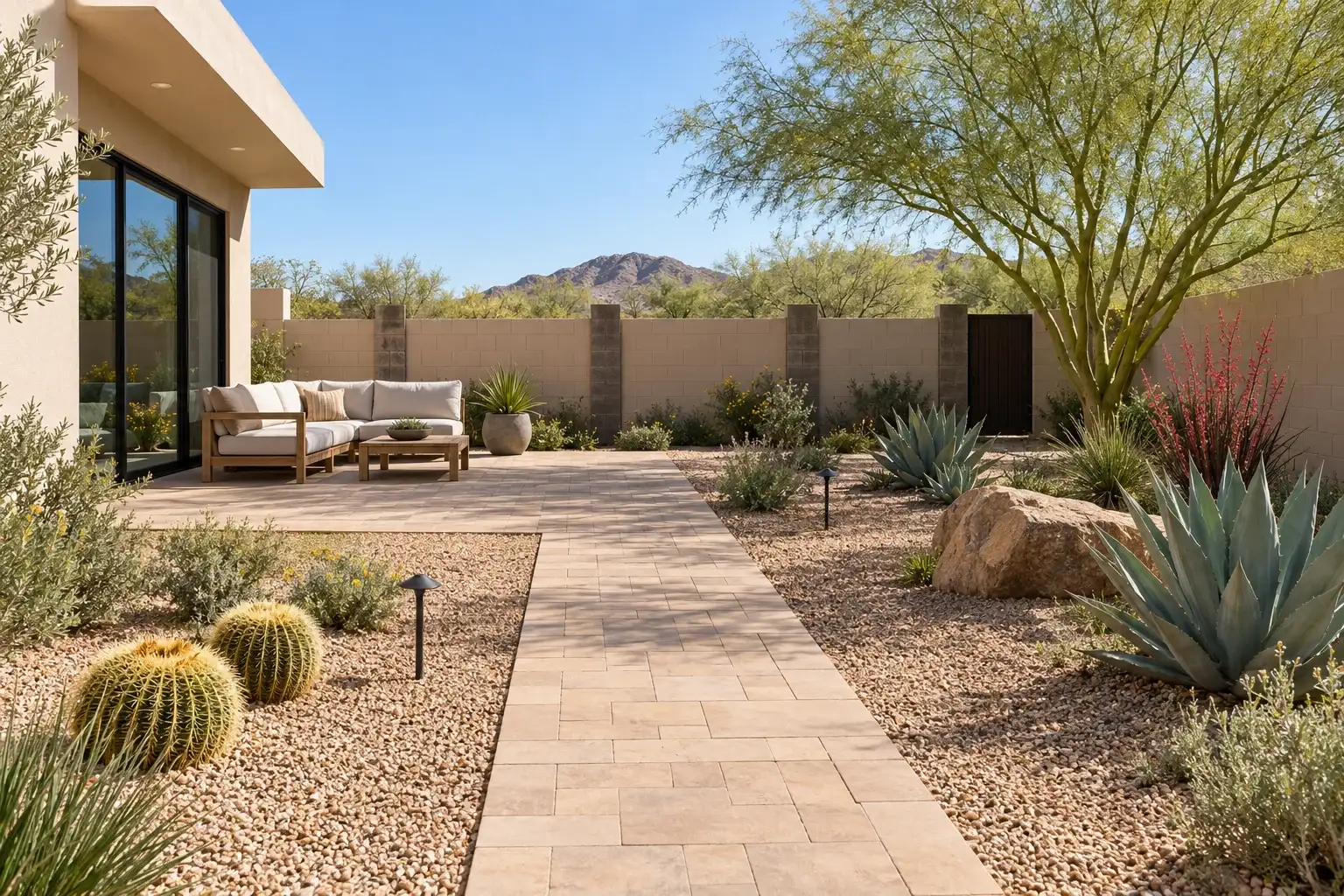
A national cost guide puts a front yard project at $1,500 to $5,000, with a full backyard renovation at $15,000 to $50,000 and a national average landscaping project at $3,517. The gap between front and back is hardscape and utilities, not plants. A front yard is mostly beds, a walkway and a surface. A backyard often adds a patio, a wall, a gas line, lighting and drainage work. In Scottsdale the front yard also carries the street facing review: an HOA sees it, and so does the city if a wall or a grade change is involved. Published market ranges, not a quote: the final price is set after an on-site assessment.
Planting
What trees grow in Scottsdale, AZ?
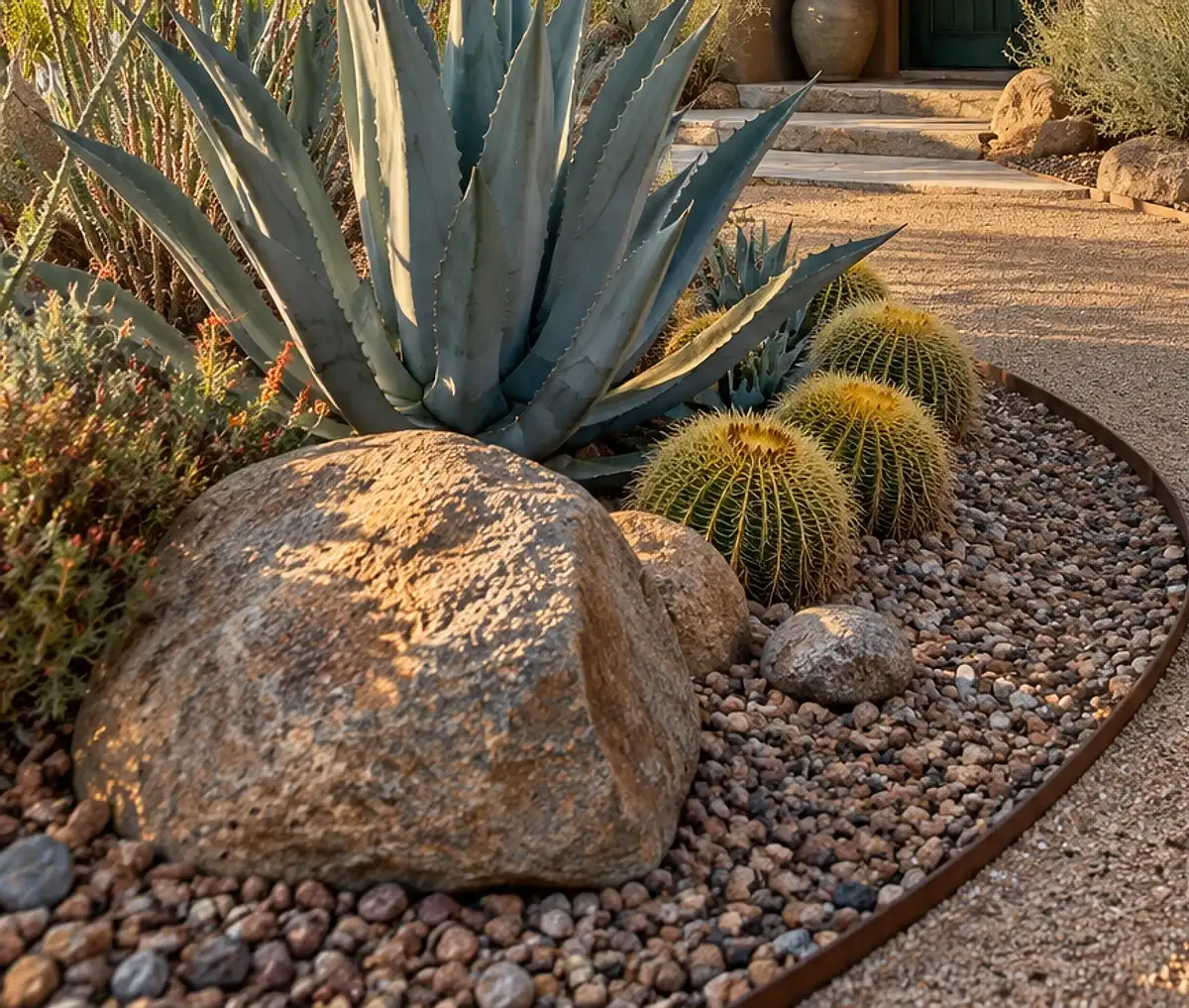
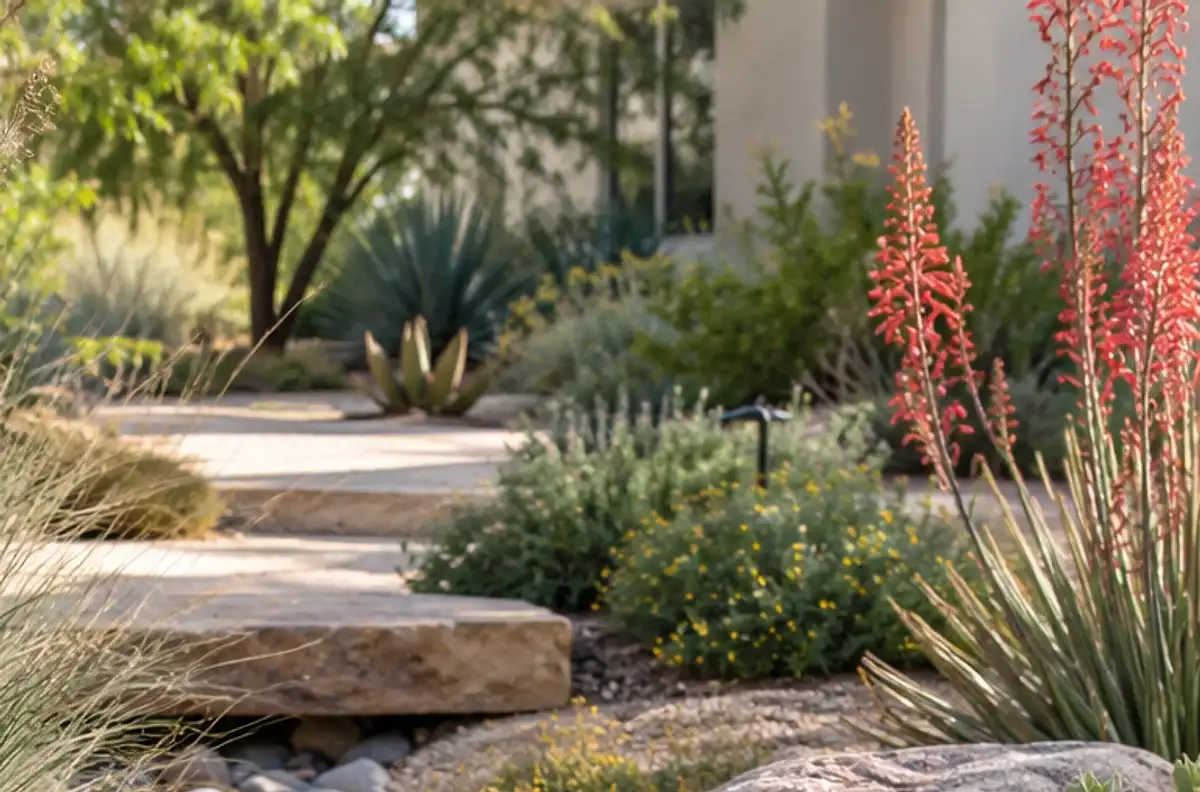
A long list, and the right one depends on the job. Blue palo verde is fast, about 30 feet, and takes very low water. Velvet mesquite is deciduous, about 25 feet, and gives broad shade. Desert willow is fast and flowers, ironwood is slow and evergreen, and fruitless olive and leatherleaf acacia can be low litter choices near a pool. Citrus works in a sheltered spot, with grapefruit and orange hardier than lemon and lime (University of Arizona, citrus for the low desert (opens in a new tab)). A saguaro is a cactus rather than a tree, and moving one more than 4 feet tall usually takes a state permit, tag and seal (A.R.S. 3-906 (opens in a new tab)). The full trees guide compares them by water, litter and mature size.
Rules
Do I need HOA approval to change my yard?
Yes, if the property is in an association, and it is often the longest step in the schedule. Arizona law requires a design review or architectural committee to include at least one board member serving as chairperson, but what the committee reviews comes from each association's CC&Rs and design guidelines, not from the statute (A.R.S. 33-1817 (opens in a new tab)). In practice expect a plant list, a site plan, material samples and sometimes the gravel color. An association's guidelines can include an approved plant list, a prohibited plant list, a required gravel color and limits on synthetic turf. Ask for the current guidelines in writing, because the version in the welcome packet is often out of date.
Climate
Is artificial turf a good idea in Arizona heat?
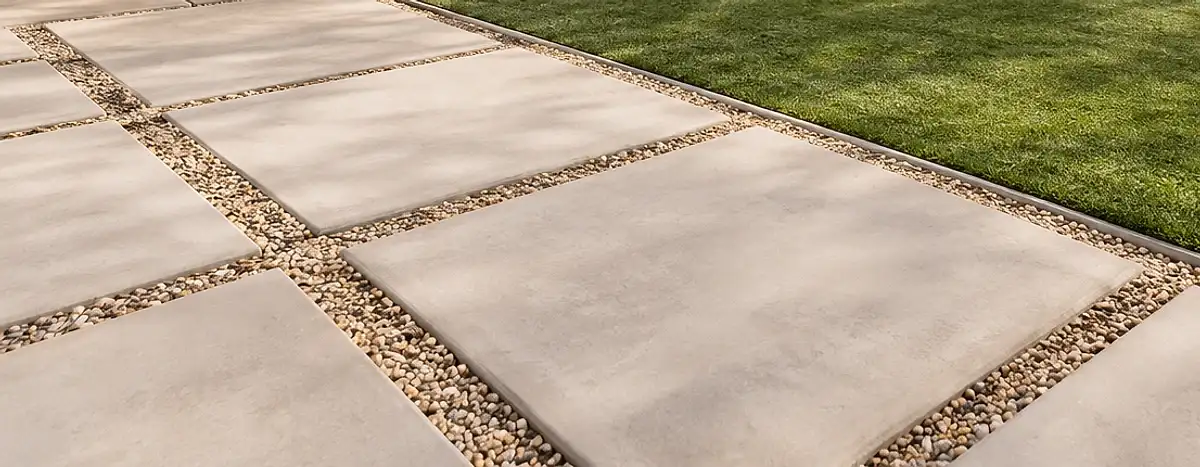
In the right place, yes. As a whole yard, no. Turf works for a small play area, a dog run, a putting green or a strip where real grass has already failed. It works less well as a full west facing yard with no shade, where the surface gets hot enough to be uncomfortable underfoot and holds that heat into the evening. The honest case for turf here is water and maintenance, not appearance. Much of the cost is in the base: excavation, crushed aggregate, compaction and drainage, and a job that skips that work can wrinkle within a couple of summers. The base depth, the compaction method and where the water goes when it rains are the points that matter. The artificial turf page covers the build in detail.
Rules
Do I need a permit for a retaining wall in Scottsdale?
Yes, at any height. Every retaining wall in Scottsdale requires engineered plans submitted to and approved by the city, and the plan review is charged hourly plus a fee per linear foot (City of Scottsdale, walls and fences (opens in a new tab)). Footings must bear at least 18 inches below undisturbed soil or engineer certified fill, and the city highly recommends a geotechnical investigation for foundation design (City of Scottsdale, retaining wall requirements (opens in a new tab)). The wall also has to sit at least 3 feet from the property line, or 1 foot for each foot of total wall depth and height, unless the applicant documents a recorded private use and benefits easement on the adjacent property (City of Scottsdale, single-family plan requirements (opens in a new tab)). Budget the engineering and review as a separate line from the block and labor, and start it before the build is scheduled.
Hardscape
Where does a wall or fence site plan go in Scottsdale?
Scottsdale's One Stop Shop, on the first floor of One Civic Center at 7447 E. Indian School Road, is where a site plan showing a proposed wall can be taken for courtesy approval from a Planner and a Stormwater Engineer (City of Scottsdale, walls and fences (opens in a new tab)). A wall or fence in a public utility easement needs written approval letters from all utility companies. The other towns on the service areas page each run their own permit counter and publish their own rules.
Good to know
What is the best time of year to landscape in Scottsdale?
Fall is the best planting window, roughly October into December, because the soil is still warm and the air is not. Late winter and early spring are the second best. Summer is workable for everything except planting, and even planting can be done with shade cloth, a checked watering schedule and a late afternoon start. What matters more than the month is the order: demolition, grading, irrigation and hardscape do not care about the calendar, and the planting can be scheduled into the better window even on a project that starts in June. The one job that should not wait is a drainage problem, because the monsoon will test it whether the work is finished or not.
Costs
How much water does a desert yard need?
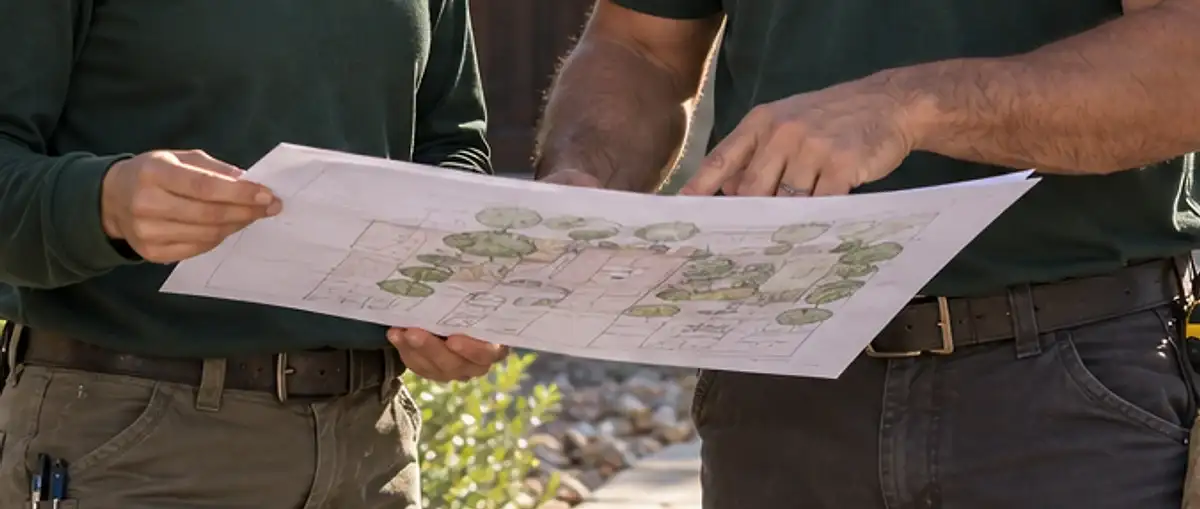
Less than a lawn by a wide margin. A Bermuda lawn with a winter overseed in the low desert takes more than 55 inches of irrigation a year, while an average xeriscape takes under 18 inches (University of Arizona, turf versus xeriscape (opens in a new tab)). About 90 percent of Scottsdale's drinking water comes from the Central Arizona Project and the Salt River Project, with groundwater wells as backup (City of Scottsdale, water supply (opens in a new tab)). The city is in Stage One of its Drought Management Plan, which it describes as increased monitoring and evaluation (City of Scottsdale, water shortages and preparedness (opens in a new tab)), and the plan's limits on watering days start at Stage 2 (City of Scottsdale, Drought Management Plan (opens in a new tab)). What actually reduces use is delivery: drip on the shrubs, a separate zone for any turf, and a controller set for the season.
Ground
What is caliche and does my yard have it?
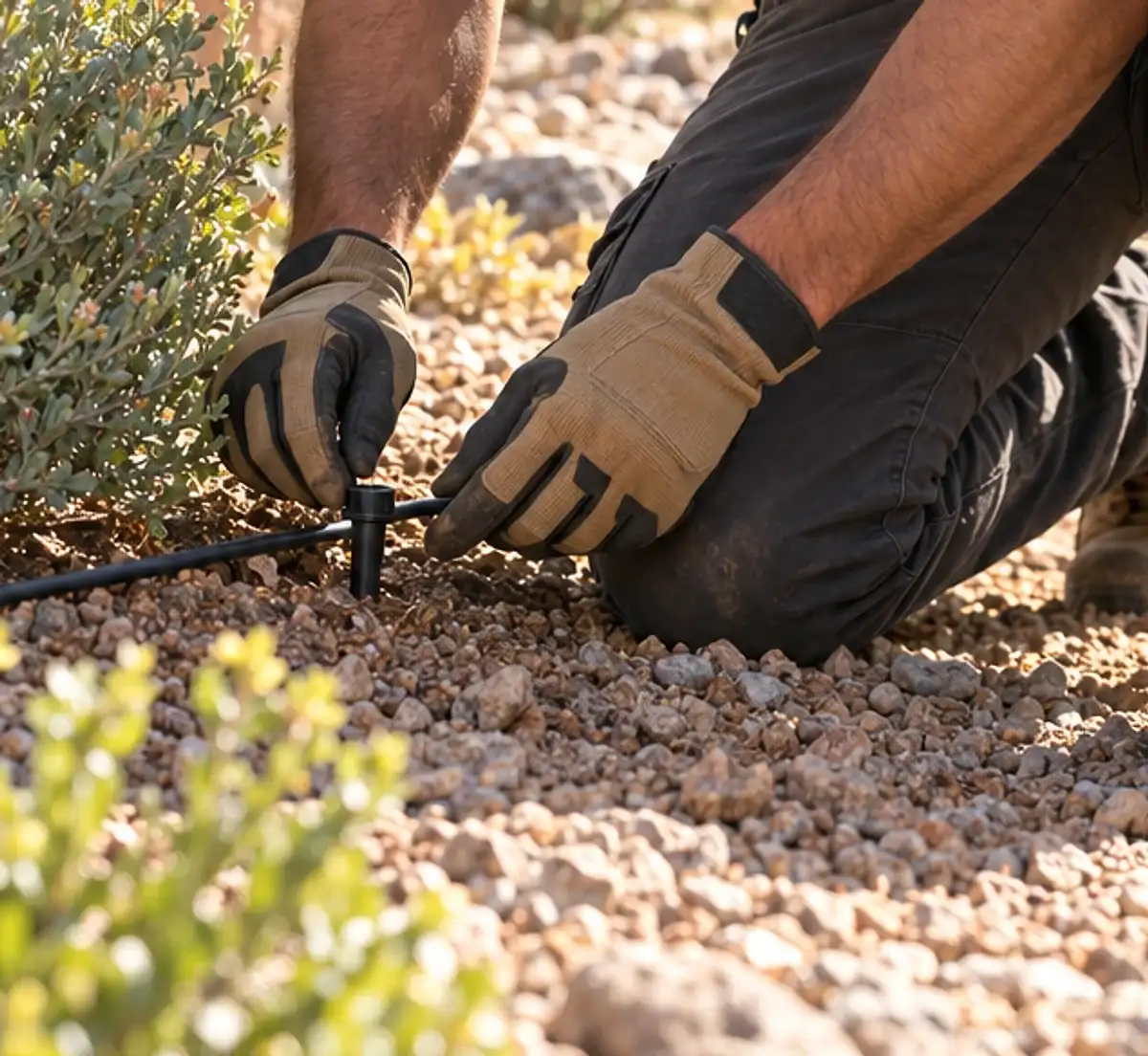
Caliche is a layer of soil cemented by calcium carbonate, and it can range from loose lumps to a solid sheet several feet thick. Where it is solid it restricts roots and blocks drainage, so water sits in the root zone, salts accumulate, and plants struggle in a way that looks like underwatering (University of Arizona, managing caliche (opens in a new tab)). Not every desert soil has it, so the test beats the assumption: dig the planting hole, fill it with water, and if the level drops at least 4 inches in 4 hours, drainage is adequate. If it does not drop, the hole gets punched through the layer or the planting goes into mounded soil. For a lawn over caliche, the extension guidance is at least 8 inches of topsoil.
Rules
Do I need a permit for a fence or a wall?
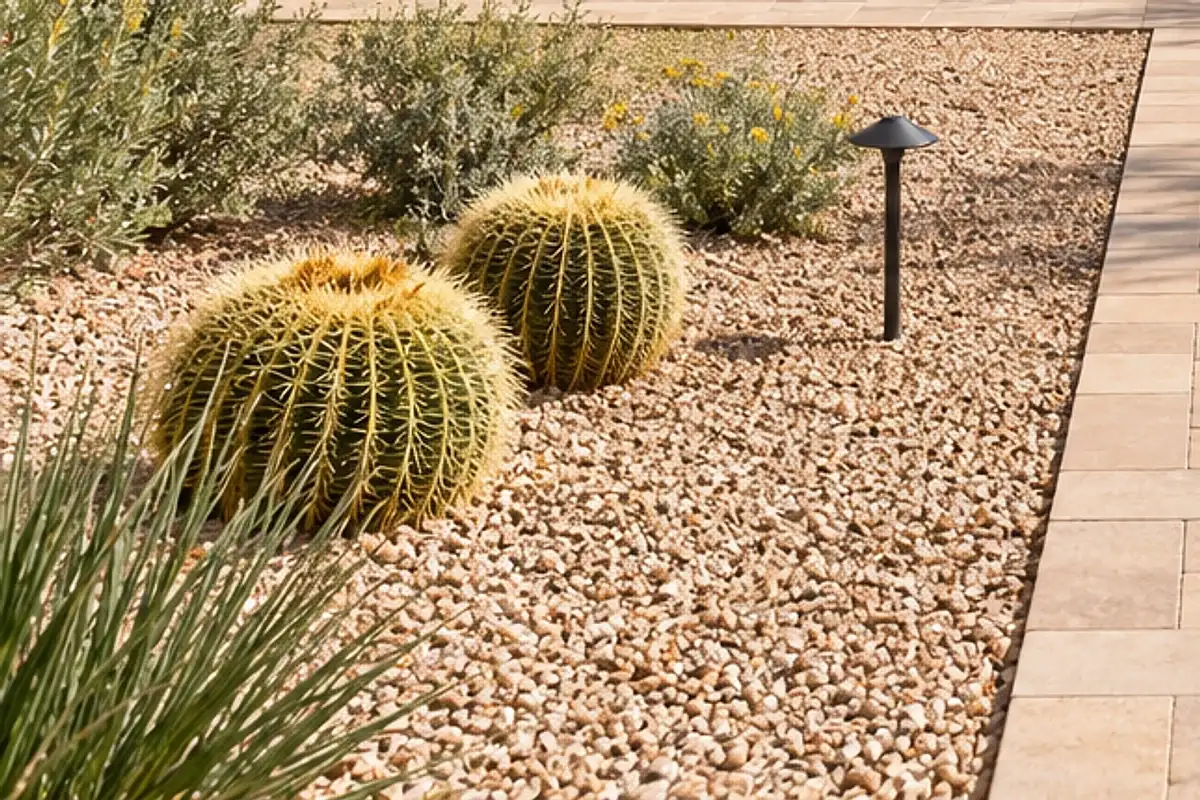
A fence or wall taller than 3 feet needs a building permit, and so does adding height to an existing one or replacing a fence. Dry stack stone or interlocking block over 30 inches also needs a permit. Walls and fences up to 3 feet do not need a building permit in most residential districts, but they still need courtesy site plan approval to confirm zoning and stormwater compliance, including easements and on site flows (City of Scottsdale, walls and fences (opens in a new tab)). The maximum wall height in side and rear yards is set by each zoning district's development standards. A wall or its footings on a shared property line need the written authorization of the neighboring owner (City of Scottsdale, fence standard plan (opens in a new tab)).