Service area · Carefree, AZ
Landscaping in Carefree, AZ
Landscaping in Carefree is shaped by a coverage cap before it is shaped by taste, and Carefree is the highest town on this list. Lot coverage runs as low as 6 percent on the biggest parcels, and a property with a 20 percent slope or more goes through the mountainside standards. The cap decides what a yard can hold before the plant list matters.
Costs
What do the lots look like, and how much can be built?
Carefree is a small town, incorporated in 1984, and its lots run from Rural-190 down to R1-10 (Carefree design standards (opens in a new tab)). What separates it from a Scottsdale subdivision is not lot size but coverage math. Lot coverage is capped at 6 percent on a Rural-190 parcel, 17 percent on Rural-43 and 30 percent on R1-10, and disturbed area is limited to 18 percent on Rural-190 and 51 percent on Rural-43, while R1-10 allows up to 100 percent. On the biggest lots that leaves most of the parcel as undisturbed desert, and the yard is the small piece around the house that is allowed to be built. Coverage is the area under roof, and disturbed area includes the driveway, utilities, courtyards, sport courts, grass areas and any area enclosed by a solid masonry wall.
Water
Where does the water come from, and what is in it?
Carefree Water Company says Central Arizona Project water now supplies almost 60 percent of what it delivers, and the company also has groundwater wells (Carefree Water Company, about us (opens in a new tab)). Groundwater can carry dissolved minerals, and those can leave a film on a wall, a patio and a glass fence panel, and they can build up in the soil over years of irrigation. Ask the company for current mineral numbers from its water quality report and irrigate with them in mind. Consistent watering matters more than volume where minerals are high.
Ground
What do the boulders and caliche do to a plan?
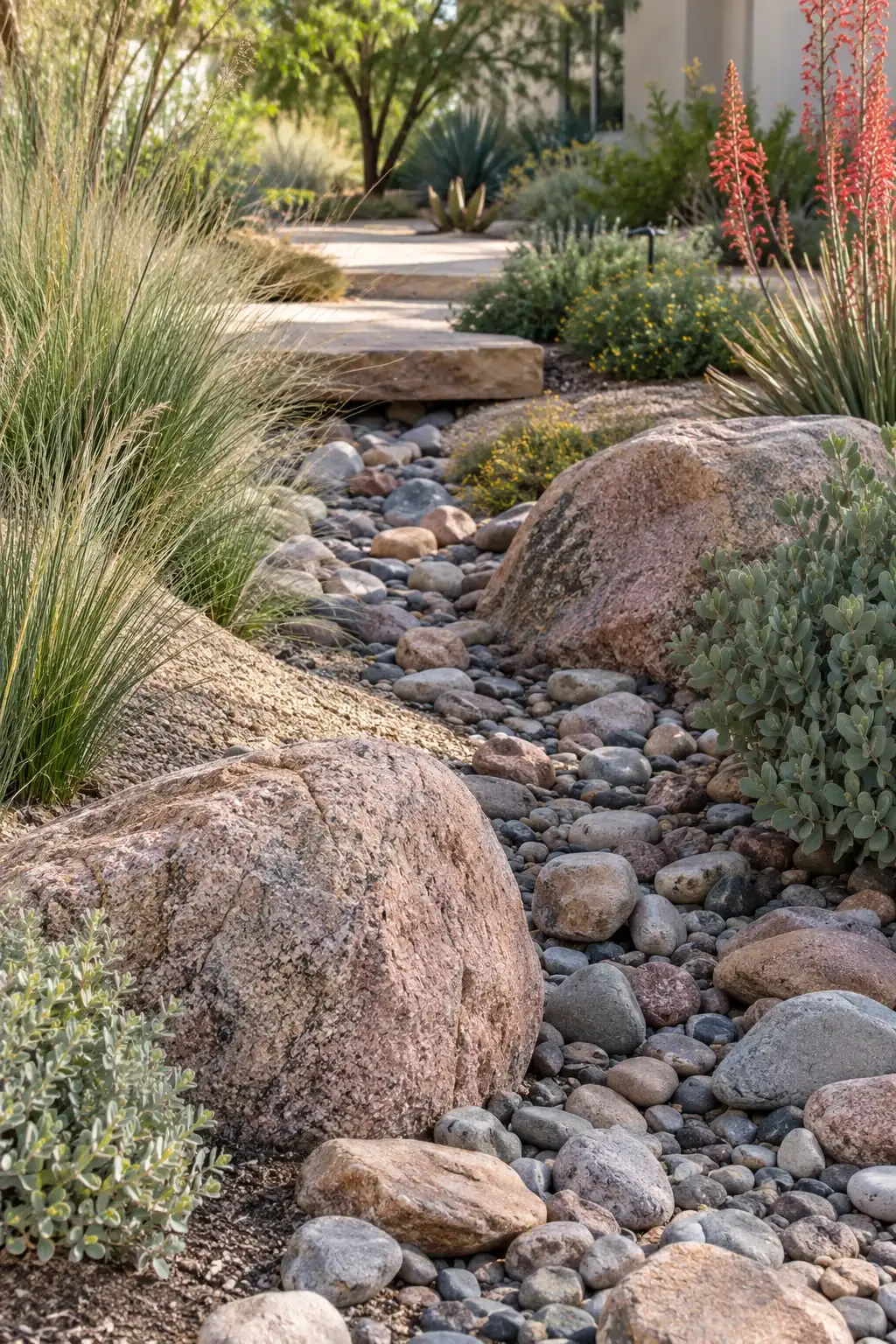
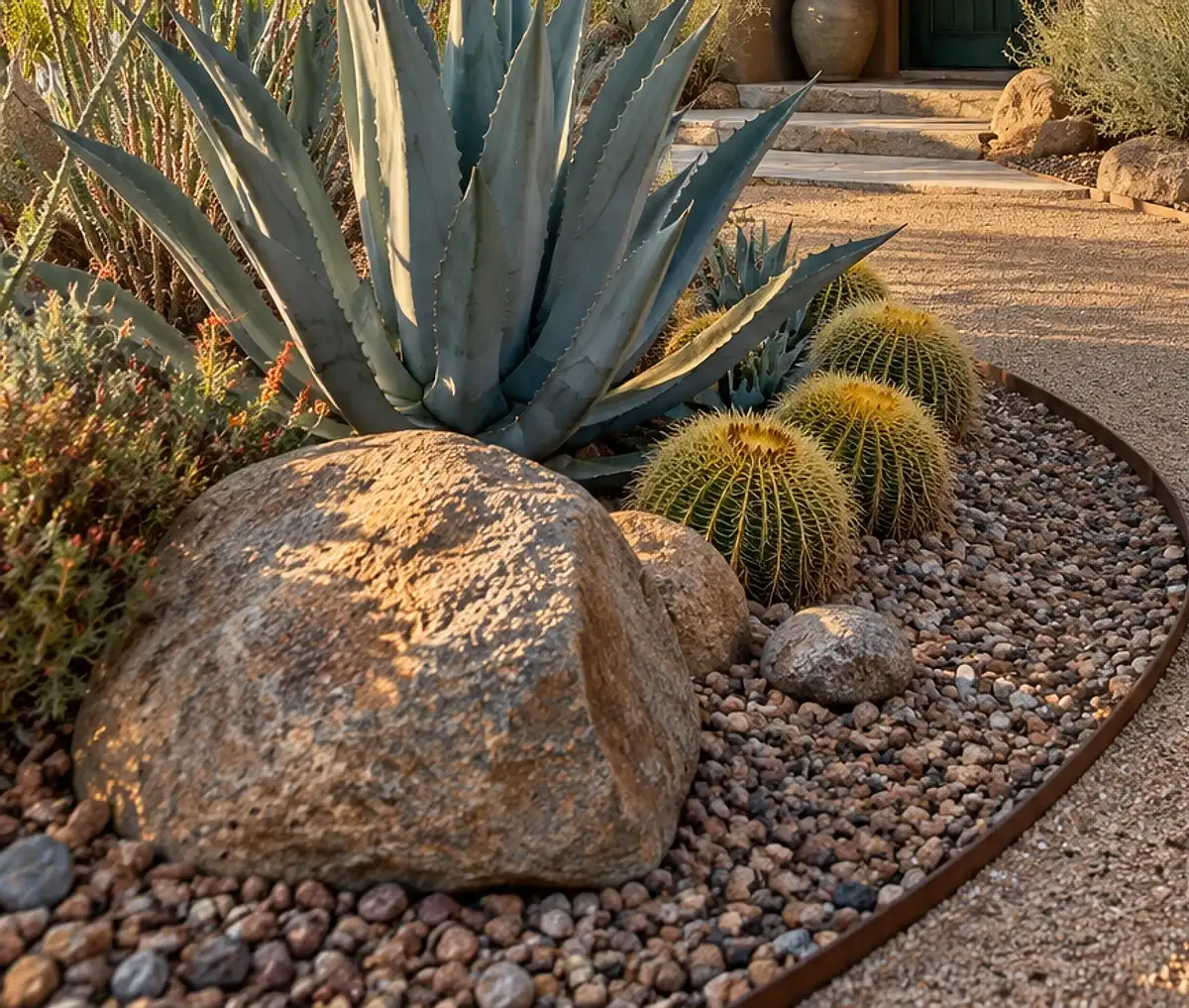
Ground here is granite and caliche with boulder outcrops that were never blasted out. The mountainside standards assume it: site improvements are to be planned around boulder outcroppings, and desert varnish should be applied to rock exposed by cuts (Carefree mountainside standards (opens in a new tab)). Caliche restricts roots and drainage where it is present, and a 4 inch drop in 4 hours is the test that says whether a planting pit will hold water (University of Arizona, managing caliche (opens in a new tab)). On a slope the soil is thin over rock, so a tree can need a blasted pocket or a raised bed. The boulders are an asset in a design and a cost in a budget.
Rules
When do the mountainside standards apply?
At a 20 percent slope or more, the mountainside standards take over and they govern the yard as much as the house. A building envelope is fixed first, cuts are limited to 12 ft, and any retaining wall over 7 ft has to be terraced rather than built as one face (Carefree mountainside standards (opens in a new tab)). Terraced walls mean more wall length for the same height, which can raise the total price even though each wall is shorter. Lot coverage and disturbed area limits apply on top of that, and the two are measured differently, so a plan can pass on coverage and fail on disturbance. The standards also cover exterior lighting.
Costs
How much colder is Carefree at night?
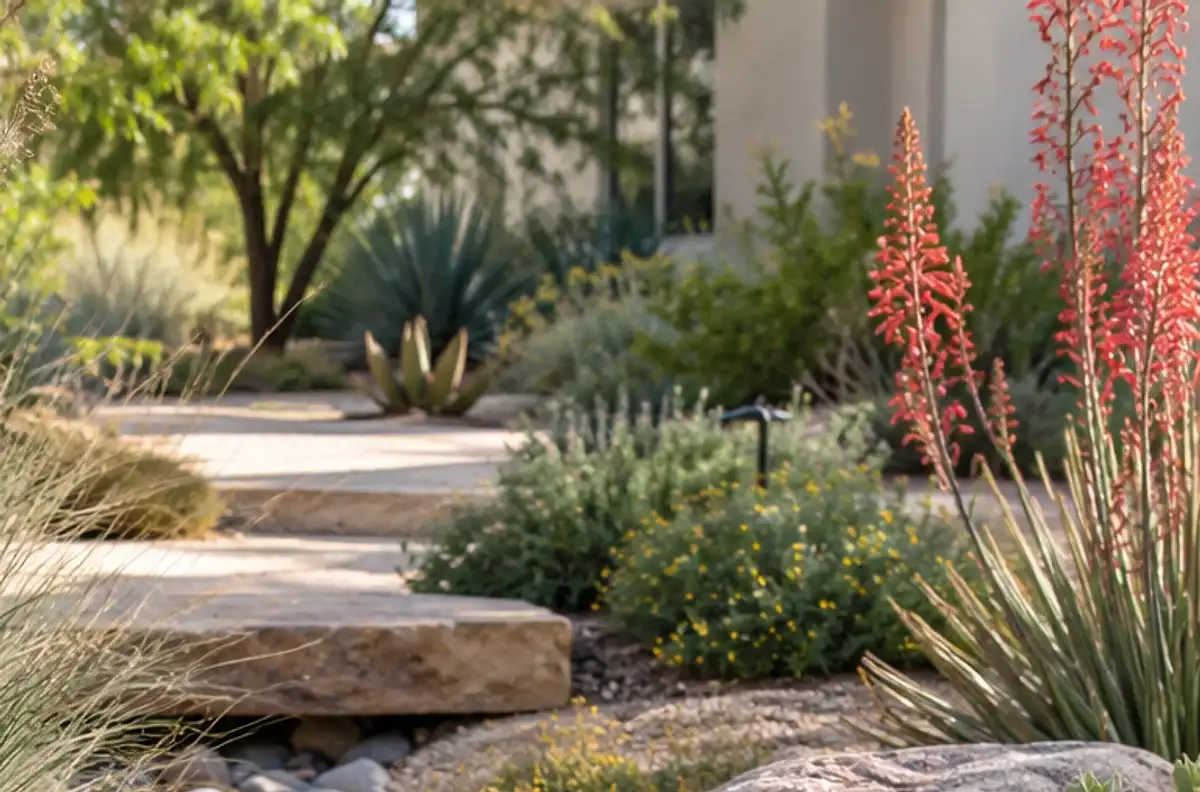
Carefree town hall is the highest of the towns around it, at about 2,400 ft, roughly 1,140 ft above Scottsdale. That buys cooler nights, a longer fall planting window and a real frost risk in winter, and the last one catches people who moved up from the valley. A plant sold as fine for Phoenix can be marginal here on a clear night, so check the hardiness rating rather than the tag at the nursery. That shifts the palette toward plants that take a cold snap. Summer still reaches 100 F, and the sun at this elevation burns a little faster, so a west wall needs shade. Wind on an exposed ridge dries a new planting faster than the temperature suggests.
Bids and scope
What does landscape design cost?
Design work is not a formality here, because coverage limits and mountainside standards have to be resolved on paper before a permit is filed. A national cost guide puts landscape design at $50 to $150 per hour, with an average near $100, or $1,934 to $7,267 for a project, and the average project at $4,588. A parcel with a 20 percent slope and a 6 percent coverage cap needs a grading plan and a plant list, and that is hours. A plan that skips that step can come back, and a redraw can bill the hours twice. Published market ranges, not a quote: the final price is set after an on-site assessment.
Planning
What should be settled before work begins?
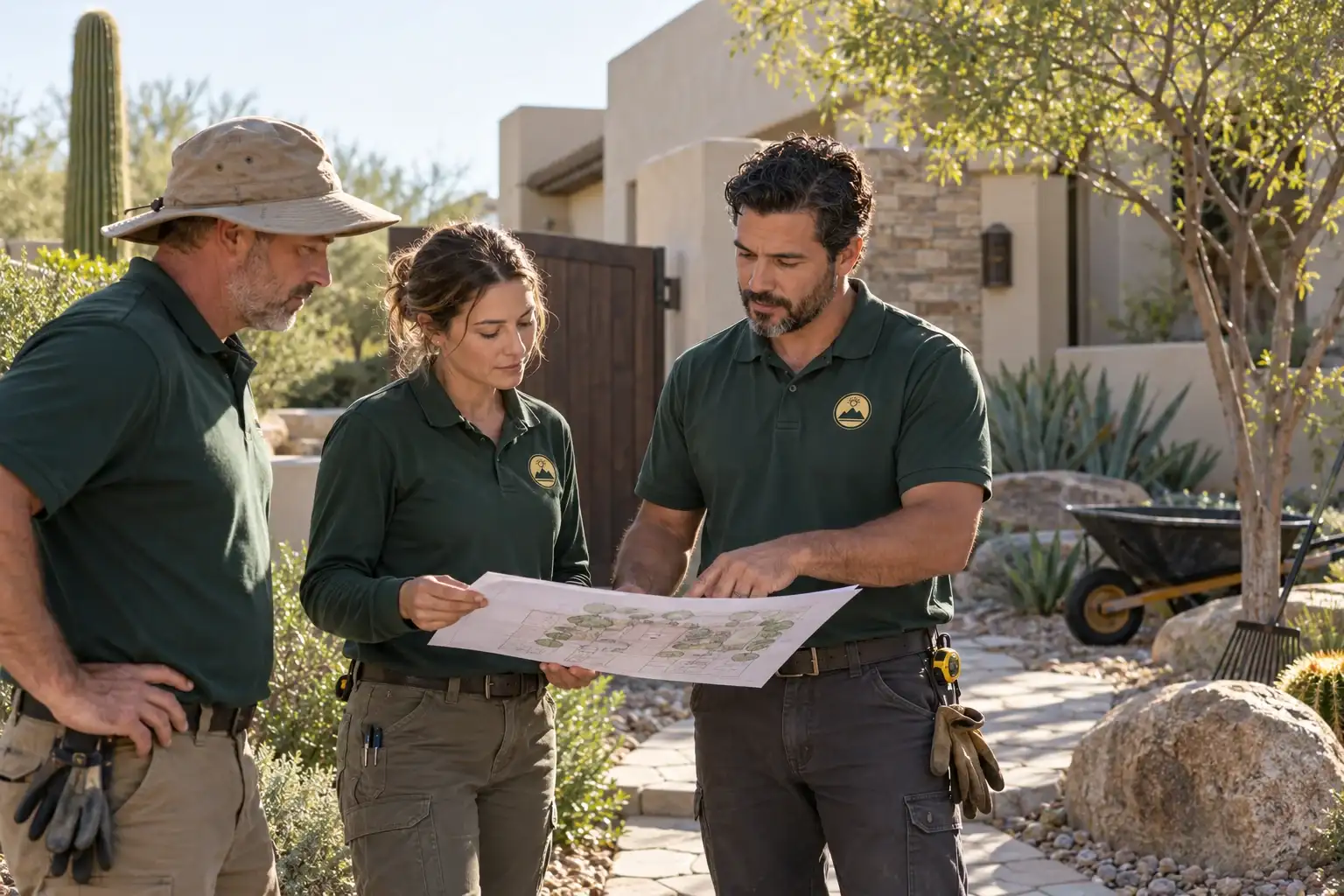
Get the slope mapped and the coverage and disturbance numbers calculated for the zone before a design is drawn, because a plan that exceeds them gets redrawn. Confirm the water source and ask for the mineral content, then choose plants that tolerate it. Route hardscape around the boulders instead of pricing their removal, since the standards call for planning around boulder outcroppings and removal can add cost. Price a retaining wall as terraced if the site is steep enough. Check the lighting plan against the standards, and leave room in the budget for the varnish treatment on any rock cut the driveway requires. Ask what the mountainside submittal requires early, and put the plant list and the lighting schedule in one package.
3 questions
Questions people ask
Still have a question? Call (747) 243-2089 and describe the yard.
How much of my lot can I cover?
It depends on the zone. Coverage is capped at 6 percent on Rural-190, 17 percent on Rural-43 and 30 percent on R1-10, and disturbed area is limited to 18 percent on Rural-190 and 51 percent on Rural-43, while R1-10 allows up to 100 percent. Coverage is the area under roof, and disturbed area includes the driveway, courtyards, grass areas and walled areas. Add both up before a design is drawn.
Do I need approval to build on a slope?
At a 20 percent slope or more, yes. The standards fix a building envelope, limit cuts to 12 ft and require any retaining wall over 7 ft to be terraced. Plans are to be laid out around boulder outcroppings, and desert varnish should be applied to exposed rock cuts. The review covers the yard too.
Is the water hard?
It can be. CAP water is almost 60 percent of what Carefree Water Company delivers, and groundwater from wells can carry dissolved minerals. Minerals can leave spots on glass and a film on walls. Ask for current mineral numbers from the company's water quality report before choosing plants, and flush drip lines at the end of the season.
Keep reading