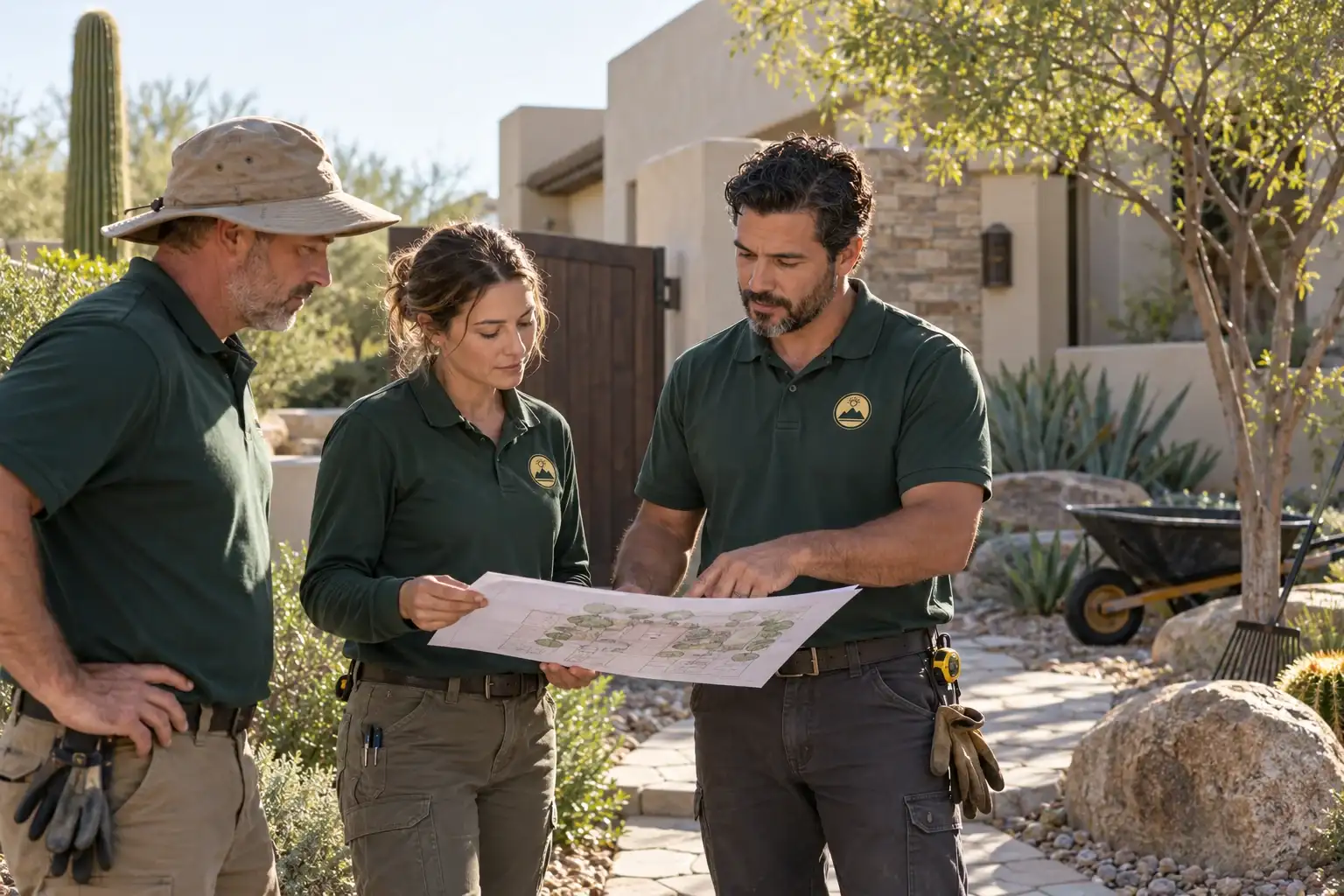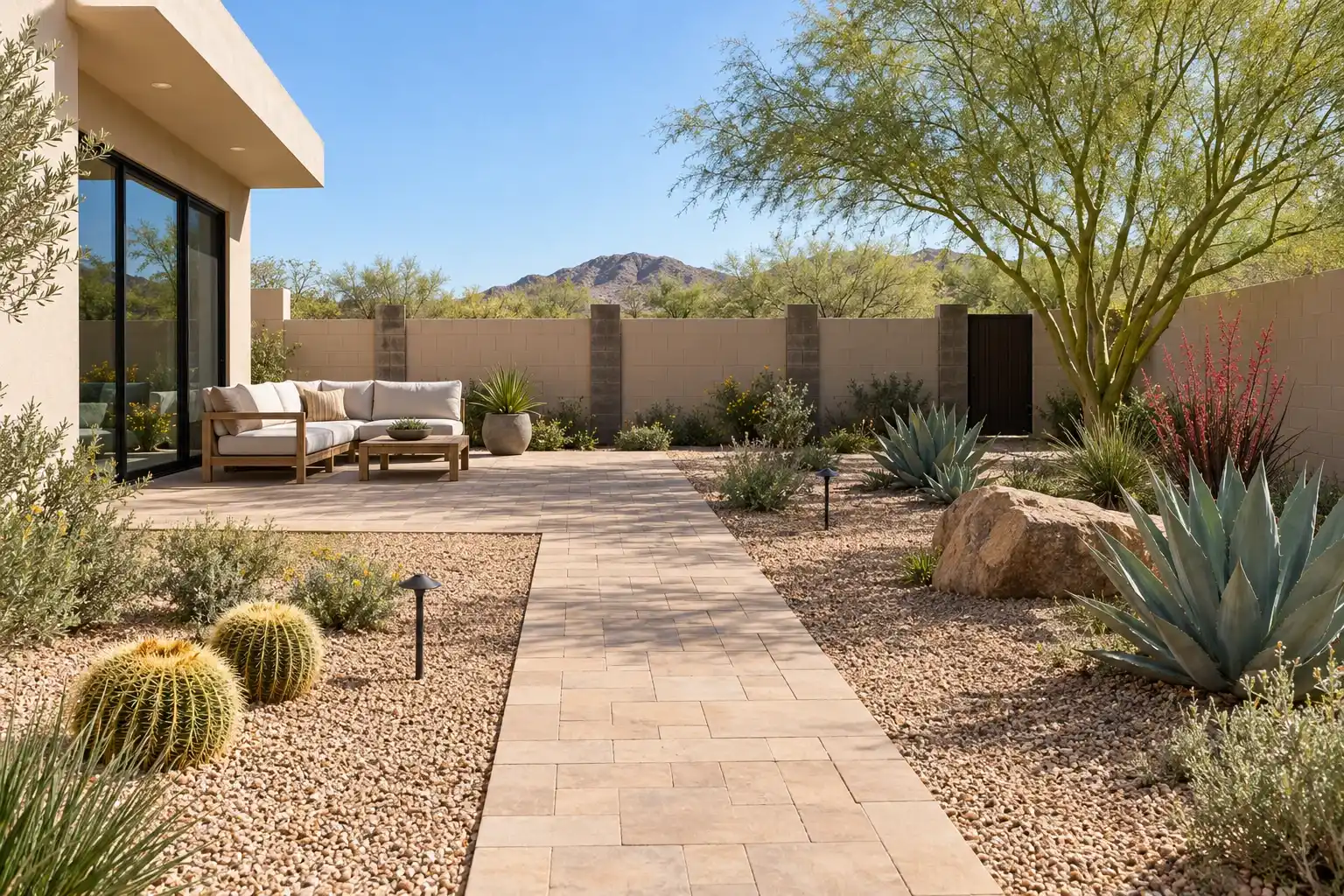
Service area · Peoria, AZ
Landscaping in Peoria, AZ
Peoria runs from a grid of old streets around Grand Avenue to master planned ground off the Loop 303, and the same yard plan does not work in both places. Call (747) 243-2089 if you want to talk through the address before you order material.
Service area
Why does Peoria feel like 2 different cities?
The south end is the original townsite, laid out on a street grid around Grand Avenue, and the city's own plan for it splits the area into 5 districts and treats walkability as a goal (City of Peoria, Old Town Specific Area Plan (opens in a new tab)). The north end is newer planned ground off the Loop 303, where master planned communities such as Vistancia sit. Peoria had 200,881 residents on July 1, 2025, up 5.2 percent from 190,985 in 2020 (US Census Bureau, QuickFacts (opens in a new tab)). An Old Town yard often works inside an existing block with trees that were planted decades ago. A northern yard often starts on graded ground with a block wall on 2 sides.
Water
Where does Peoria's water come from?
Slightly more than half of the city's demand is Colorado River water delivered through the Central Arizona Project, and Peoria holds access to 34,121 acre feet of it a year (City of Peoria, comments to the Bureau of Reclamation (opens in a new tab)). In the same filing the city reports that it moved from being primarily dependent on non renewable groundwater to renewable surface water, and that its Water Services Department serves about 180,000 of roughly 195,000 residents. The filing does not say who serves the remaining residents, so rates and rebate offers can differ by address. The same filing describes a strong water conservation ethic. Before designing around a rebate, find out which utility bills the address.
Good to know
What does Vistancia require in a front yard?
The Village at Vistancia association's published landscaping rules call for 2 trees of at least 24 inch box size, 4 different species of shrubs or groundcover, and at least 50 percent of the front yard in organic groundcover. The association also sets placement, which is what actually decides the layout: 1 of the 2 trees has to sit 4 to 8 ft behind the sidewalk, trees go 15 ft apart unless they are the same species, groundcover within 3 ft of pavement stays under 18 inches tall, and every planting area needs automatic irrigation, according to the association's design guidelines. Gravel alone does not meet the 50 percent organic groundcover minimum. A plant count, not a plant idea, is what gets approved. All exterior changes go to the Design Review Committee first, and work done before approval can be ordered back to its previous condition.
Hardscape
How tall can a wall be in Peoria?
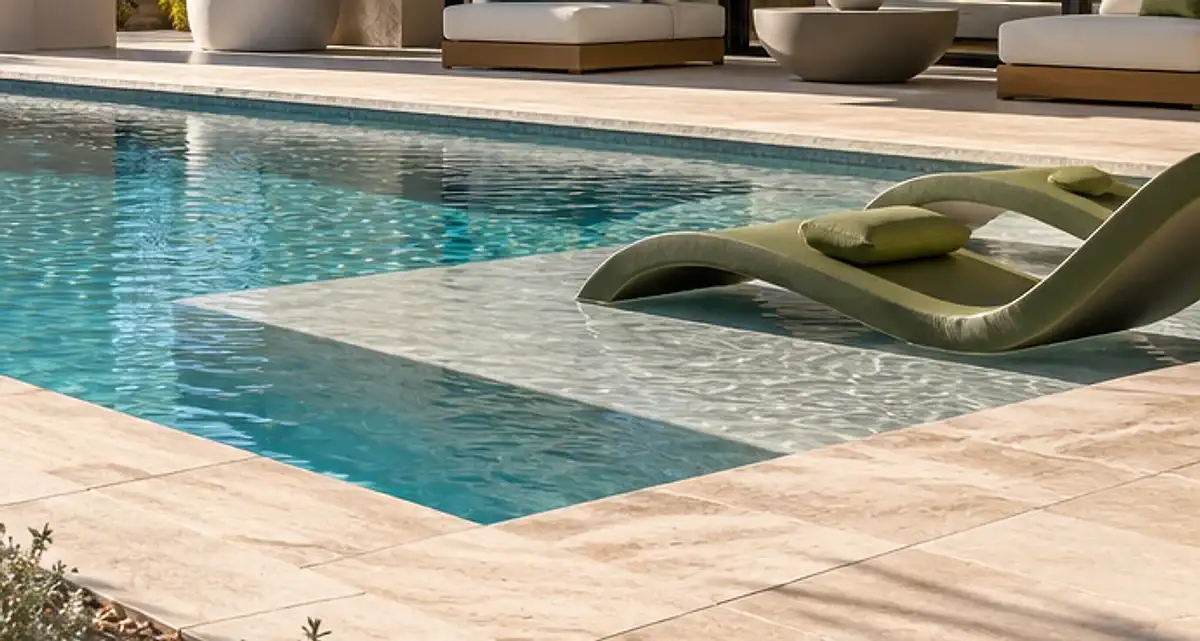
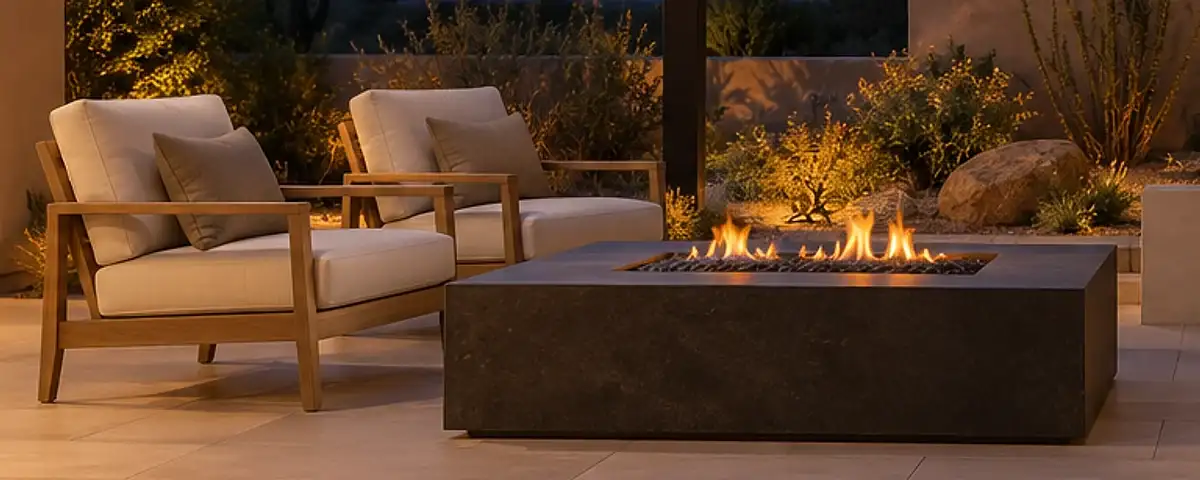
A fence or wall over 7 ft needs a permit, and anything above 8 ft goes to the City Engineer for review (City of Peoria, code section 21-312 (opens in a new tab)). In the front yard the limit is 3 ft, with narrow exemptions for agriculture, suburban ranch districts, schools, temporary construction sites and arched masonry entry features. Along an arterial or collector street, a run longer than 200 ft has to undulate, stepping at least 3 ft off the street line every 100 ft or at every other lot line. Barbed wire is prohibited with a few exceptions, among them the general agriculture and suburban ranch districts. Height is measured from a 2 ft shelf at the base or from the curb where that is higher, so 2 walls that look level from the patio can measure differently from the street.
Ground
What is the ground like on a Peoria lot?
Caliche is a layer of soil cemented by calcium carbonate, and where it is solid a shovel stops on it (University of Arizona, managing caliche in the home yard (opens in a new tab)). Where the layer is solid, roots stay in the shallow soil above it, drainage stops, and a plant can sit in drought stress with the irrigation clock still running. The extension guidance is to break through where practical, remove the solid chunks and mound soil where drainage fails. The extension publication notes that a caliche layer can form at or below the surface and range from a few inches to several feet thick. Test 2 or 3 spots in the same back yard, because the answer is not uniform.
Service area
What changes on a lot at the desert edge?
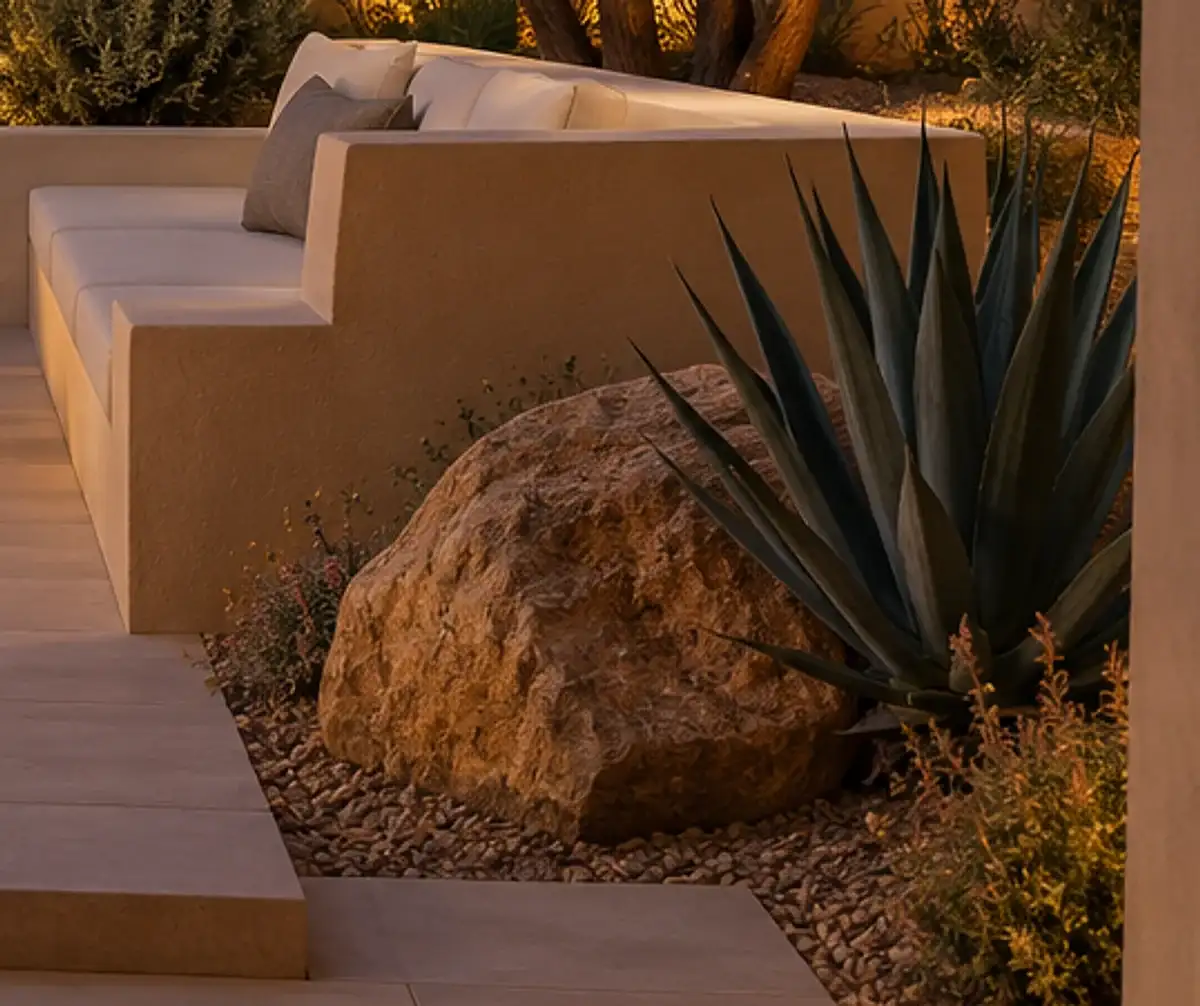
Less shade, more wind, and a plant list that has to survive both. On the edge of a master planned community, a back wall can face open ground. Wind crosses open ground with nothing to break it. The University of Arizona notes that shallow rooted plants over caliche are poorly anchored and can be uprooted in strong wind, which is another reason to plant into broken ground rather than a shallow pocket (University of Arizona, managing caliche in the home yard (opens in a new tab)). Shade on the west wall is worth more here than a decoration budget, and it takes years to arrive.
Costs
What does landscaping cost in Peoria?
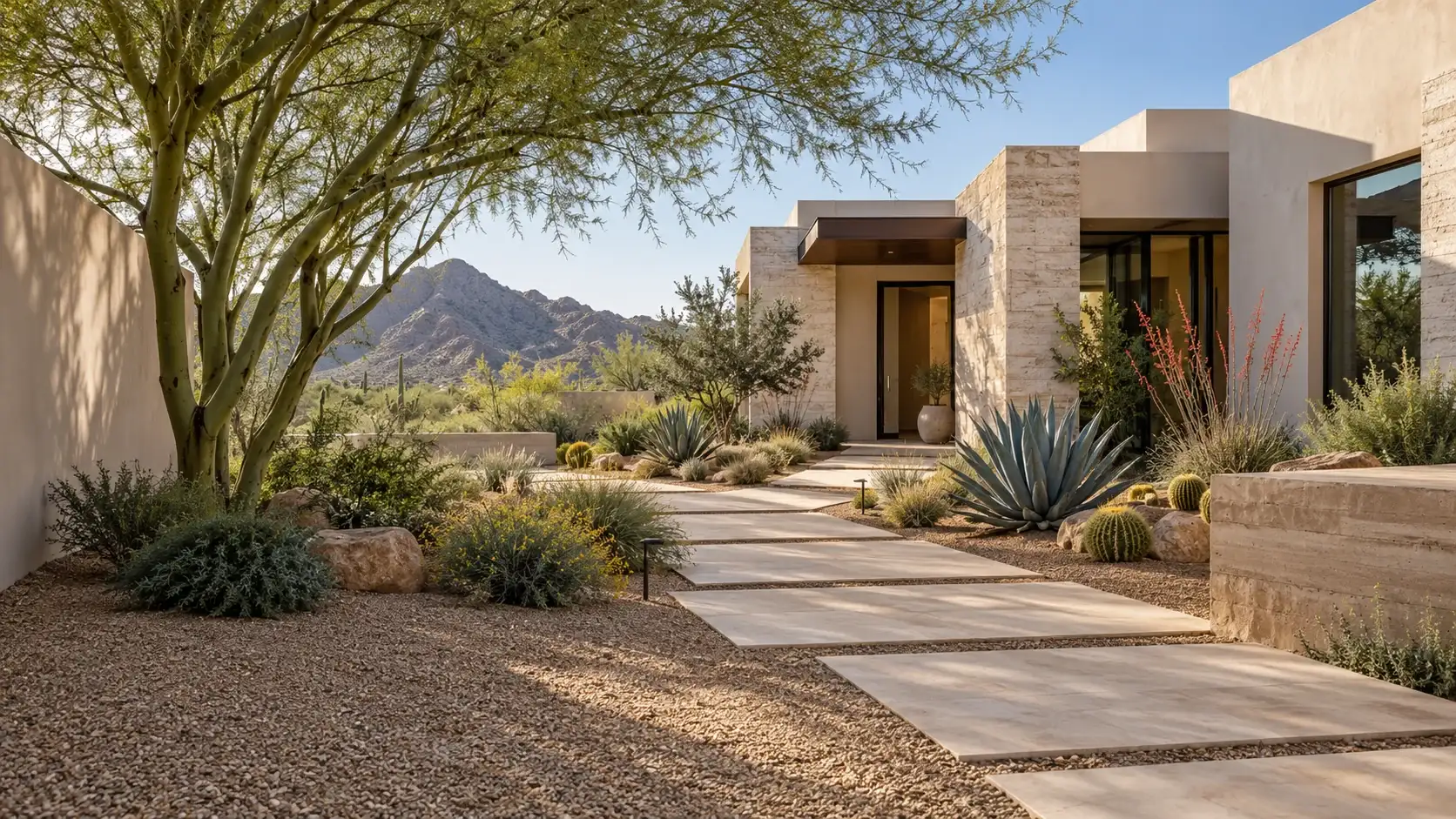
A paver patio runs $8 to $25 per sq ft, and a retaining wall runs $40 to $360 per linear foot depending on height, with most wall projects between $3,191 and $9,202, according to a national cost guide. A xeriscape conversion runs $5 to $20 per sq ft, and a front yard project lands at $1,500 to $5,000 against $15,000 to $50,000 for a full back yard, according to a national cost guide. Published market ranges, not a quote: the final price is set after an on-site assessment. A drip system adds $200 to $850, and a sprinkler repair runs $137 to $422, according to a national cost guide. In the Village at Vistancia the association's plant count sets the material list before a price exists.
Planning
What has to be settled before work starts?
5 things. Confirm which utility serves the address and what it rebates, since customers of different utilities can get different offers. Get the design review approval in writing if the house is in an association, because retroactive approval is not a thing. Pull the wall height and setback answer from the city before block is ordered, and remember the front yard cap is lower than the side yard cap. Test the ground in more than 1 spot. Then plan access, because a side yard is often the only route to the back and every pallet goes through it.
3 questions
Questions people ask
Still have a question? Call (747) 243-2089 and describe the yard.
Does Peoria get most of its water from the Colorado River?
Slightly more than half of demand, delivered through the Central Arizona Project, with access to 34,121 acre feet a year. The city reports that it moved away from relying mainly on non renewable groundwater. Ask the utility that bills the address, because the city's utility serves about 180,000 of roughly 195,000 residents.
Can I build a 6 ft wall in a Peoria front yard?
No. The front yard limit is 3 ft, with narrow exemptions such as agriculture, suburban ranch districts and arched masonry entry features. A wall above 7 ft anywhere needs a permit, and above 8 ft goes to the City Engineer. Measure from the shelf at the base or the curb where that is higher.
Who approves a landscape change in Vistancia?
In the Village at Vistancia, the Design Review Committee approves it, before any work starts. The association asks for a modification application and warns that work done first can be ordered back to its previous state. The design guidelines also set tree size, species count and irrigation requirements, so the plant list is part of the approval.
Keep reading
- Landscape Installation: for a build that has to pass design review.
- Patios and Pavers: for walls, slabs and the height code.
- Irrigation and Sprinkler Repair: for zones after a conversion.
- Landscaping Cost: for every published range in a single table.
- Drip Irrigation vs Sprinklers in Scottsdale:
- Pavers vs Concrete Patio in Scottsdale: