Guide 05 · 5 min read
Pavers vs Concrete Patio in Scottsdale, AZ
Pavers ride the soil when it moves, and a concrete patio cracks with it. On East Valley expansive clay, that difference decides more Scottsdale patios than the price does. Here is how each one behaves under monsoon, heat, and a design review board.
Good to know
The short answer
Concrete wins on upfront cost and a clean single pour. Pavers win on movement, drainage, and repair when the base is built right. The right choice depends on the slab, the soil, and how much monsoon water has to move across the yard.
Hardscape
Pavers: what it actually is
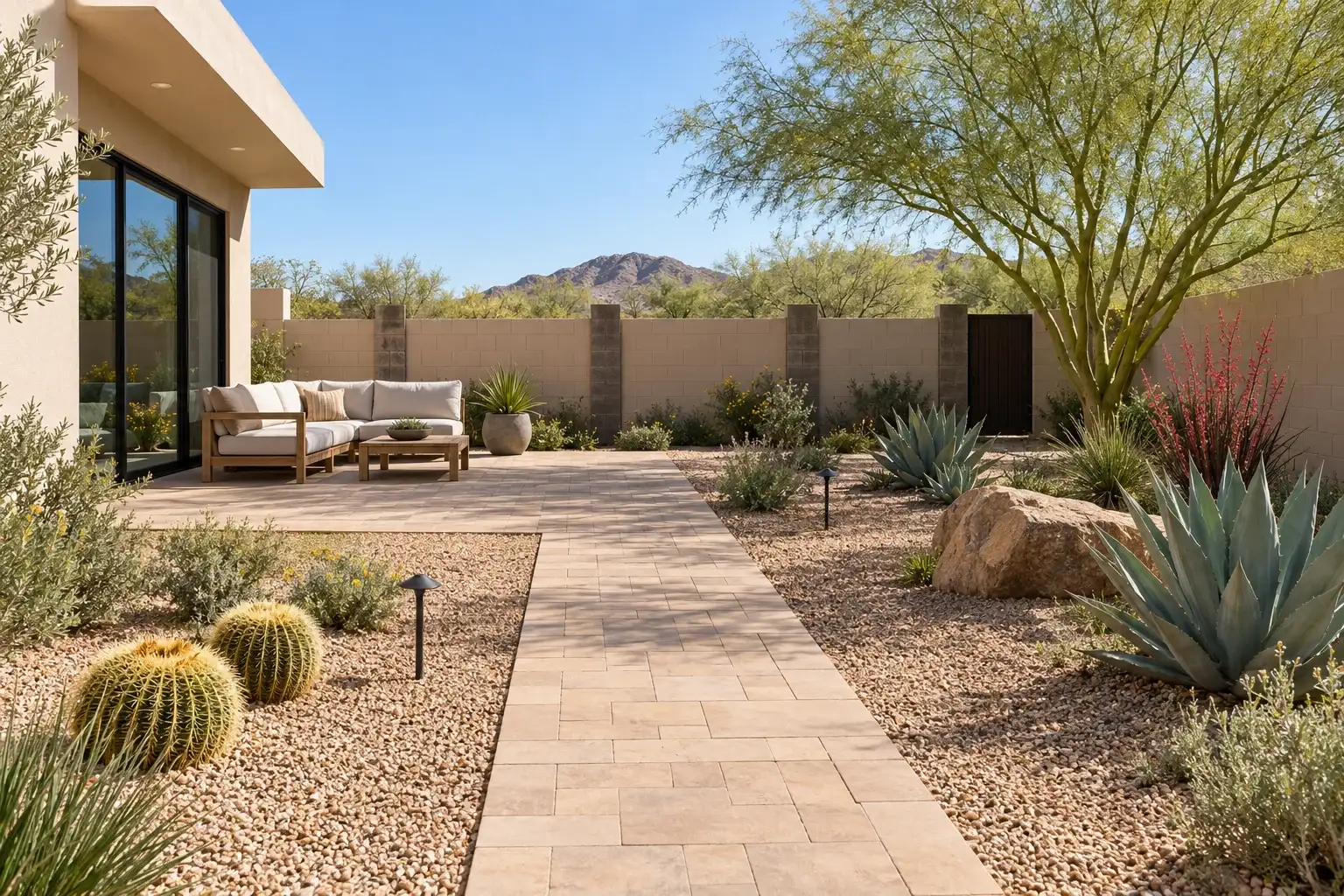
Pavers are individual concrete or stone units laid tight on a compacted base with sand joints between them. The load spreads across the units, but nothing is glued into one piece. When the ground moves, the joints give, and the patio moves in small pieces instead of cracking as a whole. A single cracked paver lifts out and gets replaced, and the surrounding field never knows. Walk the same patio after a storm and the difference shows: pavers dry through the joints, and the units stay put because the base under them was built to move water.
That flexibility is not automatic. It depends on a base that was excavated and compacted in lifts. A paver patio over poor base shifts, dips, and lets the joints open, and then the look falls apart in months instead of years.
Hardscape
Concrete patio: what it actually is
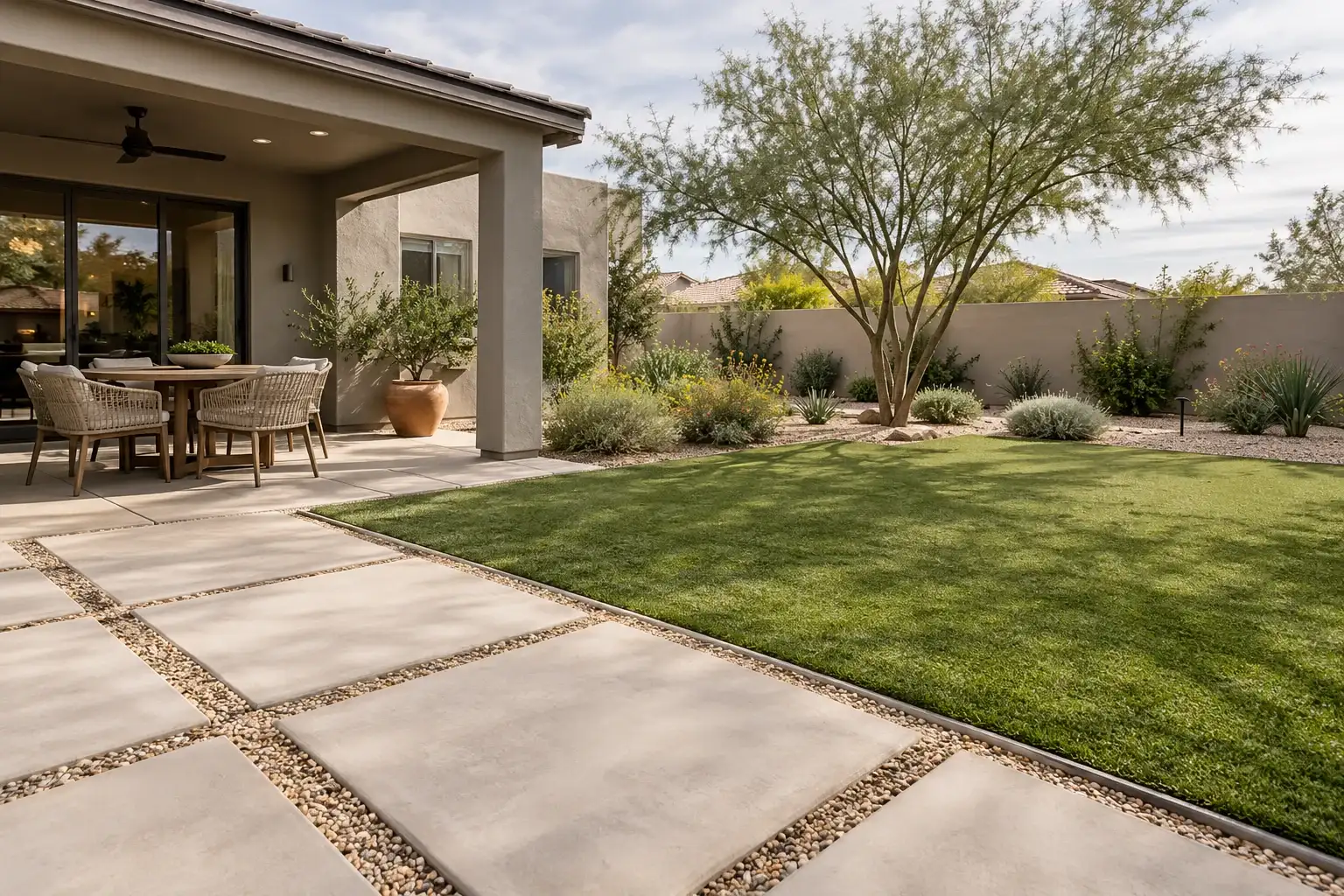
A concrete patio is one pour of mixed cement, aggregate, and water, finished flat or brushed, usually with control joints cut into it. It is strong in compression and brittle in tension, which means it handles weight fine and movement badly. When the ground underneath swells, shrinks, or settles, the slab cannot give, so it cracks.
The control joints are the design's answer to cracking. They give the slab a chosen place to fail, and on a stable lot that is enough. On moving Arizona clay, the crack often ignores the joint and goes where it wants.
Hardscape
Where pavers fail here
Caliche is the cost driver. Much of the East Valley sits on a cemented calcium carbonate layer that dulls trenchers and turns a simple dig into a jackhammer job. A paver patio needs that excavation done right, because the base depth is what carries the units. Cheap paver bids in Scottsdale usually mean a thin base over caliche, and the patio telegraphs it within a season as dips and opened joints.
Monsoon tests the joints. Water arrives faster than desert soil can absorb, so it sheets across the surface and finds the sand joints. Without a slope and a drainage plan, that water works its way under the units and washes the base, and the patio starts moving. A raised paver patio done without drainage planning pushes that same water toward the house or the neighbor, which is how a pretty patio becomes a damage claim. The tell is a low spot that holds water after a storm. Once the patio holds water, the base under that spot is already washing, and the dip gets deeper with every storm after.
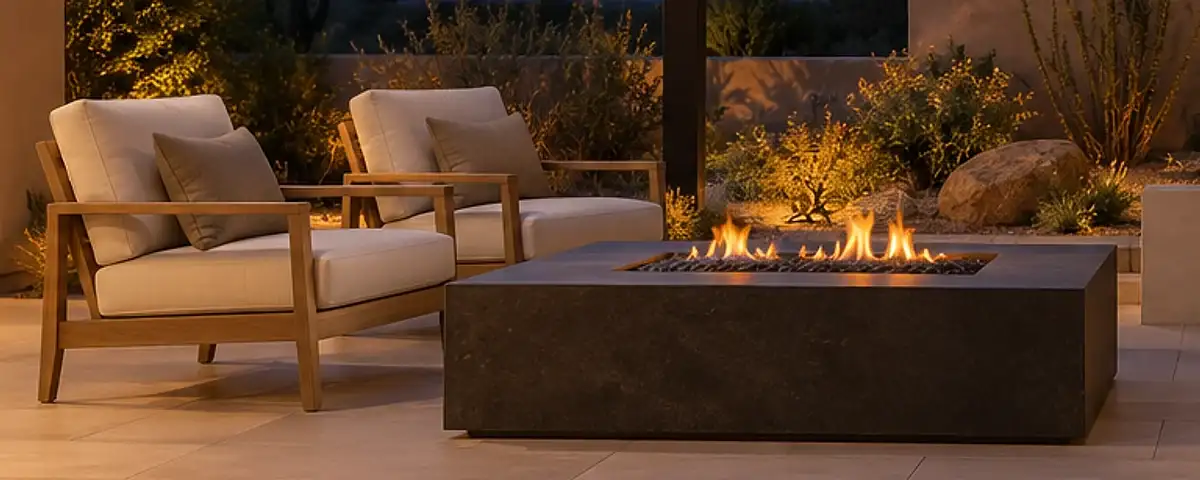
Heat is the last one. Pavers store the day's sun and re-radiate it through the evening, and a west facing paver patio can be unpleasant underfoot by late afternoon. Lighter colors help, and the heat is a real part of the choice in zone 9b.
Hardscape
Where concrete patio fails here
Expansive clay is the big one. Parts of the Valley sit on clay that swells when it gets wet and shrinks when it dries, and that cycle is what cracks slabs. Monsoon wetting followed by furnace dry spells is exactly the sequence that moves a patio, and when the slab cracks, the crack is permanent. Patching leaves a visible map, and the surrounding finish keeps failing along the same line.
Caliche traps water under the slab too. Because the calcium layer stops infiltration, water that gets under the edge sits there, softens the subgrade, and the slab settles unevenly. The crack that appears is the slab telling you what the water has been doing underneath.
UV ages the finish fast. Arizona sun is harder on sealers and color than the national average assumes, so a colored or stained concrete patio fades and chalks earlier than the brochure suggests. Sealing again pushes the fade back but never removes it, and in full sun the cycle starts over the day the new coat cures. Design review adds a layer as well. Scottsdale runs the strictest design review in the Valley, and hardscape changes to a front yard, entry, or any area visible from the street often need approval before the pour.
Costs
What it costs and what drives the number
Concrete usually runs lower per square foot than pavers, sometimes by a wide margin, and the gap widens with elaborate patterns and borders. The drivers that move both numbers are the same: access for equipment, caliche excavation, base depth, and slope. A paver patio in a backyard with no machine access costs more than the same patio on an open lot, and so does a concrete pour that needs pump delivery.
The fair comparison includes repair. A cracked slab is a cut and repour, while a failed paver is a unit swap, and over the life of a Scottsdale patio the movement argument usually closes the price gap. The right comparison lines up the same yard on both surfaces, same access, same drainage, and the gap between the two quotes tells you what the movement insurance actually costs. The full landscaping cost breakdown walks through what moves these numbers, and the patios and pavers page shows how the pieces fit a real yard.
Good to know
What good work looks like in Scottsdale
- The base is specified to caliche depth before the price, because the excavation is the part that decides whether the patio survives.
- Drainage is planned with the patio, not after it. Monsoon water gets a route that runs away from the house and the neighbor.
- Material color and pattern go through design review before purchase, so nothing gets ordered that will not pass.
- The comparison is priced over the life of the patio, including what a cracked slab costs to fix versus a swapped paver.
6 questions
Pavers vs Concrete Patio: your questions
Still have a question? Call (747) 243-2089 and describe the yard.
Do pavers crack in Arizona heat?
The units themselves hold up to heat. What moves is the ground underneath, and pavers ride that movement because the joints give. A paver field can still dip and shift if the base is thin, which is a base problem, not a paver problem.
Does a concrete patio last in Scottsdale?
It can, on stable soil with good drainage. On expansive clay with monsoon water, cracks are common, and the control joints only help if the ground stays put.
Are pavers too hot for bare feet?
They store heat and re-radiate it, like any hard surface. Lighter colors and shade make a real difference, and a west facing patio is the one to plan around.
Which one drains better?
Pavers drain through the joints when the base is built to let water through. A concrete slab needs slope to move water off, and standing monsoon water on a flat slab is where the trouble starts.
Does the HOA need to approve a patio?
Often, yes. Hardscape in the front yard or visible from the street goes through design review in most Scottsdale HOAs, and approval comes before the work, not after.
Which is cheaper to repair?
Pavers. One cracked unit lifts out and gets replaced, while a cracked slab is usually a cut and repour, and the patch rarely matches. If the look of stone in one pour is still tempting, read pavers vs stamped concrete before you decide.