Service 06 of 06 · Scottsdale, AZ
Landscape Lighting in Scottsdale, AZ
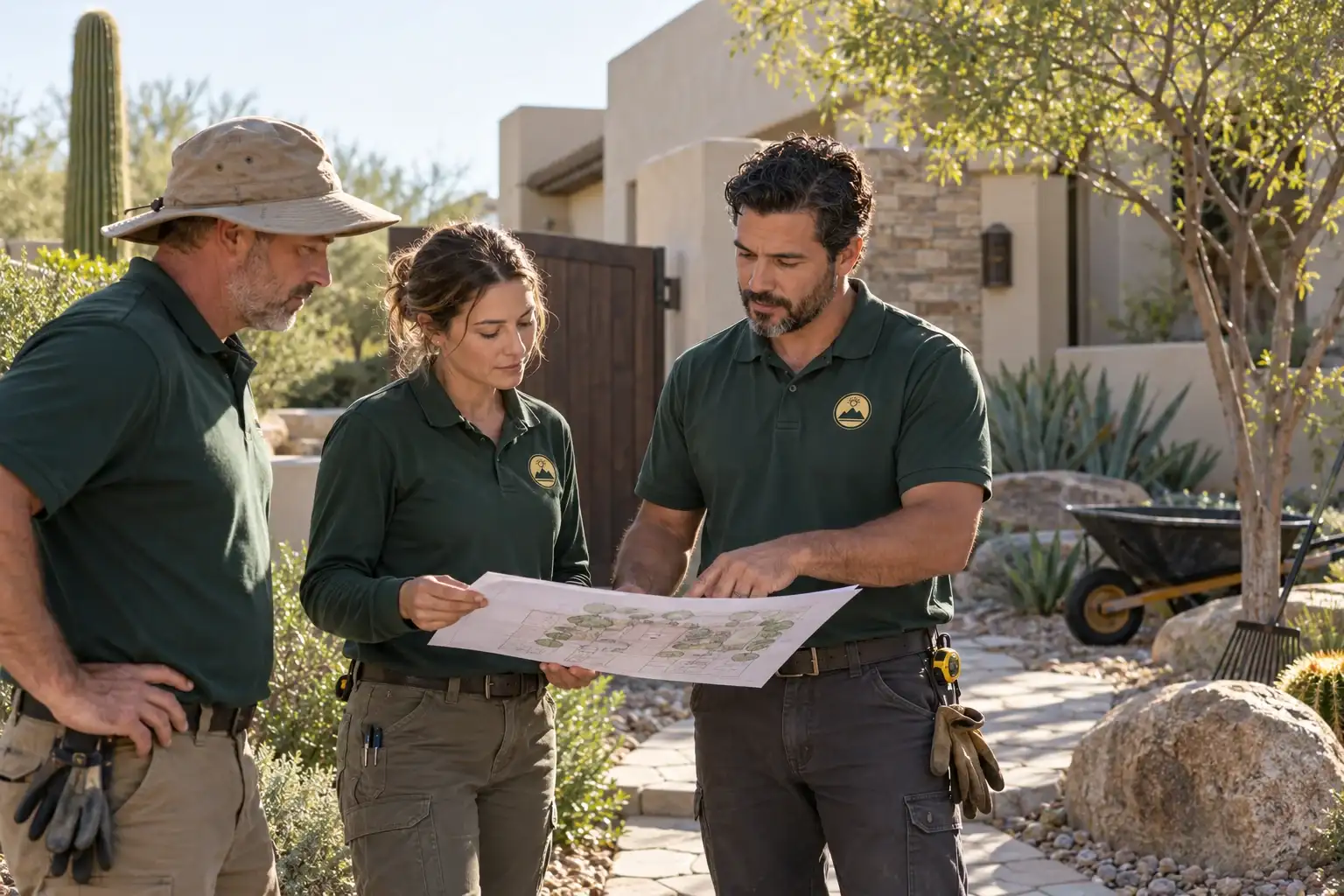
You want to see the walk and the planting after dark without lighting up the neighbor's window. Tell us where you walk, and someone from our team will call you back to plan the fixtures.
What you get
Light on the walk, kept inside your property line
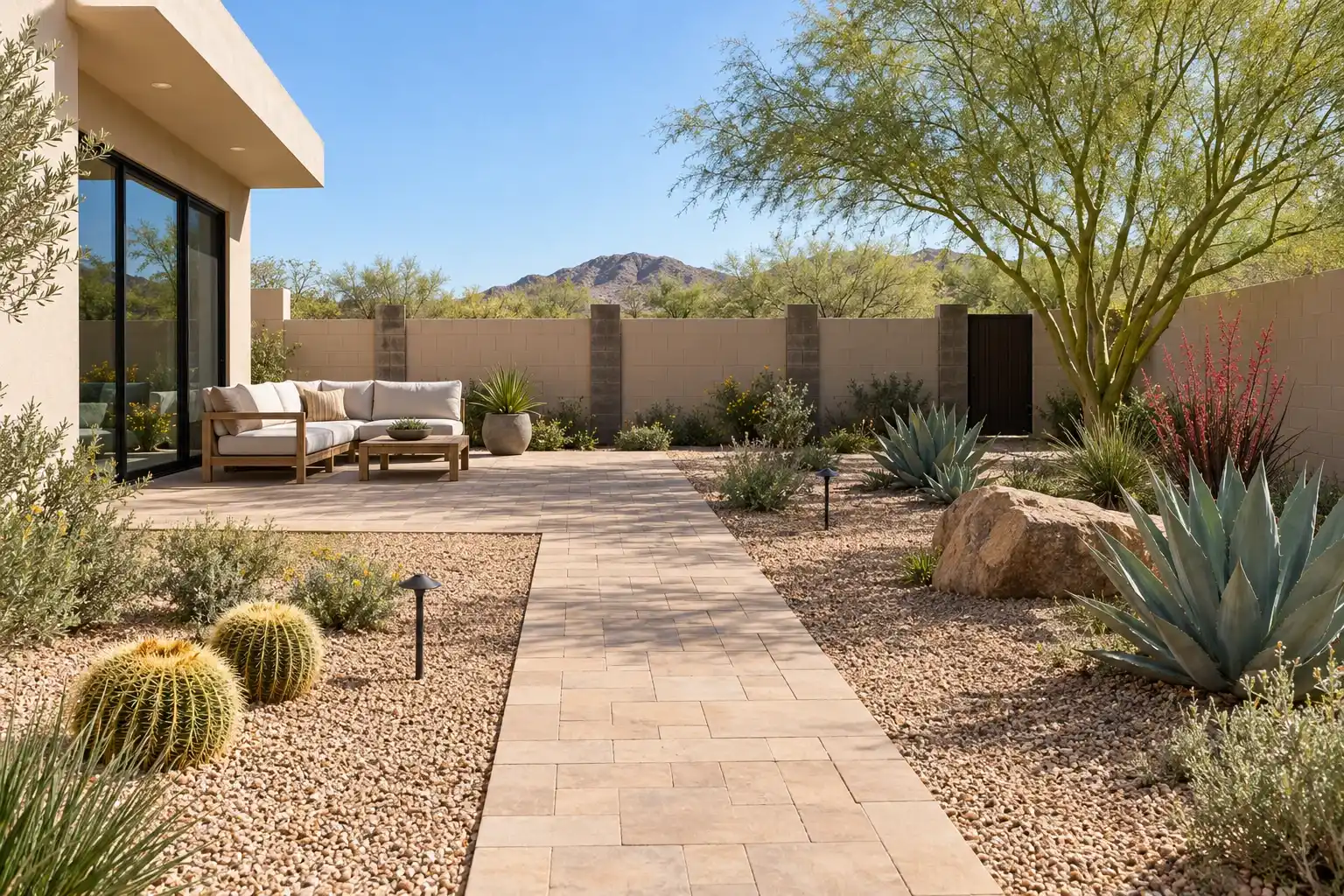
Landscape lighting in Scottsdale is a low voltage system, a transformer and city guidance on how much light leaves the property.
- Path and step lights set low and shielded, so you see the ground and not the lamp
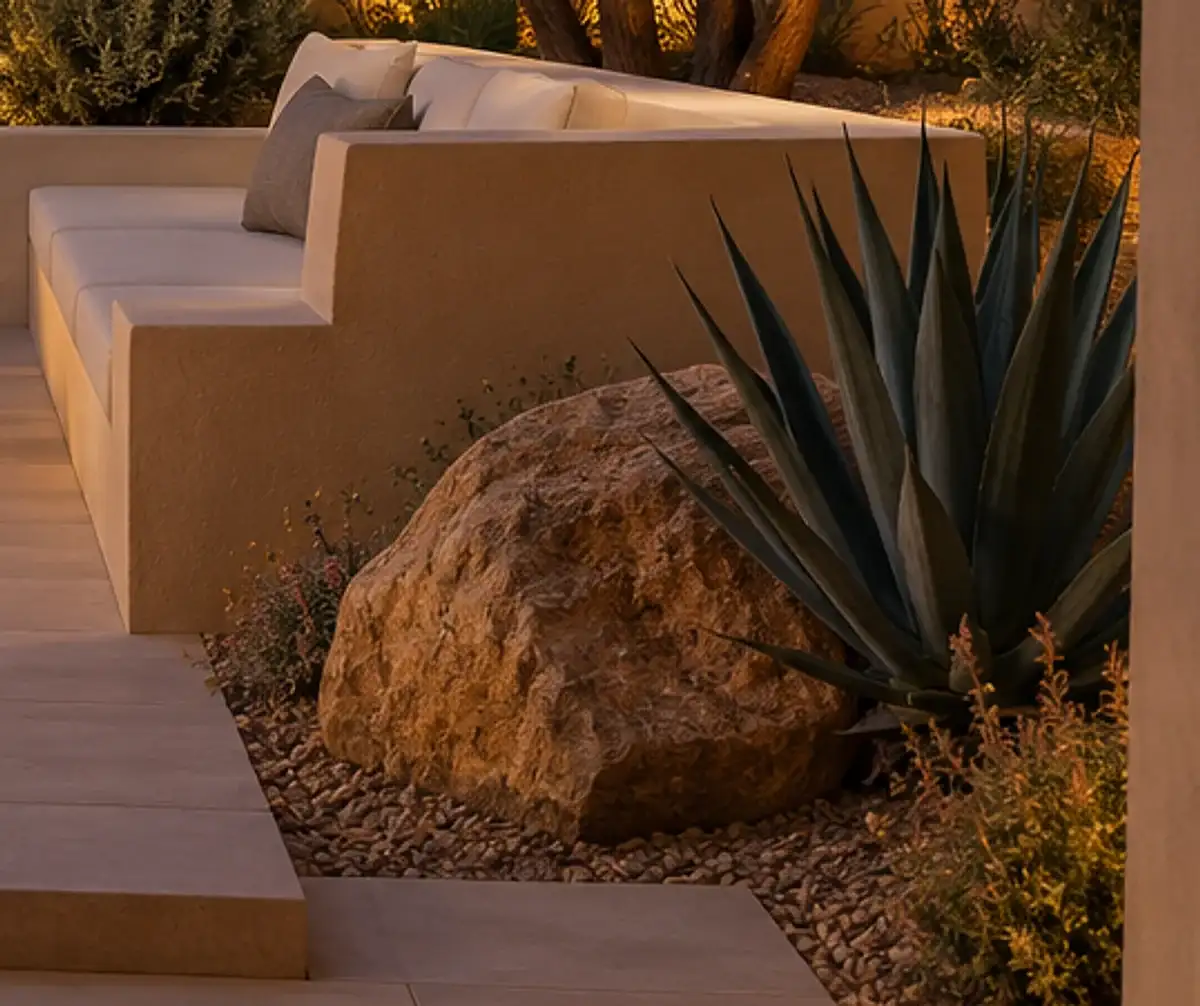
- A tree or a wall lit with the right beam, from a narrow uplight to a soft wash
- A transformer sized above the load, so the last fixture on the run is not dim
- Fixtures aimed down and away from the property line, to stay inside the city's light trespass limits
- A timer or astronomic clock that tracks sunset all year
Check your yard
5 signs your yard needs landscape lighting
- You cannot see the ground on the walk after dark.
- You take the steps slowly at night, because a missed tread is a fall.
- A tree or a wall you want to see from the street stays dark.
- A patio or an outdoor kitchen with no task light.
- Fixtures that haze over, flicker or look dim at the end of the run.
3 steps
How it works
Tell us what you need
Send the form or call. Give the address, the ZIP code and what the yard should do.
We call you back
Someone from our team goes over the project, the budget and the timing with you.
Your lighting plan gets drawn
The fixtures, the transformer and the price are set in writing and put on the calendar. City and HOA lighting rules come before anything is ordered.
Costs
What does landscape lighting cost in Scottsdale?
According to a national cost guide, a full installation runs $2,000 to $6,000, with an average of $3,500, and a small system of 4 to 8 fixtures can land near $800. Per fixture, that guide lists $100 to $500. A second national guide prices low voltage lighting at $90 to $150 per fixture and a typical job at $2,000 to $4,000. Published market ranges, not a quote: the final price is set after an on-site assessment. What changes the total: cable length, transformer size, whether a trench crosses finished pavers, and the metal of the fixture. Brass and copper sit at the high end of fixture prices in the second guide. The first guide also lists permit fees of up to $300 where a project needs one, and a running cost of $5 to $15 a month for an LED system.
Bids and scope
What does Scottsdale require of an exterior lighting design?
Approval, shielding and a photometric plan. The city's policy requires every exterior lighting design to be approved by the Development Review Board, with full cut off fixtures, controlled mounting heights and shielding used to limit glare and spill (City of Scottsdale, exterior and site lighting policy (opens in a new tab)). Landscape fixtures get a narrower rule: they are meant to accent planting, they aim away from the property line, and each one carries an extension shield to minimize glare and light source visibility. On land inside the Environmentally Sensitive Lands overlay, the light must be shielded and pointed at the ground. A submittal needs at least 2 photometric studies, 1 horizontal over the site and 1 vertical around the perimeter, and the maintained light loss factor cannot drop below 0.70. A homeowner may not be filing those, but they show the numbers the city's policy works from.
Costs
How much light can actually land on my yard?
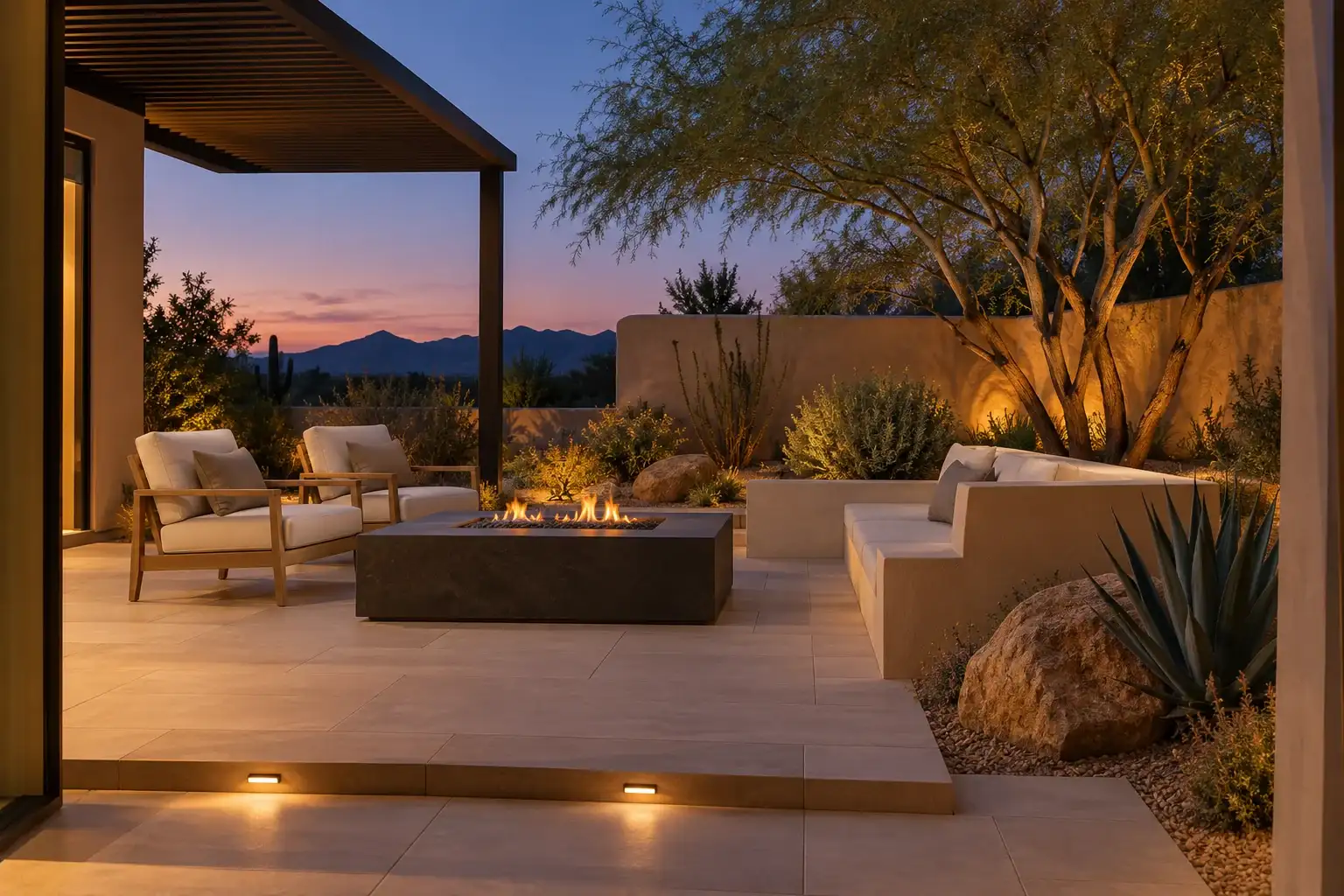
Less than most people expect, because the city's policy lists recommended footcandle levels by ambient zone. It gives an average and a maximum at grade: 1 and 4 in an intrinsically dark area, 1.5 and 6 in estate or rural land, 2 and 8 in suburban areas, and 2.5 and 10 in urban or pedestrian areas (City of Scottsdale, exterior and site lighting policy (opens in a new tab)). The suburban band lists an average of 2 footcandles across the ground, and the city calls the zone locations a guide. Light trespass has its own recommended limits, measured vertically 6 feet above grade at the property line with the reader aimed perpendicular into the site: 0.1 footcandle in the darkest zone, 0.3 in estate, 0.8 suburban, 1.5 urban. A fixture aimed sideways can fail that test while leaving the walk below it dark. Aim down, and both numbers are easier to meet.
Rules
What counts as a dark sky area in Scottsdale?
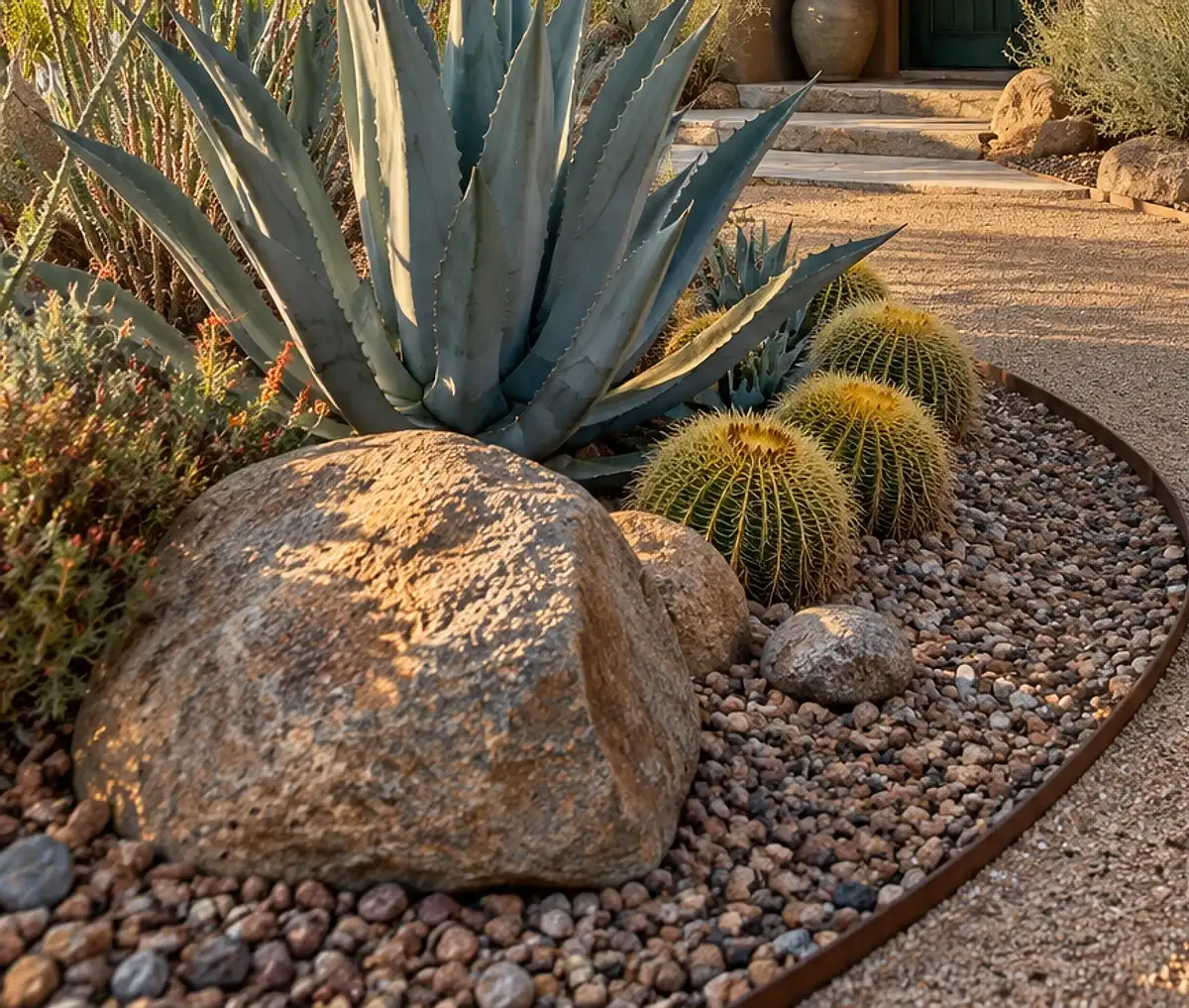
The Environmentally Sensitive Lands overlay and the areas the city's policy calls intrinsically dark. The city's lighting policy is written to hold dark skies, and its lowest ambient zone, E-1, is for intrinsically dark areas, with zone locations taken from the city's Design Standards and Policies Manual as a guide (City of Scottsdale, exterior and site lighting policy (opens in a new tab)). Inside the Environmentally Sensitive Lands overlay, a fixture has to be shielded and aimed down, which rules out a bare uplight at the lot line. On a lot that backs to desert, the plan lights the path and the patio and leaves the open ground alone.
Good to know
What size transformer does my system need?
Size it above the connected load, with headroom, because a transformer run at its limit drops voltage and runs hot. Add the wattage of every lamp on the circuit, then add 25 percent, and buy the next size up. A 12 fixture system at 7 watts each is 84 watts, so the load figure is 105 and a 150 watt transformer fits. Low voltage systems step 120 volts down to 12 at the transformer, and the cable can then sit 6 inches deep with a lower shock risk, according to This Old House. Mount the transformer within reach of a GFCI protected outdoor outlet, and keep it off the ground where irrigation spray reaches it. Then leave room on the terminals, because a system that grows by 4 fixtures should not need a new box.
Good to know
Why does the last fixture on a run look dim?
Because cable resistance eats voltage, and the loss grows with distance and with load. On a 12 volt system the drop is the current times the resistance of the run out and back. A 56 watt load at the end of 100 feet of 12 gauge copper loses about 1.5 volts, which is 12 percent, so the last lamp sees roughly 10.5 volts instead of 12. The same run in 10 gauge loses about 0.9 volts. This is why a plan uses a heavier main cable to a junction point and equal length branches from there, and why branches are kept short, per This Old House. Dim, warm, flickering lamps at the end of a run are the usual symptom. A hub layout fixes it. A bigger transformer does not, because the loss happens in the cable.
Good to know
How far apart should the fixtures go?
Far enough to make pools of light instead of a continuous strip, which is a design decision rather than a rule. One installer quoted by This Old House puts fixtures no closer than 20 feet apart so the eye moves from one pool of light to the next, and the same guide spaces path lights about 6 to 8 feet apart. Beam spread sets the diameter of each pool: a 12 degree bullet makes a tight circle for a trunk or a wall detail, a wide wash covers a broader surface at lower intensity. Aim a narrow beam at a distance and the circle grows, so a fixture 3 feet from a wall throws a small spot while the same fixture 10 feet away throws a wide one. On a step, spacing is set by the tread, not by the path. The plan should give a spacing figure for each fixture type rather than 1 number for the yard.
How it works
How do I light a path and steps without glare?
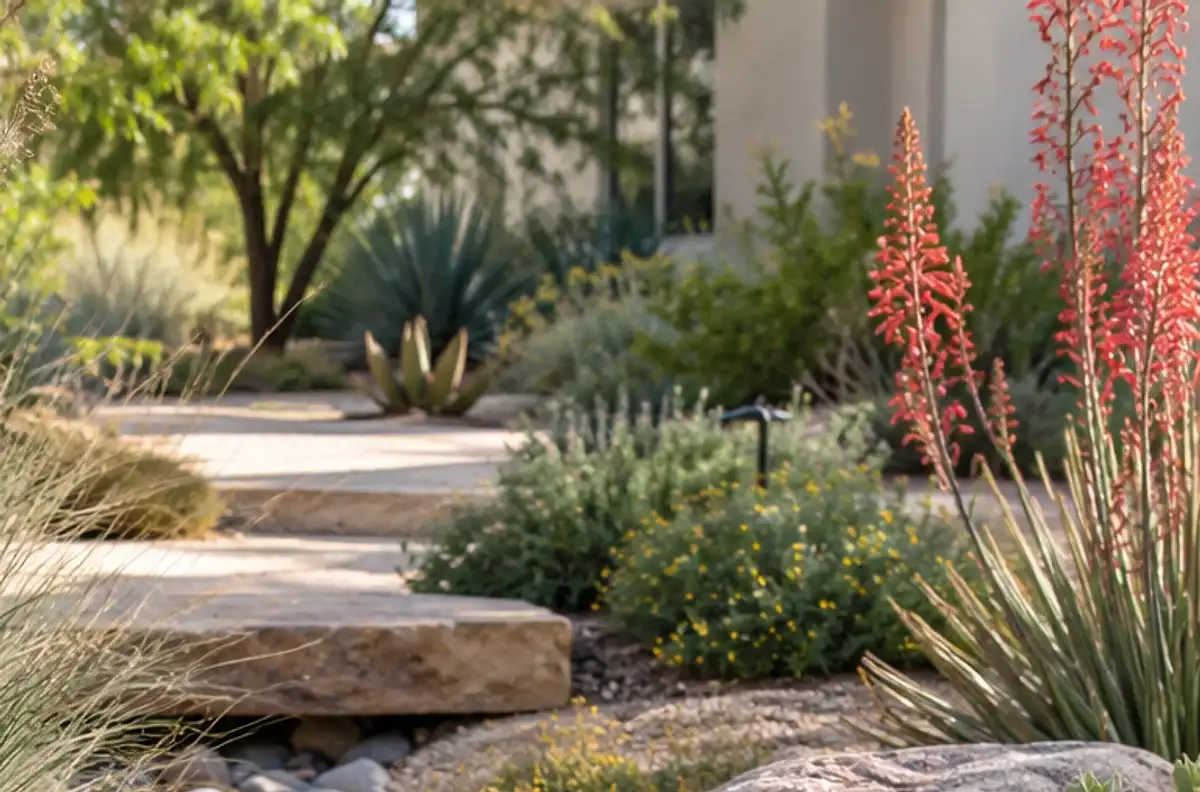
Mount low, shield the lamp and put the light on the walking surface. A path light at 18 to 24 inches throws a pool that the eye reads as ground, while a fixture at chest height puts the source in the viewer's line and washes out everything behind it. Steps need the most care, because a missed tread is a fall. Light each riser or each tread edge from the side, keep the fixture out of the walking line, and check the result at night from the direction a guest arrives. A national cost guide prices step lights at $85 to $100 installed and path lights at $50 to $150 each.
Ground
How should a wall wash differ from a tree uplight?
By distance and by beam. A wash fixture sits close to the surface with a wide, soft pattern, so the wall reads as texture without hot spots, and the policy specifically warns against lighting large wall planes into bright patches (City of Scottsdale, exterior and site lighting policy (opens in a new tab)). A tree uplight sits at the trunk with a narrow beam and lights both the trunk and the canopy, because lighting only one of them makes the tree look like it floats. A tree under 20 feet usually takes 2 uplights at about 20 watts, and a larger tree may take 3 to 5 at 35 to 50 watts each, according to This Old House. Aim the beam up the trunk and into the canopy, and check from the street. The failure mode is a bright trunk and a black canopy.
Water
What changes for a pool or water feature?
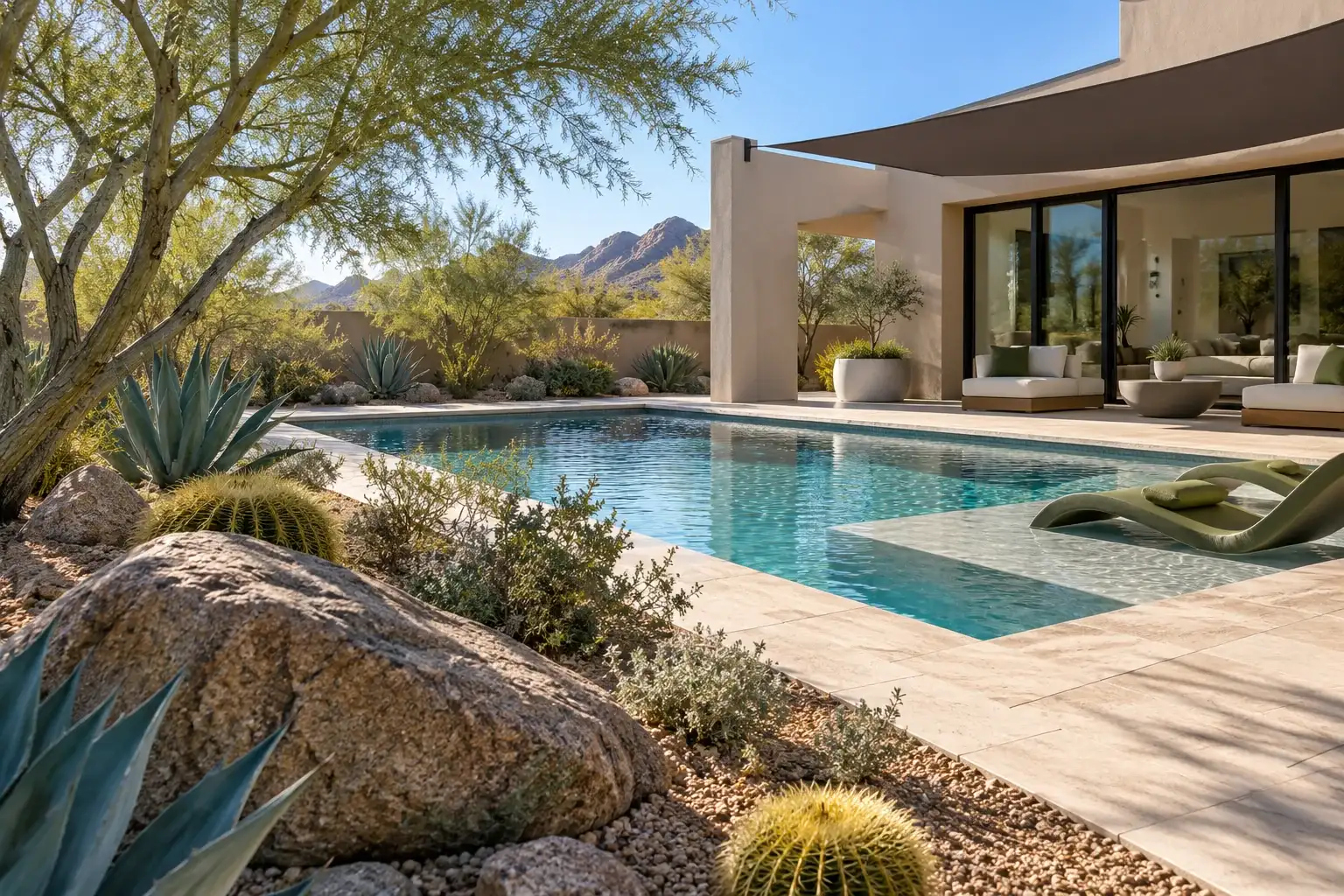
The fixture has to be rated for submersion, and the circuit has to be protected. Pool and water feature lights have a sealed lens and a cable that runs to a junction box. The outdoor outlet feeding a landscape transformer should be GFCI protected, according to This Old House. A national cost guide prices pool lighting at $300 to $500 per light installed. 2 details decide whether it looks right: the beam should graze the water surface rather than point at the house, and the color temperature should match the path and patio fixtures. A warm pool and a cool path read as 2 different houses.
Rules
Does an HOA have to approve landscape lighting?
Often yes, and the approval runs alongside the city review rather than instead of it. Private covenants can add their own standards on top of what the city requires, and the city's community association resource notes that associations can enact and enforce design standards in addition to city ordinances (City of Scottsdale, community association resource (opens in a new tab)). The committee has a statutory shape too: under A.R.S. 33-1817 a board member must sit as its chair, which matters when a decision stalls (Arizona Legislature, A.R.S. 33-1817 (opens in a new tab)). What a committee asks for is often similar: fixture locations on a site plan, the fixture model and finish, the color temperature, the wattage and whether the light is visible from the street or a neighbor's window. Submit 1 drawing to both counters. If the CC&Rs name a dark sky standard, quote it in the submittal so the plan answers the rule directly.
Water
Should the lights run on a timer, a photocell or an astronomic clock?
An astronomic clock with a curfew setting, because it tracks sunset through the year without being reset. A plain timer drifts as the days shorten, so a 7 pm on time lights the yard in daylight in June and leaves it dark in December. A photocell reacts to actual light and handles a storm, but it can switch on for a passing cloud and has no curfew setting. The city's policy asks designers to consider pre curfew and post curfew settings with automatic control, so the yard dims after the hour when nobody is walking it (City of Scottsdale, exterior and site lighting policy (opens in a new tab)). A smart controller adds a schedule per zone and a scene for a party. Whatever the control, put it where it can be reached without moving furniture.
3 questions
Questions people ask
Still have a question? Call (747) 243-2089 and describe the yard.
Can I add fixtures to an existing system?
Often, if the transformer has headroom and the branch is not already long. Add the new wattage, keep the total under about 80 percent of the transformer rating, and check the voltage at the last fixture. A system already dim at the end needs a second run or a larger transformer.
Why do my fixtures haze over?
Sun and irrigation spray. The lens etches, calcium in the water leaves a film, and a powder coated body chalks. Brass and copper can age into a finish that hides it. A wipe with a soft cloth and a mild cleaner helps, and a shield that keeps spray off the lens helps more.
Do LED fixtures last as long as the box claims?
Not always in this heat. ENERGY STAR notes that the hotter an LED runs, the faster its light output degrades, so a rating measured at a moderate temperature may not hold at 110 F in direct sun (ENERGY STAR, LED lighting (opens in a new tab)). Buy a fixture with a serviceable lamp or driver, so a failure is a part and not the whole fitting.
Keep reading
- Outdoor living spaces: for the kitchen, fire feature and structure the light serves.
- Landscape lighting in Phoenix: for the neighboring market.
- Landscaping cost: for the published price index.
- Landscape installation: for planting and grading before the trench.
- Pavers vs Stamped Concrete in Scottsdale:
- Sod vs Seed in Scottsdale:
By city