Service area · Chandler, AZ
Landscaping in Chandler, AZ
Chandler went from 3,800 residents in 1950 to 278,748 in 2025, and it has added about 1 percent since the 2020 census, so most landscaping work here is a retrofit rather than a new build (Census QuickFacts, Chandler (opens in a new tab)). Call (747) 243-2089 and describe the yard.
Good to know
What kind of yard comes with a Chandler house?
Start with the year the block was built, because Chandler has 3 distinct yard types and they do not price the same. Dr. A.J. Chandler opened the townsite office in May 1912, and the blocks near the park are the oldest in the city, with prewar houses, narrow driveways and mature shade trees in places (City of Chandler, history (opens in a new tab)). The city doubled in population during the Second World War and reached 3,800 by 1950, and the postwar ranch houses followed. South Chandler was mostly farmland in the 1970s, then Intel and its suppliers arrived and the subdivisions followed through the 1980s (City of Chandler, reclaimed water (opens in a new tab)). A 1950s lot and a 1990s lot want different equipment, different access and a different plant list, and the address tells you which one you have.
Water
Where does Chandler water come from?
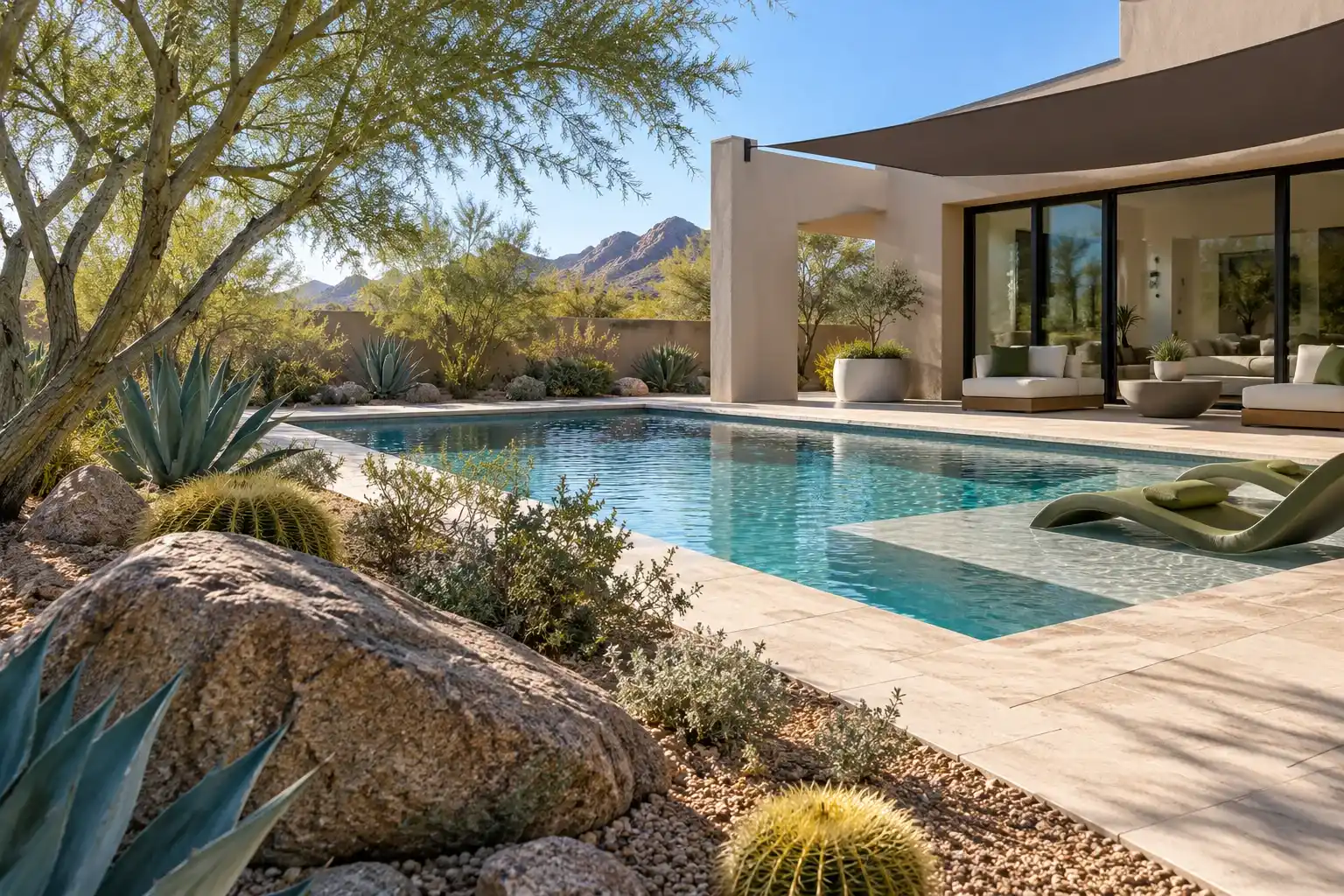
4 sources, and the city draws them in a deliberate order. Salt and Verde river water arrives through the Salt River Project canal system at the Pecos treatment plant, while Colorado River water comes down the Central Arizona Project canal to the Santan Vista plant. Wells and reclaimed water fill in the rest, and groundwater is used last (City of Chandler, drought preparedness (opens in a new tab)). That ordering is why the city's drought FAQ says it can weather a dry spell without mandatory water use restrictions. The yard still leaks money. A controller set for July in January wastes both water and the bill, and a head broken behind a wall can run for weeks without showing at the surface. Take a reading at the start and the end of a single cycle and the guilty zone shows itself.
Good to know
How do the man made lakes get filled?
With treated wastewater, and that system is one of the larger pieces of infrastructure in the city. Chandler reuses 100 percent of its wastewater, treats roughly 11 billion gallons a year at 3 reclamation plants, and moves it through 93 miles of purple pipe (City of Chandler, reclaimed water (opens in a new tab)). The lakes in Ocotillo and the water that edges the golf courses are kept up with that supply, which keeps that demand off the drinking water supply. Veterans Oasis Park adds 32 acres divided into 5 basins for aquifer recharge. On a lake lot the grading is the part that matters: a rebuild that raises soil or sends runoff toward the water is the change a neighbor notices first.
Costs
What does Chandler pay to take grass out?
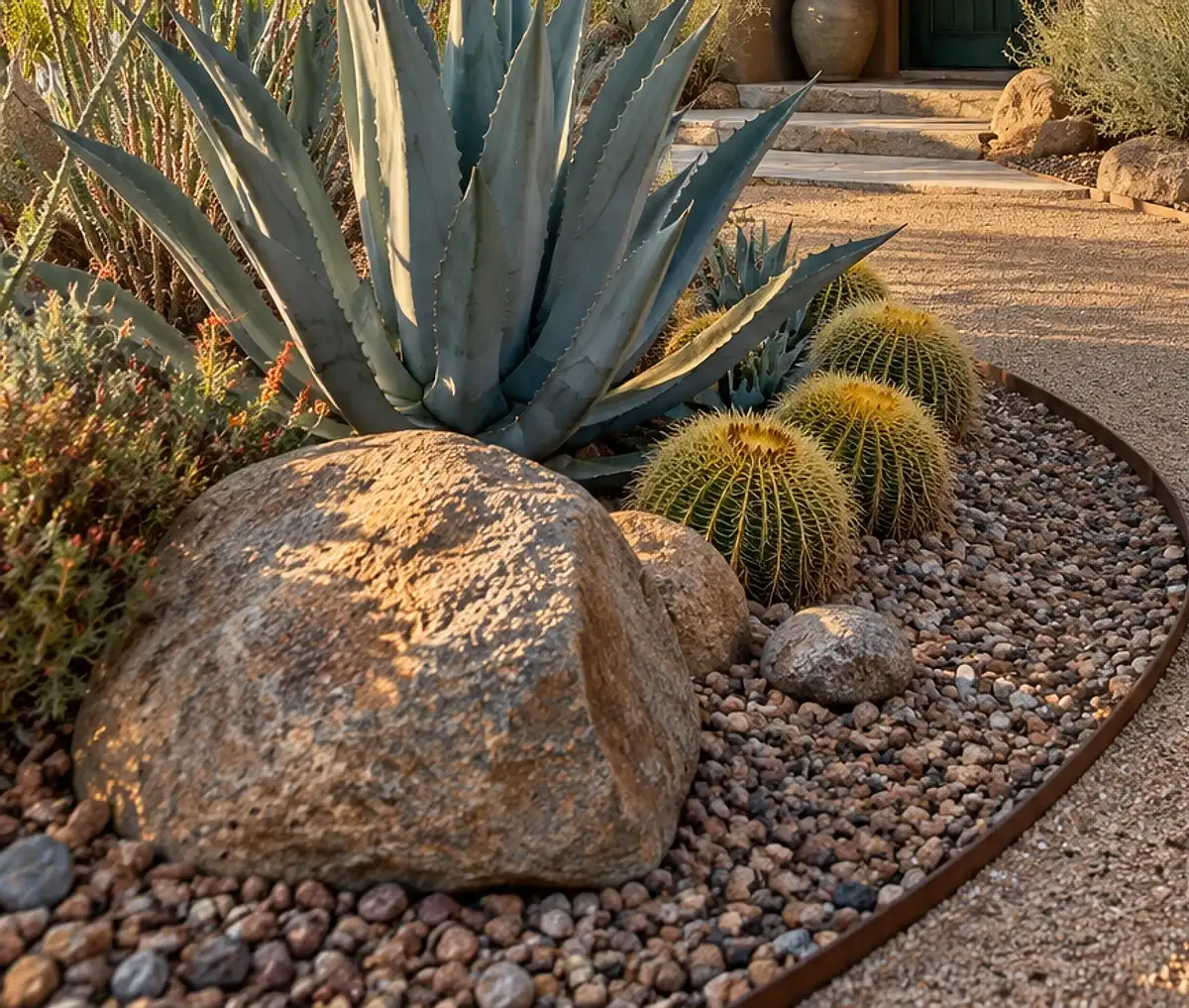
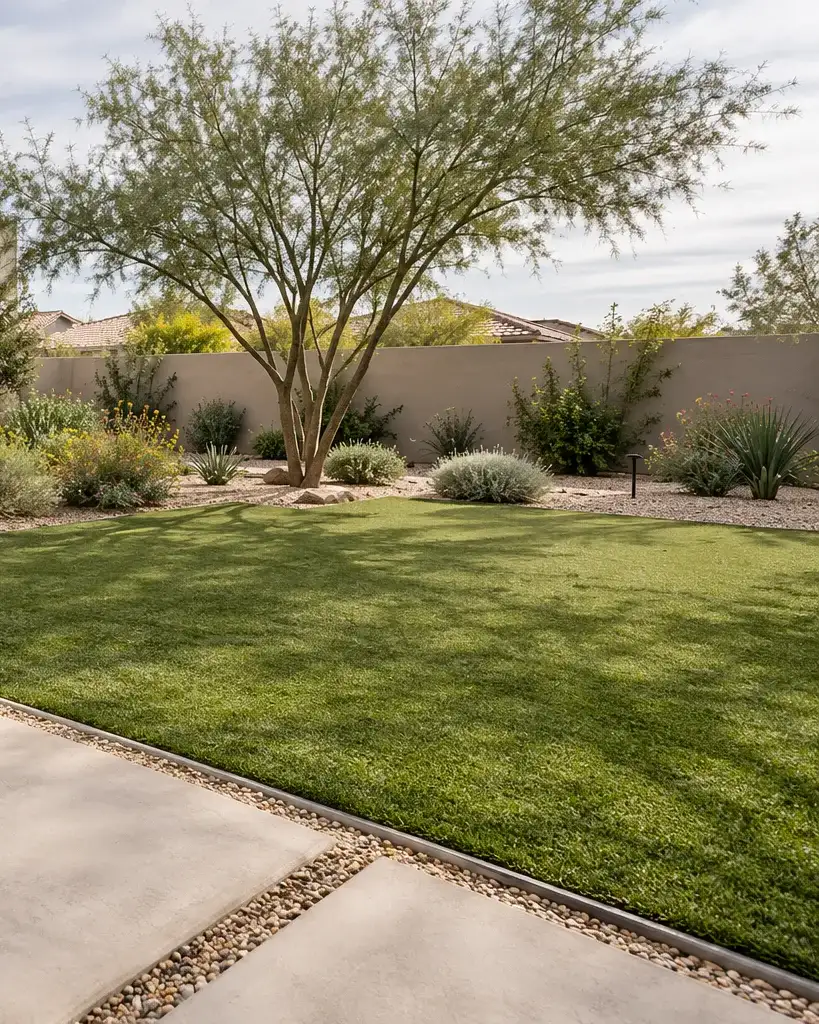
The city pays, and the terms are specific enough to plan around. Chandler's single family rebate caps at $2,000 per property, requires at least 500 square feet of living grass to come out, and allows 90 days from the Notice to Proceed to finish the work (City of Chandler, single family rebate policy (opens in a new tab)). Details decide whether a project passes: no artificial turf in the converted area, at least 50 percent plant canopy at maturity from the Phoenix AMA low water list, plants bought from a nursery, and a 2 inch minimum layer where granite is the top dressing. Flood irrigated properties are not eligible. HOAs have a separate route, with a large landscape rebate that reimburses 25 percent of the project cost up to $20,000 per property, with a 5,000 square foot minimum (City of Chandler, large user rebates (opens in a new tab)).
Hardscape
What is under the surface in south Chandler?
Caliche, and it behaves like a lid on the lot. The local version is a crust of calcium carbonate that has bound the sand and gravel beneath the topsoil into something nearer rock than soil, and it sheds water instead of taking it, so roots stop at the top of it (University of Arizona, managing caliche (opens in a new tab)). South Chandler was farmed before it was subdivided, so a parcel can carry a thin skin of improved topsoil over ground that was graded and compacted by equipment. The test costs a bucket and a tape measure: fill a hole, wait 4 hours, read the drop. Under 4 inches and the bed goes up rather than down. A trencher finds the same layer within a few feet, and a drainage line with nowhere to discharge finds it first.
Costs
What does a Chandler patio or wall cost?
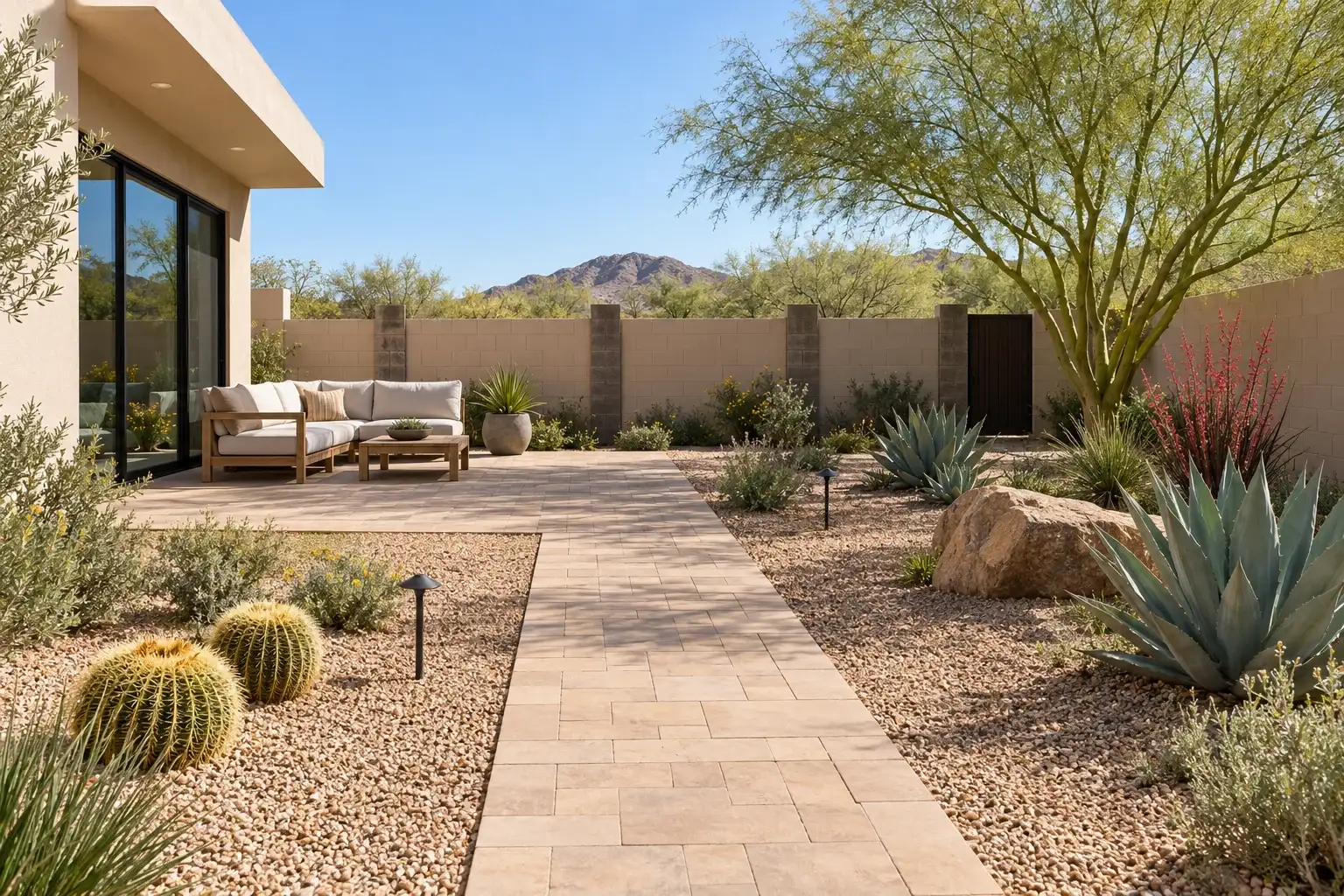
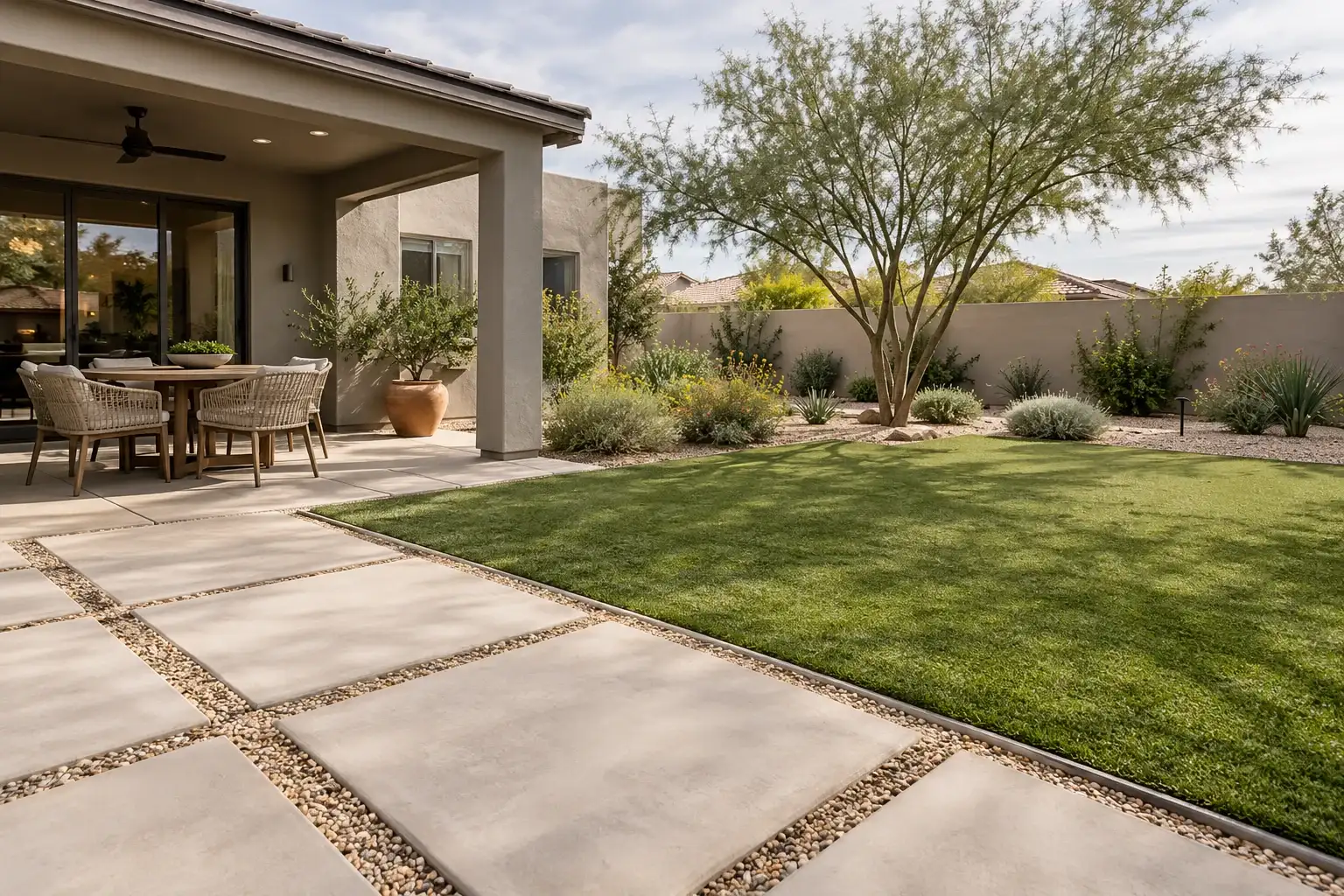
3 published ranges carry most of a Chandler budget. A national cost guide lists $8 to $25 per square foot for pavers, with the typical patio landing at $2,400 to $7,000 and a 280 square foot job averaging about $3,800. This Old House puts installed turf at $15 to $19 per square foot, with materials listed at $2 to $8 and labor at $4 to $12. Where the grass comes out entirely, another national guide puts a 1,200 square foot xeriscape near $17,000, with a 500 square foot lawn at the low end near $6,000. Published market ranges, not a quote: the final price is set after an on-site assessment. Gate width and the carry from the alley move a bid on a built out lot more than the finish does.
Rules
What do the city and the HOA each review?
2 reviews, and they run in a fixed order. Chandler's homeowner permit manual treats fences and walls, landscaping, patio covers and detached structures as separate scopes, and it asks for a plot plan that shows the property lines and the proposed work (City of Chandler, homeowner permit manual (opens in a new tab)). The same manual is blunt that plans in an association subdivision should be approved by the board before the city application goes in, and that the city does not enforce those private rules. Blue Stake is a third call, at least 2 days before a shovel goes in the ground. Read the section that matches the scope, because a patio cover and a shade ramada can share a footprint and carry different paperwork.
Planning
What should be measured before a Chandler crew starts?
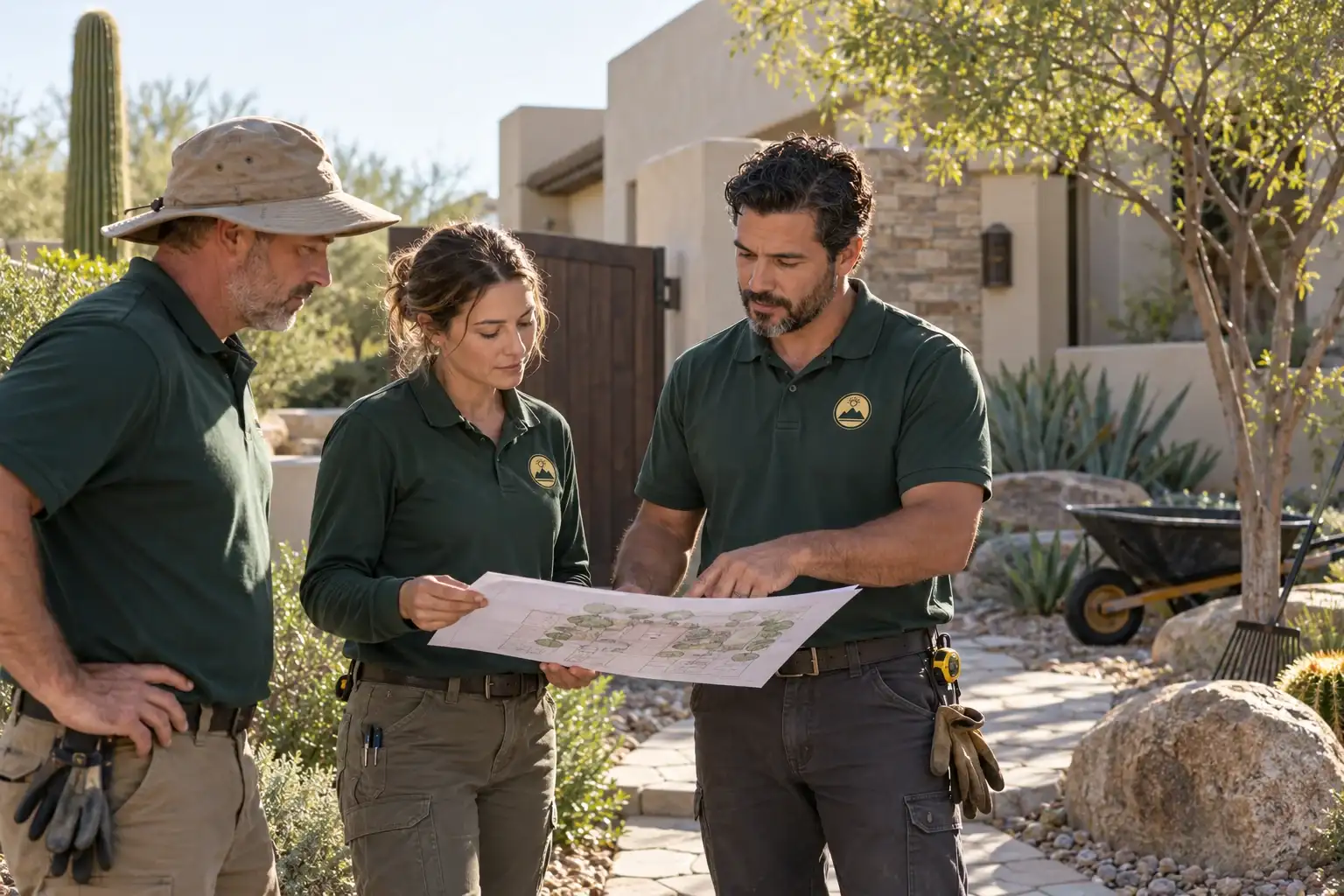
Measure, then order. The list is short: the gate opening, the turn out of the alley, the height of any overhead line, and the distance from the street to the work area. A side yard 3 feet wide is a tight route for a loaded wheelbarrow, and labor on every load changes when material has to be carried by hand. Second, pick the dumpster spot and check whether it sits in a lane or in a neighbor's view. Third, protect the trees. A mature shade tree over a 1950s block is the reason that yard works in June, and raising grade inside its drip line can kill it slowly.
3 questions
Questions people ask
Still have a question? Call (747) 243-2089 and describe the yard.
Do the lakes make a Chandler lot harder to build on?
They can change the grading. A lake lot drains somewhere, and the rebuilt surface has to keep storm runoff from running into a lake that stores reclaimed water. Keep the finished grade at or below the old level and keep the drain path clear.
Can a Chandler HOA get money for common area grass?
Yes, through the large landscape program rather than the single family one. It reimburses 25 percent of the project cost up to $20,000 per property and needs at least 5,000 square feet of grass removed, and the application comes from the HOA, not an individual owner.
Why does a south Chandler yard cost more to dig?
Caliche, mostly. Cemented layers blunt a trencher and slow a planting hole, and the deeper the layer sits the more machine time it takes. A yard on the south side can carry an excavation line that a lot closer to downtown does not.
Keep reading
- Artificial Turf: for play areas that stay green without a mower.
- Patios and Pavers: for a slab, a walkway or a seat wall.
- Irrigation and Sprinkler Repair: for zones that stopped matching the season.
- Landscaping Cost: for the full published price index.
- Gilbert: for the next town over and its water split.
- Artificial Turf vs Sod in Scottsdale:
- Artificial Turf vs Real Grass in Scottsdale:
More for Chandler