Service area · Phoenix, AZ
Landscaping in Phoenix, AZ
Phoenix stretches across 518 square miles, and the yard rules change with the zoning district you live in.
Service area
What do Phoenix lots look like?
It depends on the ZIP code. The city runs R1-6 at 5 to 5.5 homes per acre, R1-10 at 3 to 3.5, and RE-43 on lots of 43,560 square feet (City of Phoenix, residential zoning (opens in a new tab)).
Those are different products, and they price differently: a 1950s ranch house with a carport and an alley, a midcentury block with a ditch along the street, a single house on an acre of ground. Dozens of ZIP codes sit inside the boundary, so the yard you get is the zoning you bought. Pull the zoning case and the plat for the parcel before you sketch anything, because a setback that fits one district fails in the next.
Water
Who supplies Phoenix water, and where does it go?
Phoenix Water serves 1.7 million people across a 540 square mile service area, and about 97 percent of the supply is surface water from the Salt, Verde and Colorado rivers, with roughly 3 percent from groundwater (City of Phoenix, water services (opens in a new tab)).
Up to 70 percent of household water goes outdoors (City of Phoenix, landscape watering (opens in a new tab)). That ratio makes a landscape decision a water decision. A lawn is where much of the outdoor share goes, and a drip system on the same square footage can use a fraction of it.
Compare the meter reading across a cycle. It is the cheapest audit available and it tells you which zone is lying to you about its run time.
Planting
What does desert landscaping look like in Phoenix?
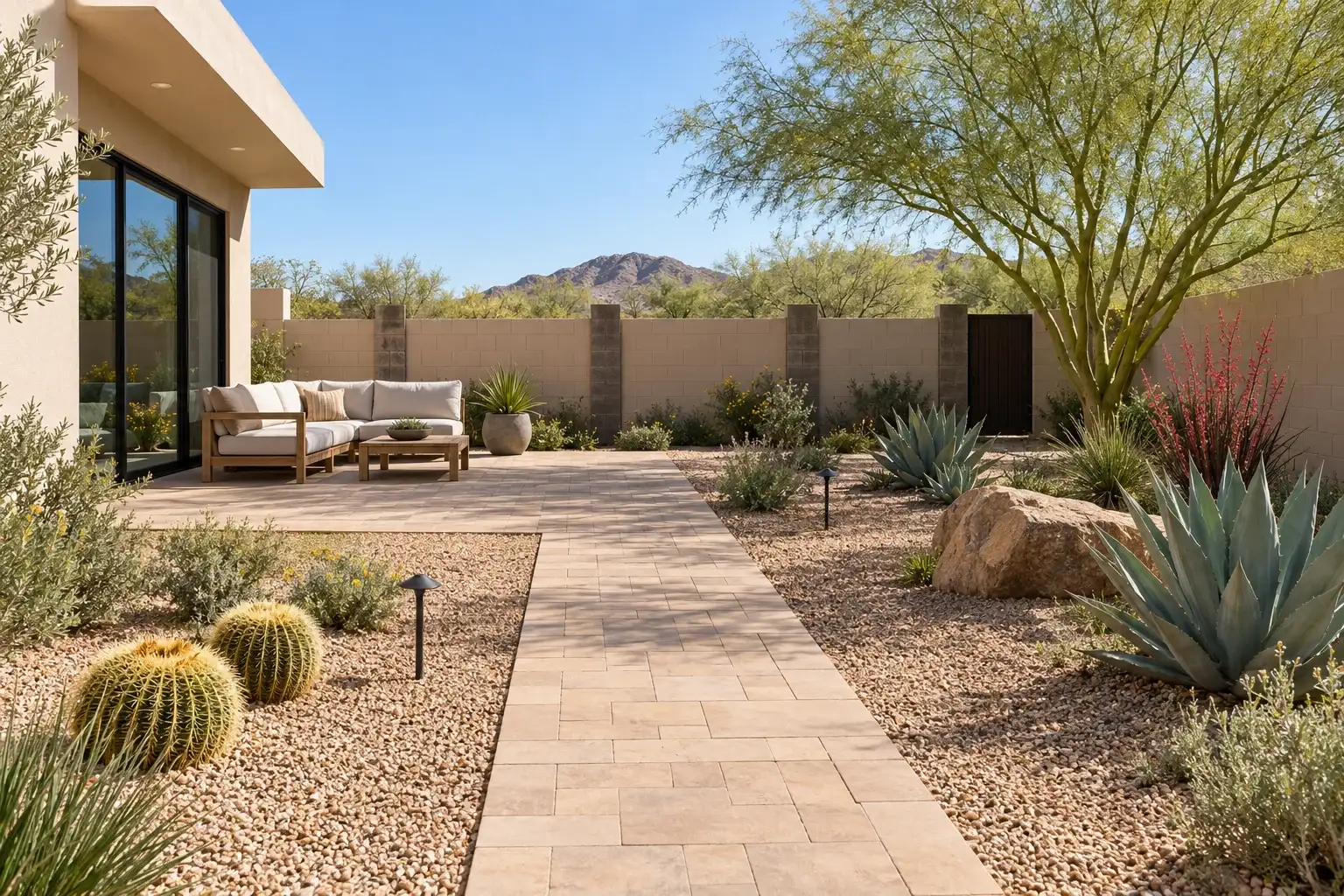
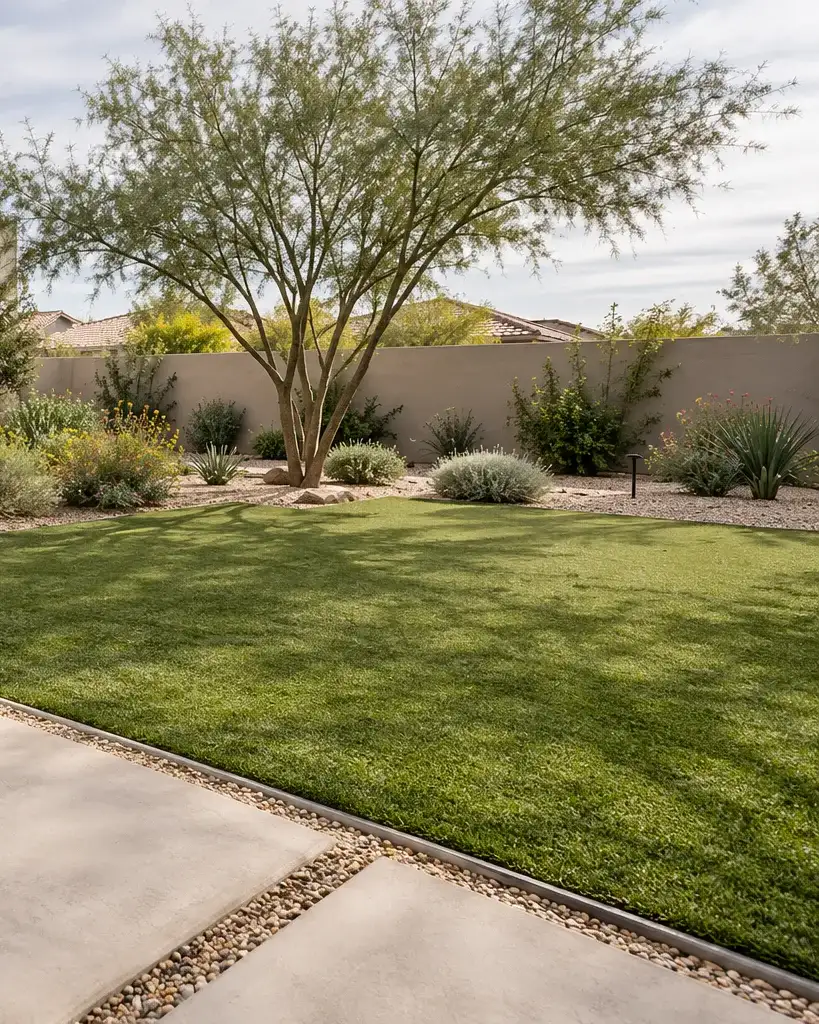
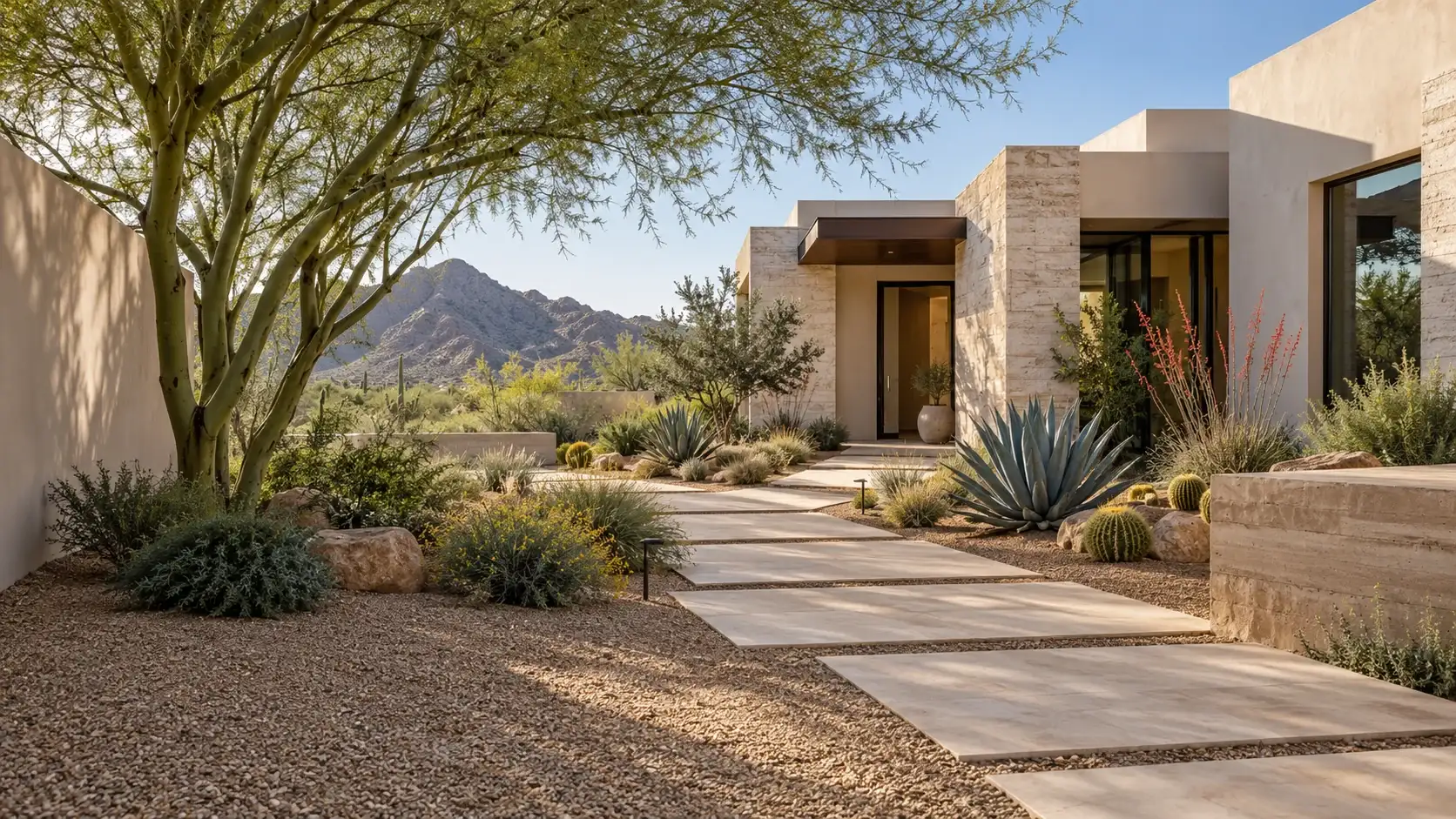
Desert landscaping in Phoenix means desert plants, gravel and drip in place of a lawn.
It saves the most water when it also follows the 7 xeriscape principles AMWUA lists: good planning and design, low water use plants, appropriate grass areas, efficient irrigation, soil improvements, mulches and appropriate maintenance (AMWUA, landscaping with style (opens in a new tab)).
The water case is large. A Bermuda lawn with a winter overseed needs more than 55 inches of irrigation a year, the average xeriscape needs less than 18, and converting turf to xeriscape can reduce outdoor water use by 50 percent (University of Arizona Cooperative Extension, turf versus xeriscape (opens in a new tab)).
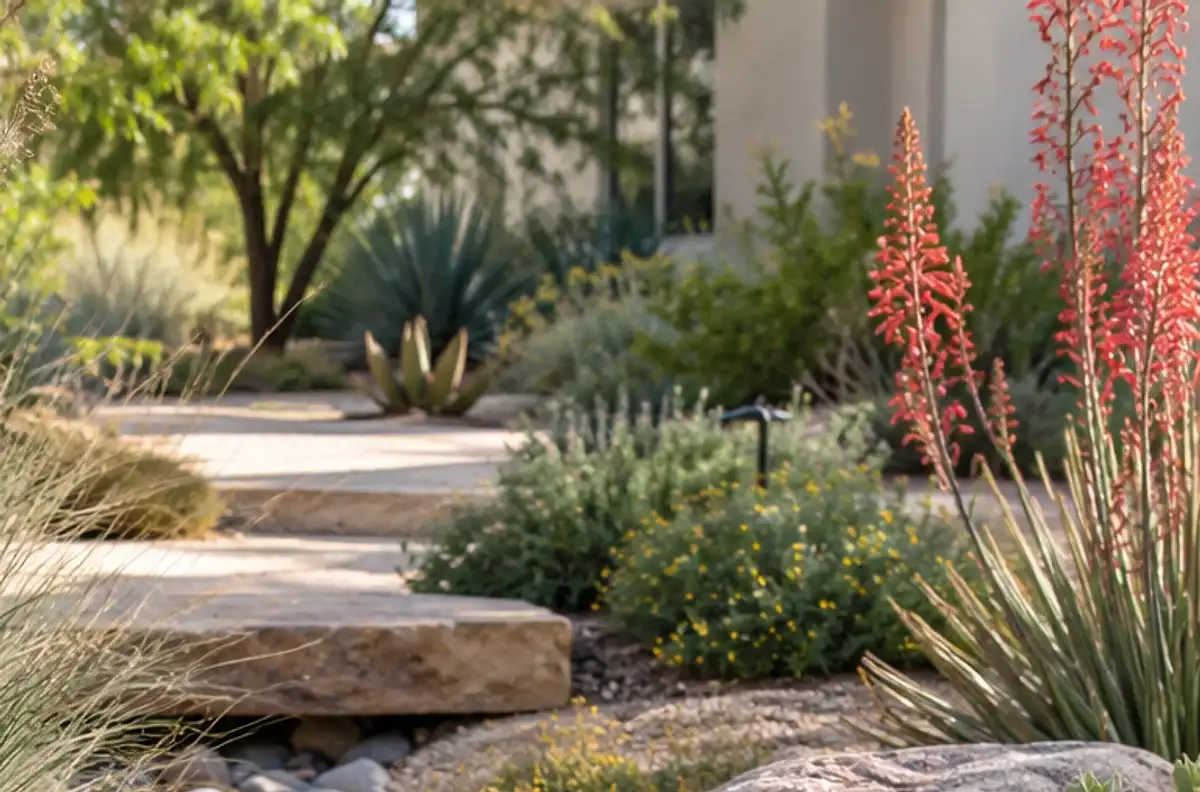
For the plant list, AMWUA publishes Landscape Plants for the Arizona Desert, with over 200 low water use plants for central Arizona (Water Use It Wisely, low water use plants (opens in a new tab)).
Group plants with similar water needs on the same valve, and cover the soil with mulch to cut evaporation.
Costs
Does Phoenix pay to remove grass?
Phoenix Water pays $2 per square foot to residential customers who remove at least 250 square feet of grass (City of Phoenix, residential grass incentives (opens in a new tab)).
The applicant has to be the property owner and a Phoenix Water Services customer, and no grass comes out until the city issues a Notice to Proceed. Pools and water features cannot go in the converted area, and bare soil is not allowed there.
Applications go through myPHX311 (City of Phoenix, residential grass incentives (opens in a new tab)), and the city's October 2024 announcement says they are accepted first come, first served (City of Phoenix, grass removal news release (opens in a new tab)).
Phoenix has a Stage 1 Water Alert in effect under its Drought Management Plan (City of Phoenix, drought (opens in a new tab)).
In July 2026 the city said it could move to a Stage 2 Water Warning by the end of 2026 (City of Phoenix, water supply update (opens in a new tab)).
Rules
What changes in a historic district?
Exterior work that needs a building permit goes through a preservation review first. Phoenix has 36 residential historic districts (City of Phoenix, historic districts (opens in a new tab)).
The Historic Preservation Office requires a Certificate of No Effect or a Certificate of Appropriateness for building permit applications that affect a property's exterior (City of Phoenix, approvals and guidelines (opens in a new tab)). Fences are on its list of minor work, and the office says it does not regulate paint colors (City of Phoenix, historic preservation FAQ (opens in a new tab)). Read the district guidelines before choosing a wall finish, because a material that suits a 1950s ranch can be refused on a 1920s bungalow block.
Even a fence that matches the house can fail the review. Ask the Historic Preservation Office how long the review takes before a start date is set.
Ground
What is the soil and grade like?
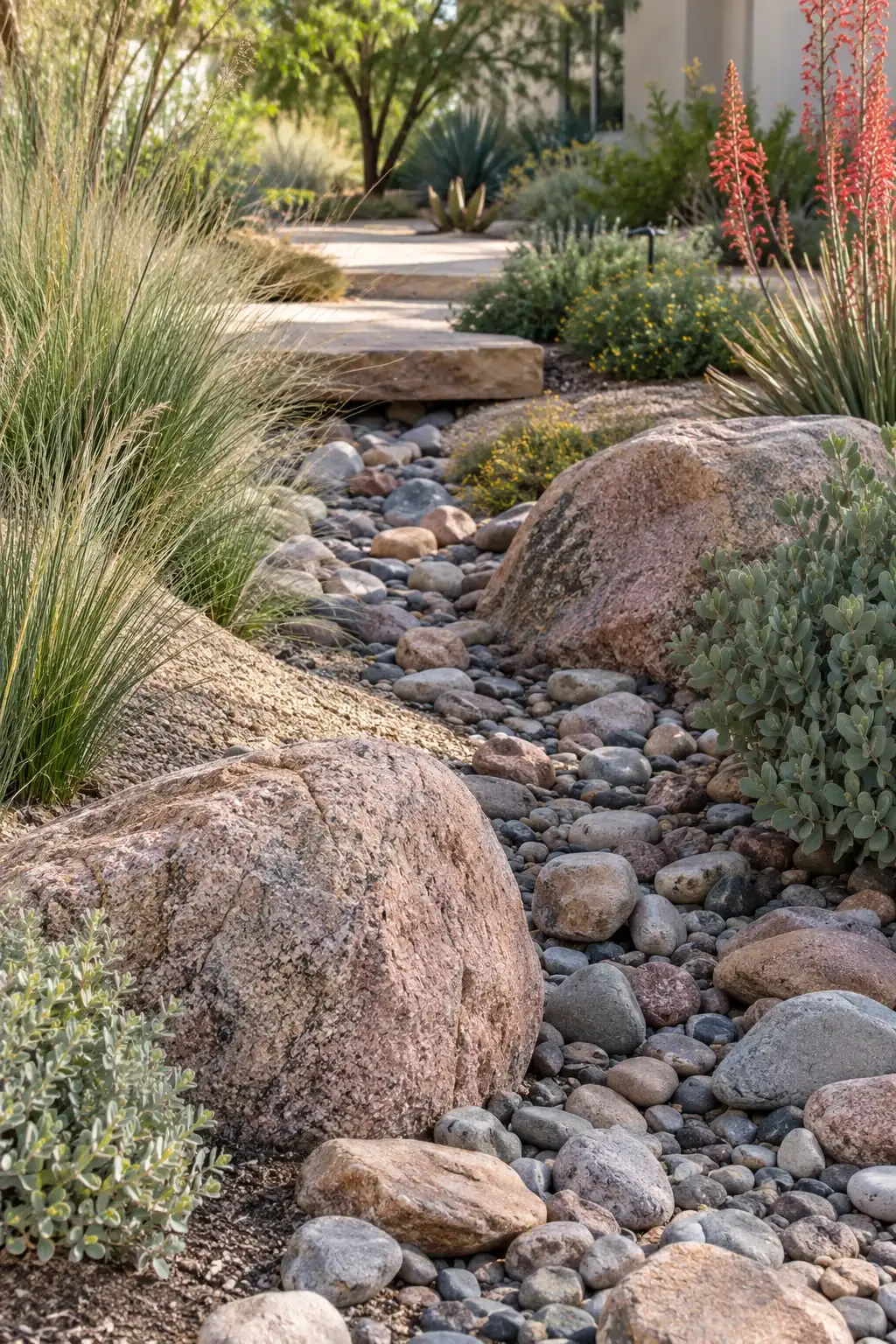
Caliche, in parts of the city, and it can decide what a shovel can do. The layer is calcium carbonate cemented into a layer that can restrict roots and drainage (University of Arizona, managing caliche (opens in a new tab)).
Fill a hole with water and time the drop. A drop of 4 inches inside 4 hours means the ground takes water; slower than that means the design raises the soil or picks different plants. Lawn over caliche takes 8 inches of topsoil.
On a new build the ground can be worse than the native soil next door, because the top layer was scraped and equipment ran over what was left. Keep the drainage test result with the scope.
Climate
How hot does Phoenix get?
Hot for a long stretch, and the calendar is not subtle. Phoenix averages 111 days at or above 100 F and 21 at or above 110 F, with the first 100 F day around May 2 and the last around Oct 5 (NWS, extreme temperatures (opens in a new tab)).
Planting in June tests the plant, not the design. The monsoon runs June 15 to Sept 30 and delivers a large share of the annual rain, fast enough to run off a hard surface and take the mulch with it. Set plants in October, while the soil is still warm and the air is not, and let them root before the first cold night.
A schedule written in April is wrong by July, so check it monthly.
Bids and scope
What does landscape design involve for a Phoenix yard?
Landscape design for a Phoenix yard sets the grade, the irrigation zones and the plant list before anything is ordered. A national cost guide puts design at $50 to $150 an hour, or $1,934 to $7,267 for a design project.
The city's residential permit list does not mention planting. It lists fences taller than 3 feet as work that needs a permit, and replacing existing landscape irrigation as work that does not (City of Phoenix, residential plan reviews (opens in a new tab)).
At a street corner, the city allows no fence, wall or hedge higher than 3 feet in the visibility area (City of Phoenix, landscaping visibility requirements (opens in a new tab)).
The city does not allow artificial turf in the public right of way (City of Phoenix, landscape FAQ (opens in a new tab)), so check where the property line falls before turf goes in next to a sidewalk.
Services
Which landscaping services does a Phoenix yard need?
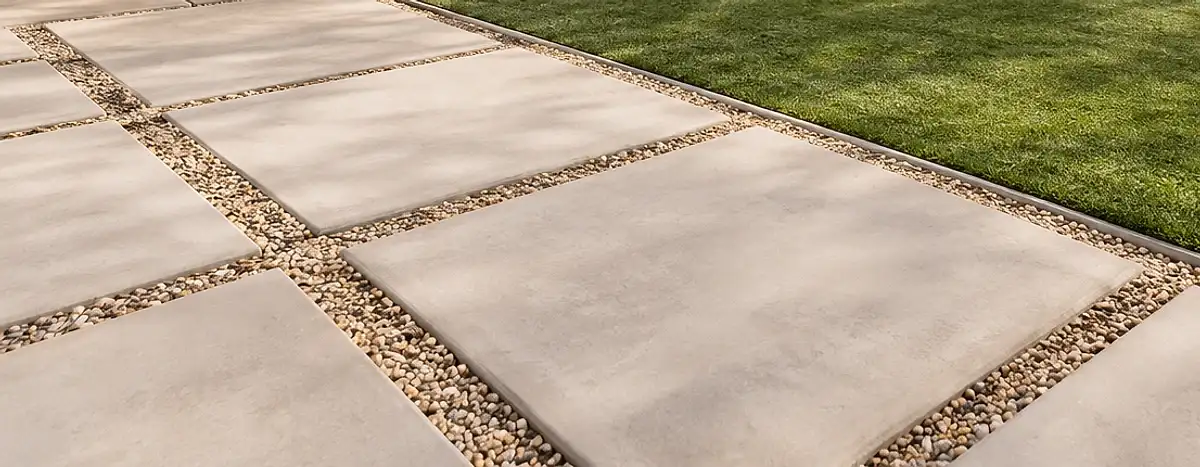
Usually one of these. Sprinkler repair when water is wasted or plants keep dying, landscape installation for a lawn to desert rebuild, and pavers for patios, walks and walls.
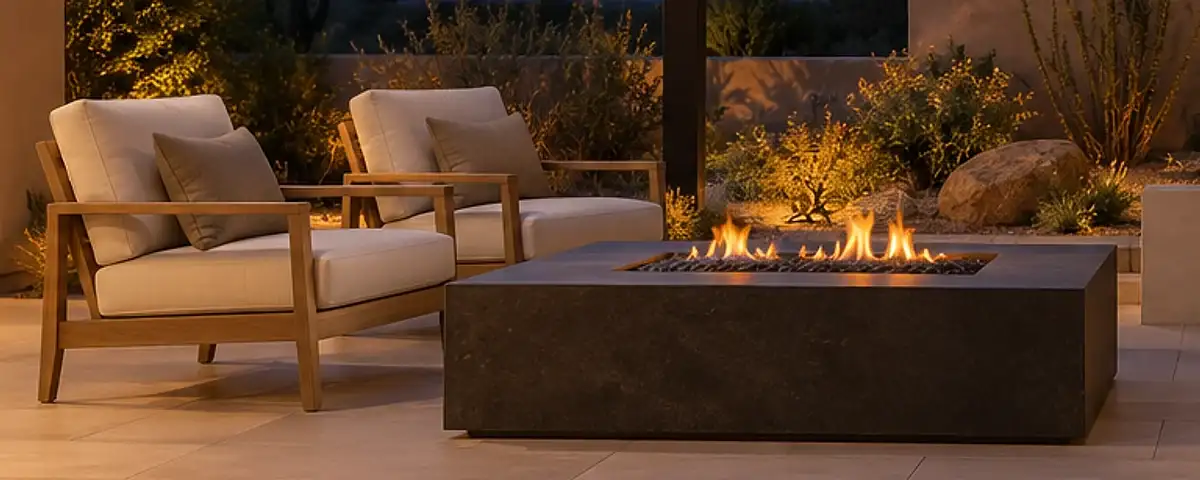
Artificial turf fits where feet go, pergolas shade a patio, and landscape lighting comes last. Outdoor living covers fire features and kitchens. The landscaping cost page puts every range in one place.
Costs
What does landscaping cost in Phoenix, AZ?
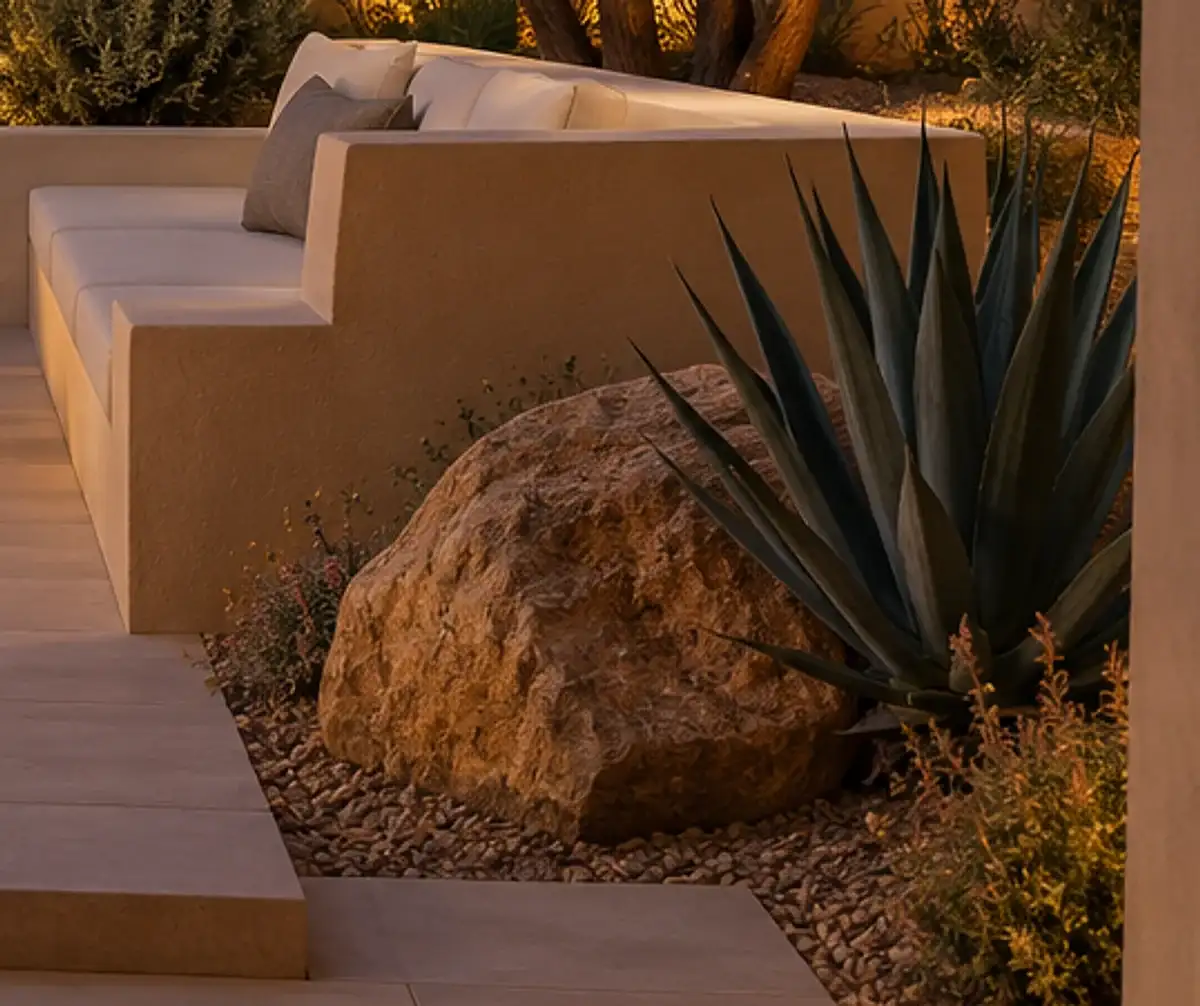
A national cost guide puts most landscaping at $4.50 to $12 per square foot, a front yard at $1,500 to $5,000 and a full back yard renovation at $15,000 to $50,000. The landscaping cost page lists each range with its source.
The same guide puts the top of the market at $40 per square foot for a full tear out or an outdoor kitchen build.
It puts a paver patio at $8 to $25 per square foot, or $2,400 to $7,000. Published market ranges, not a quote: the final price is set after an on-site assessment. On an R1-6 lot the front range is realistic; on an acre in RE-43 the back yard range can be a floor, not a ceiling.
Planning
What should I check before work starts?
4 items, in order. Zoning first: setback, lot coverage and height come from the district, and a covered patio can push a lot past its coverage limit. Historic review second, if the parcel sits in one of the 36 districts.
Third, the permit, because a wall, a ramada and a gas line each carry a review, and the counter will say which. Fourth, the HOA, which sets its own design rules. Get every answer in writing, and keep the approval with the scope so an inspector can see it.
A permit that lands late holds the whole schedule. Order nothing before the permit lands.
4 questions
Questions people ask
Still have a question? Call (747) 243-2089 and describe the yard.
Do I need design review for a front yard?
It depends on the district and the work. In one of the 36 residential historic districts, building permit work that affects the exterior needs a Certificate of No Effect or a Certificate of Appropriateness, and fences are on the list of minor work the Historic Preservation Office reviews.
The office says it does not regulate paint colors. Outside a district, the city reviews permits and zoning. Ask the Historic Preservation Office what applies to your front yard, and get the answer before ordering material.
When should I plant in Phoenix?
October. Soil is still warm from summer, air temperatures drop, and roots have months to establish before the next June. Spring planting works if the irrigation is dialed in, but a young plant in May needs water every few days.
Avoid June and July for anything except cactus and trees that are already established.
How do I apply for the Phoenix grass removal incentive?
Apply through myPHX311 as the property owner and a Phoenix Water Services customer, then wait for the city's Notice to Proceed before any grass comes out. The converted area cannot hold a pool, a water feature or bare soil.
How much of my water bill is the yard?
Up to 70 percent of household water in Phoenix goes outdoors, so the yard is often the largest single use on the bill. A valve that leaks or a schedule set for July can carry into October without anyone noticing. Read the meter on a day when nothing runs, then again after a cycle.
Keep reading