Artificial Turf Installation · Phoenix
Artificial Turf Installation in Phoenix, AZ
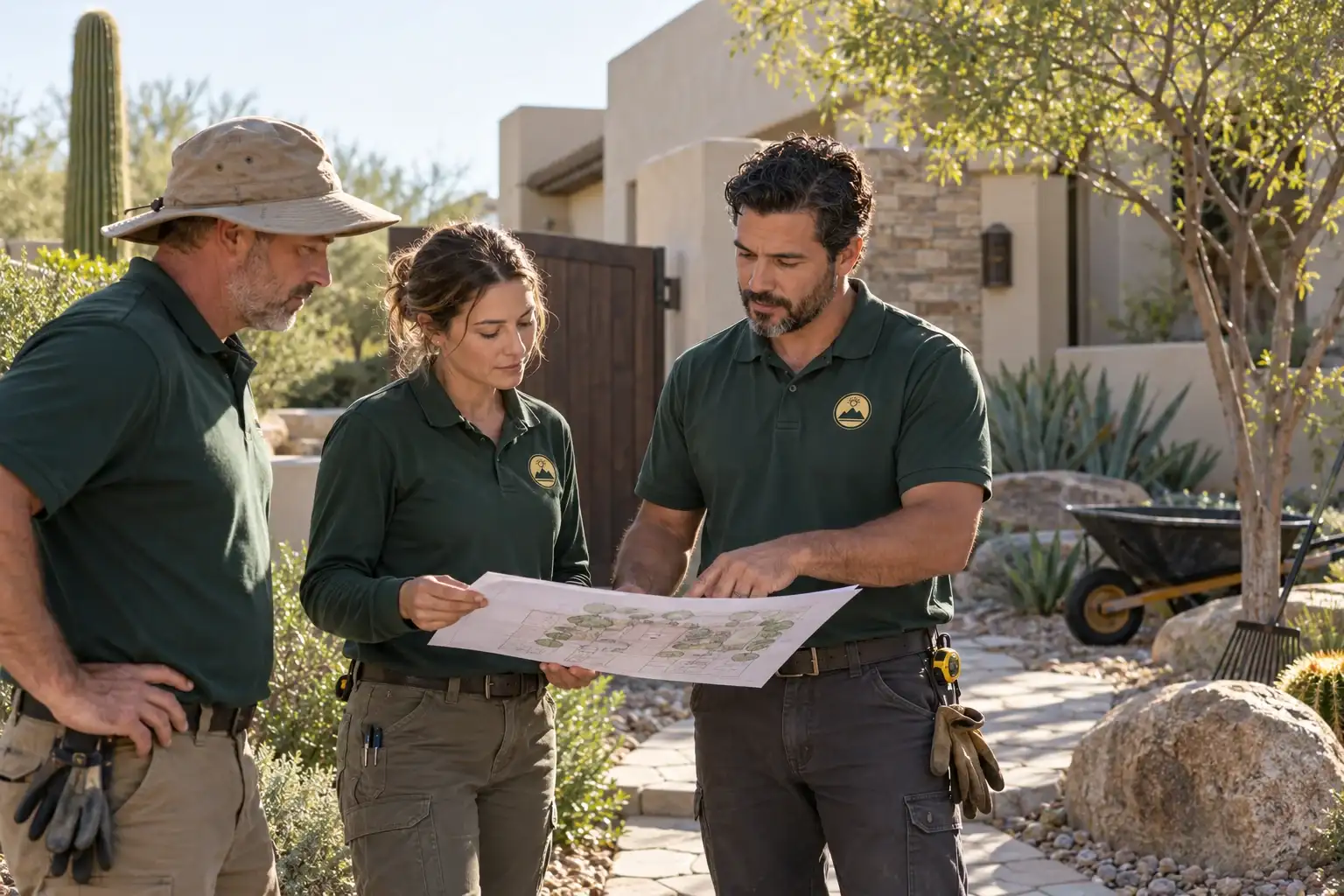
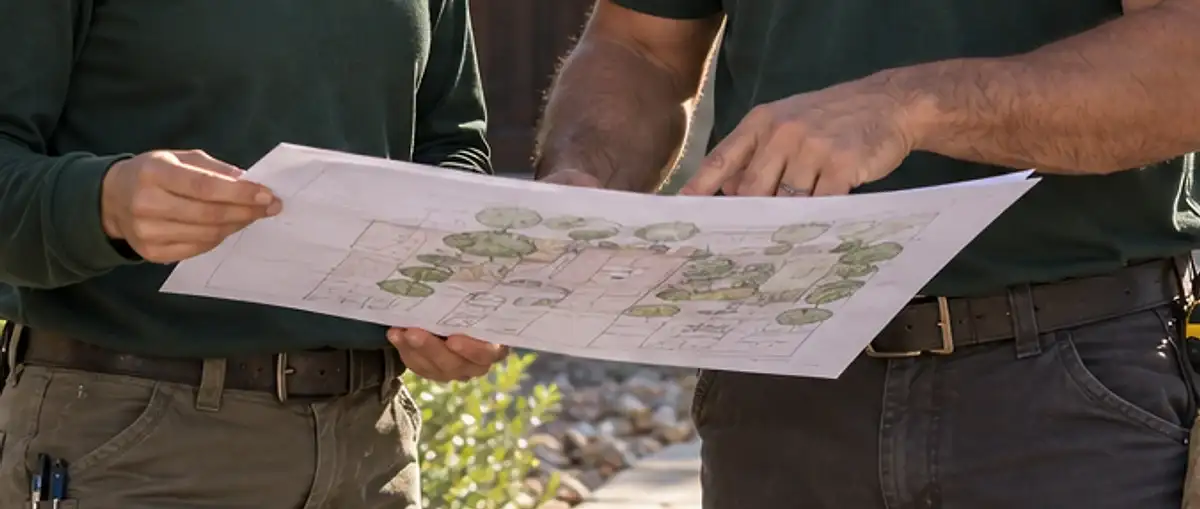
Artificial turf in Phoenix is priced by the area covered and decided by summer heat and the city rules on a grass to turf conversion. Start with the area you want covered and how a truck reaches it. Call (747) 243-2089 and describe the area, the access and what the surface is for.
Costs
What does artificial turf cost per square foot in Phoenix?
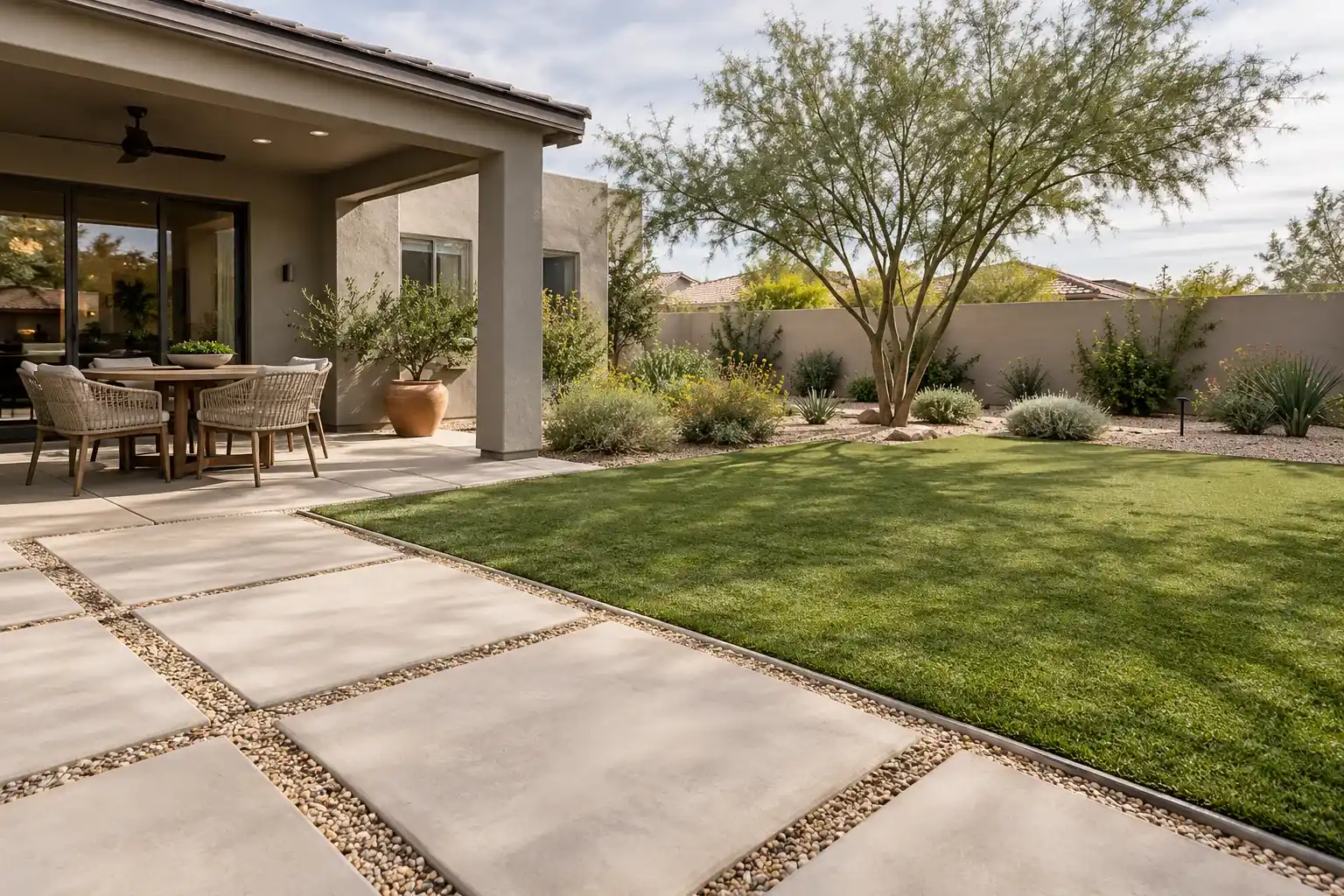
This Old House prices an installed lawn at $15 to $19 a square foot, with materials at $2 to $8 and labor at $4 to $12 a square foot. A national cost guide puts a 2026 job at $3,244 to $8,714, with an average of $5,783. A second national guide puts the same work at $3,000 to $7,500, with an average of $4,259. Published market ranges, not a quote: the final price is set after an on-site assessment. The rate usually carries demolition, 3 to 4 inches of crushed base, compaction, a weed barrier and haul off. Gate width, how much concrete or dead sod comes out, and whether the lot sits on caliche move the number more than the turf brand does. A 300 square foot dog run and a 1,200 square foot backyard share a rate. The totals do not match.
Costs
Does Phoenix pay a rebate for removing a lawn, and can turf replace it?
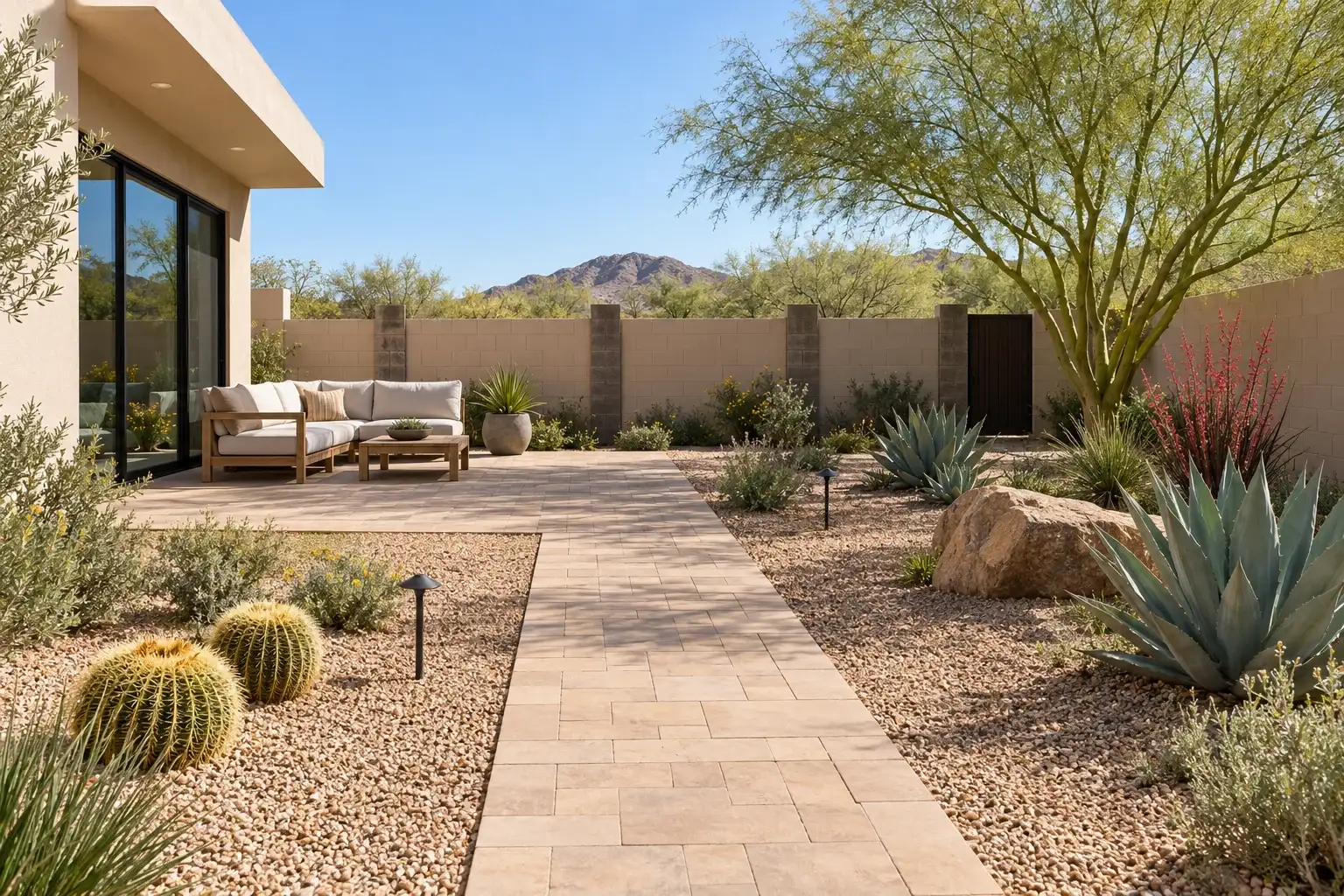
Phoenix pays $2 per square foot to take out living grass, and the city names artificial turf among the surfaces that can replace it (City of Phoenix, grass removal program (opens in a new tab)). The program has conditions worth reading before a shovel moves. The lawn has to be at least 75 percent live and healthy, the removal area has to reach 250 square feet, and a pre-approval with a Notice to Proceed is required before any grass comes out, with up to 3 weeks for review. Bare soil is not an acceptable finish, and a pool or water feature cannot be installed in the cleared area. Projects over 5,000 square feet get reviewed case by case. A crew that strips sod before the notice arrives can void the money for the whole job. Apply first, then schedule the work.
Climate
How hot does synthetic turf get on a Phoenix afternoon?
Hotter than the air by a wide margin, and the gap is largest on a still, sunny day. A Las Vegas study of one turf product by UNLV and the Desert Research Institute logged a maximum surface temperature of 169 F on green synthetic turf, about 62 F above air temperature and 69 F above irrigated natural grass (UNLV, turf surface heat (opens in a new tab)). Phoenix hit 118 F on July 5 and again on July 8, 2024, against an all time record of 122 F set on June 26, 1990 (NWS Phoenix, 2024 climate review (opens in a new tab)). Add 60 degrees to a 118 F afternoon and a bare foot will not stay on it. The rise was driven by solar radiation rather than air temperature, so shade changes the result more than breeze does. Pale fiber and pale infill sit lower on a thermometer than dark green over black crumb. A hose pass buys minutes. A tree or a ramada buys the afternoon.
Good to know
What do the Colorado River cuts mean for a Phoenix yard?
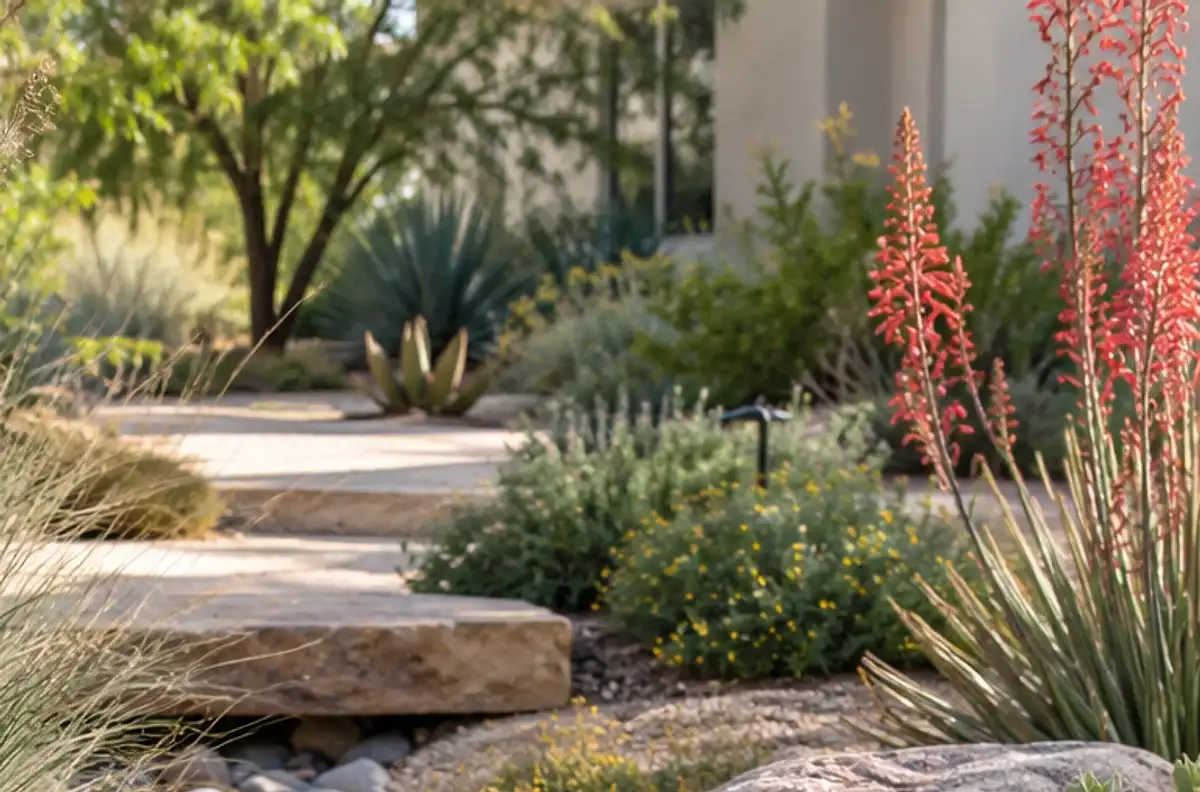
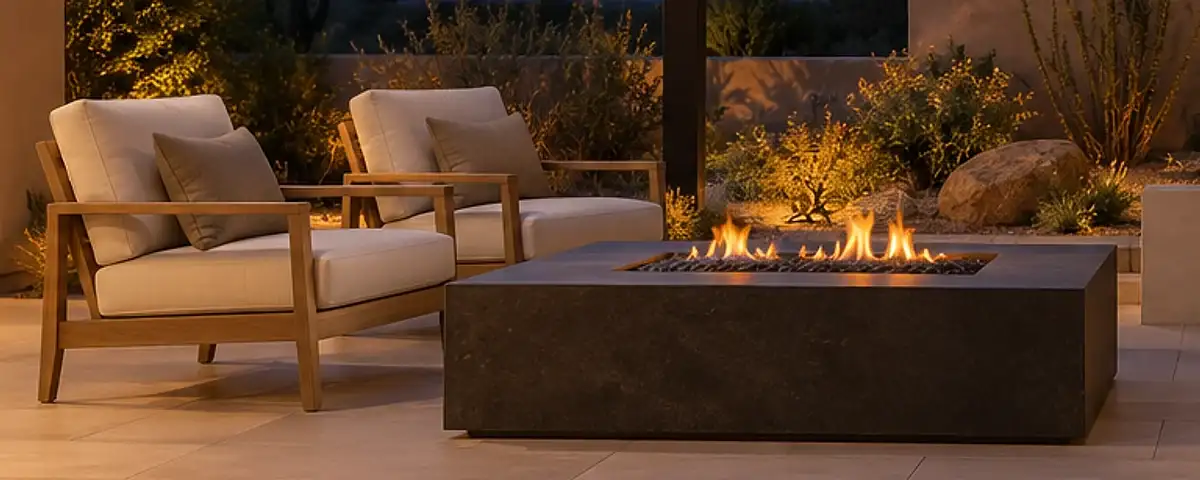
They keep pressure on outdoor water, which is where most of the savings have to come from. Arizona took a mandatory 592,000 acre foot reduction in 2023 under a Tier 2a shortage, then 512,000 acre feet in 2024 under Tier 1, and that cut still equals about 30 percent of the Central Arizona Project's normal supply (Arizona Department of Water Resources, Colorado River (opens in a new tab)). Lake Mead sat above 1,050 feet when the 2024 tier was set, and those guidelines expire in 2026 (AMWUA, Tier 1 shortage (opens in a new tab)). Reclamation issued 2027 and 2028 operating guidelines in August 2026 (Bureau of Reclamation, post-2026 operations (opens in a new tab)). In Phoenix, up to 70 percent of the water residents use goes outdoors (City of Phoenix, HOA water efficiency (opens in a new tab)). Turf removes a lawn's irrigation schedule but not its water use. It still takes a rinse. The swap deletes mowing, edging, fertilizer and the fall overseed.
Timeline
How long does turf last here, and how does the heat kill it?
This Old House puts the product's life at 15 to 20 years, and Phoenix sun is the variable that can shorten the estimate. One cost guide puts real world life at 8 to 20 years with proper care. Heat does not usually tear the fiber. It makes the blade stiff, then brittle, until traffic snaps the tips and the pile stops standing. Ultraviolet light fades pigment on the south and west faces first, so a yard can look patchy in tone rather than worn. Infill breaks down faster in heat, and once the infill layer thins, the fibers lean and flatten into paths. Seams and edges fail before the field does, and both fail earlier when the base was not compacted in lifts. A shaded yard with light infill will outlast a full sun yard with black crumb.
Ground
What does the base work involve on Phoenix caliche?
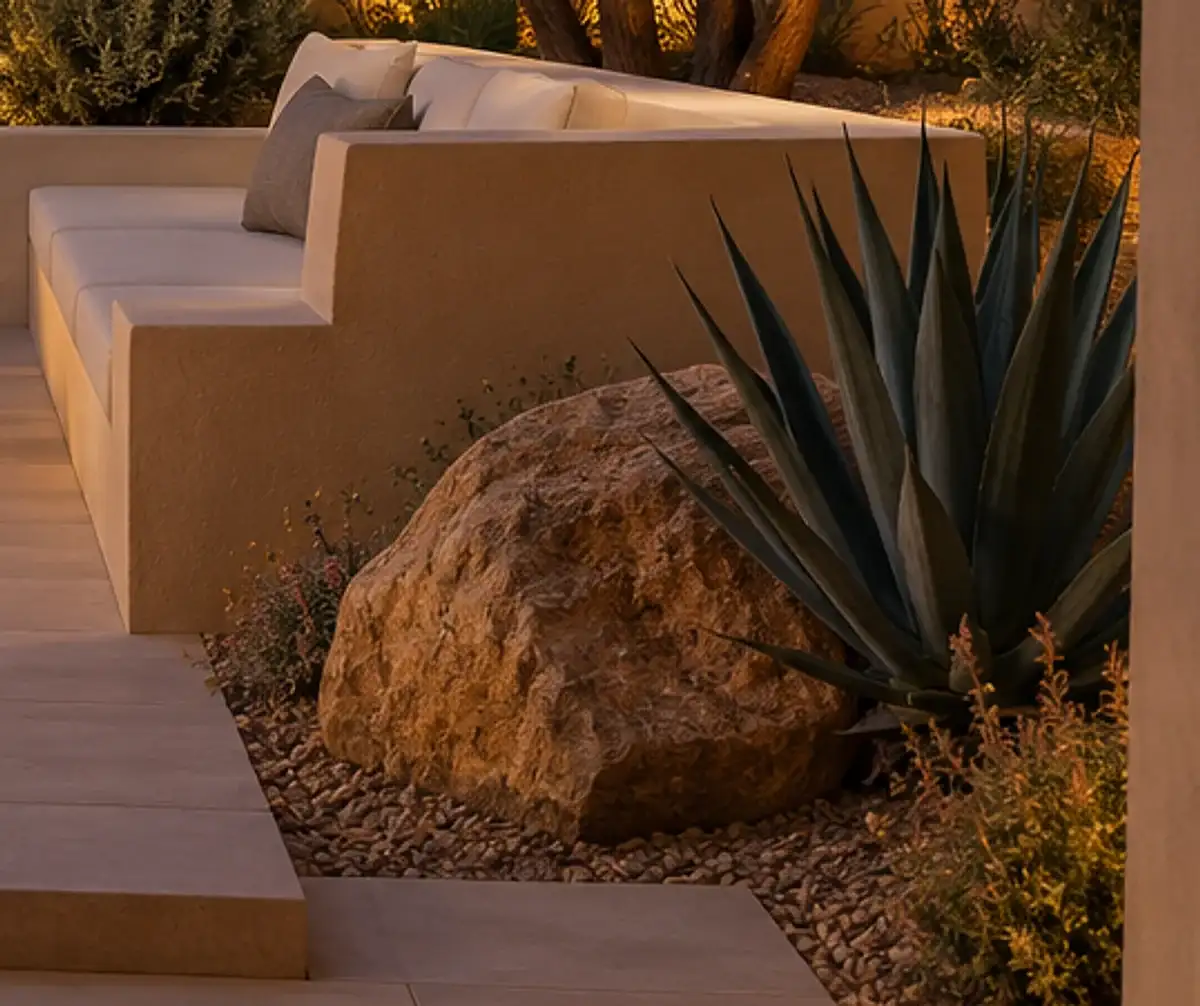
The base is the part that decides the job, and in Phoenix it often starts with a layer that fights back. Caliche is soil cemented by calcium carbonate into a solid sheet that can run from a few inches to several feet thick, and it blocks water movement instead of passing it (University of Arizona, managing caliche (opens in a new tab)). A planting hole has to break through that layer for water to drain, and the same rule applies to a turf excavation. So the sequence is cut, break out the cemented material, haul it, grade to the intended fall, then place aggregate in lifts that get watered and plate compacted in sequence. A base dumped in a single pass and walked on once will move underfoot later. On a lot where caliche sits near the surface, expect equipment work before any turf is unrolled.
Water
Where does monsoon water go under a turf install?
It goes wherever the base sends it, so the base has to send it away from the house. The monsoon runs June 15 to September 30 and peaks between mid-July and mid-August in Phoenix, and the city's own storm advice includes repairing landscaping so water runs away from the building (City of Phoenix, monsoon resources (opens in a new tab)). Turf drains through holes punched in the backing, which means the surface cannot pond the way soil does. A flat plane that buries the low corner will hold water in the first hard storm and lift the edge restraint. The grade should fall away from the slab at roughly 2 percent, with a clear path to the street, a drywell or a wash. Where a wall or a planter interrupts that path, a drain or a channel has to replace it. Water that leaves the lot is a neighbor problem, and it comes back as a call.
Rules
Does a Phoenix HOA or the city limit turf in a front yard?
2 sets of rules apply, and they answer different questions. A homeowners association can enforce design standards on top of city ordinance, and review usually asks about the front setback, the wall height and what a neighbor sees over it. Phoenix measures fence and wall height from the higher of the adjacent finished grades, and any wall in a private drive or utility easement needs planning approval (Phoenix Zoning Ordinance, section 703 (opens in a new tab)). The city's water rules are separate. Grass removed from a right of way under the Phoenix AMA management plan cannot be put back, and replacement plants have to come from a low water use list (City of Phoenix, grass removal program (opens in a new tab)). Read the association's own documents, because the language is written per community. A front yard turf plan that ignores the wall detail can pass the association and still fail the setback review.
Good to know
How do you keep a play area or a dog run usable in July?
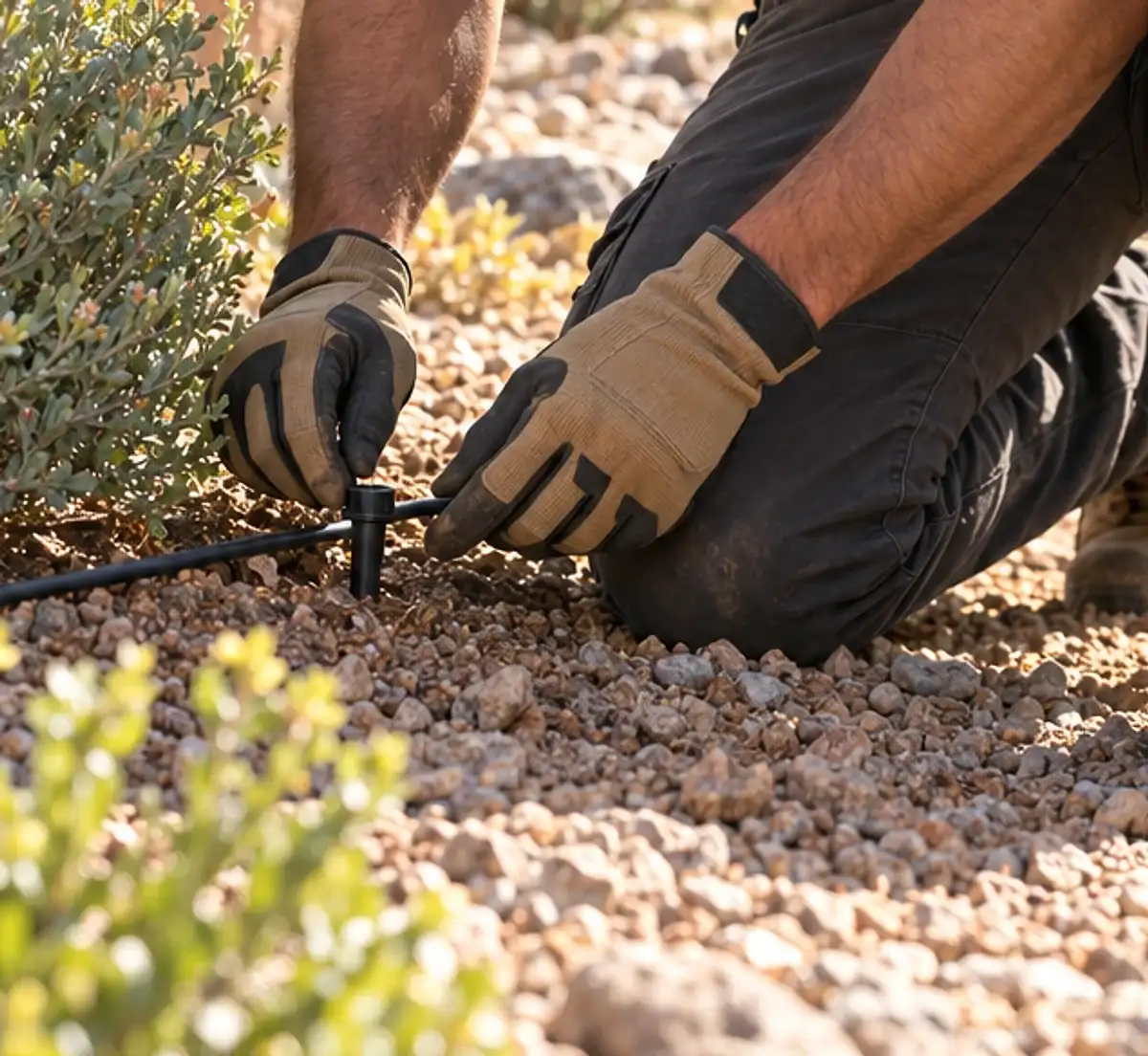
You shade it, you drain it and you pick a light surface. A play structure over turf in full afternoon sun is unusable for part of the summer, so the shade structure or the tree goes in the plan rather than in a later phase. Surface temperature is the constraint, and the UNLV work showed solar radiation drove the rise more than air temperature did (UNLV, turf surface heat (opens in a new tab)). For dogs, a base that falls to a drain matters more than the infill brand, because odor comes from urine held in wet ground under the carpet. A pet run wants a slight fall, a drain or a tie in to the yard's flow, and a rinse routine. Turf beats grass for a digger and loses to gravel for drainage. The trade is worth making when the run sits in shade and the base was built to shed water.
Turf
What changes in a putting green build?
A green is shaped, not laid flat, and that shaping is most of the difference. The base gets contoured with a crown, a tier or a subtle break, then it is packed until a ball rolls true across it. The turf is a denser, shorter pile than a lawn product, because the ball has to hold a line instead of disappearing into fiber. Cups need sleeves set into the base at the depth a flagstick expects, and the collar or fringe is cut from a second material so the edge reads as a green rather than a rug. Those steps are handwork, and handwork is why a green costs more per square foot than a flat lawn at any size. A green also needs the same drainage thinking as the rest of the yard, since a low spot in a contoured surface collects water in a place a ball cannot roll.
Turf
How does turf work around a pool deck?
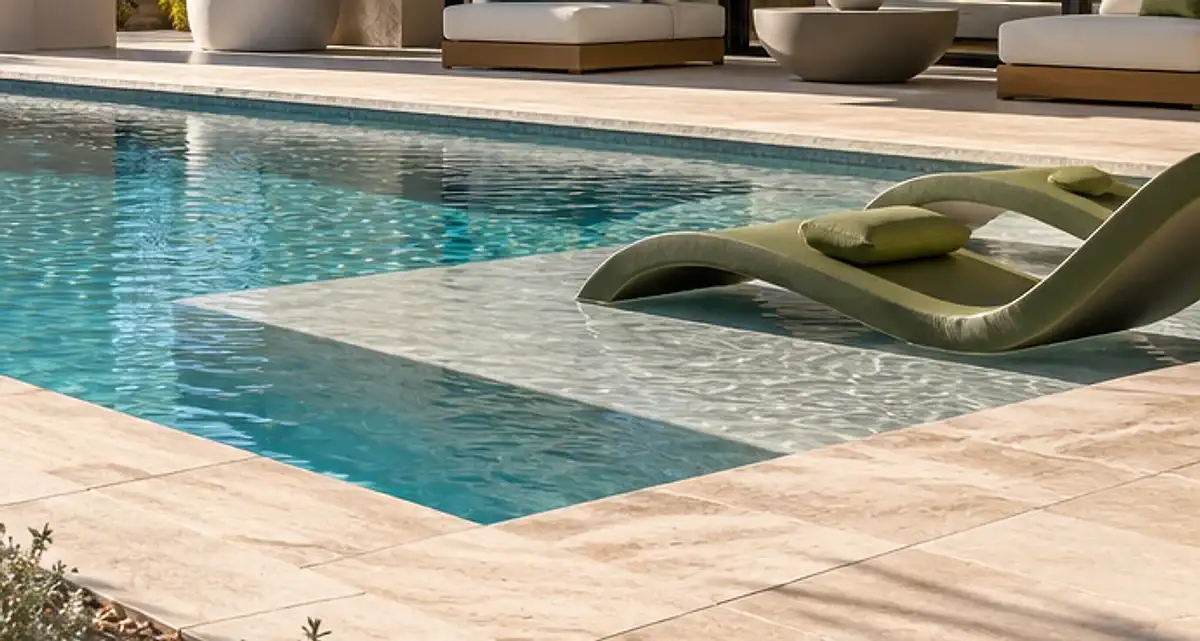
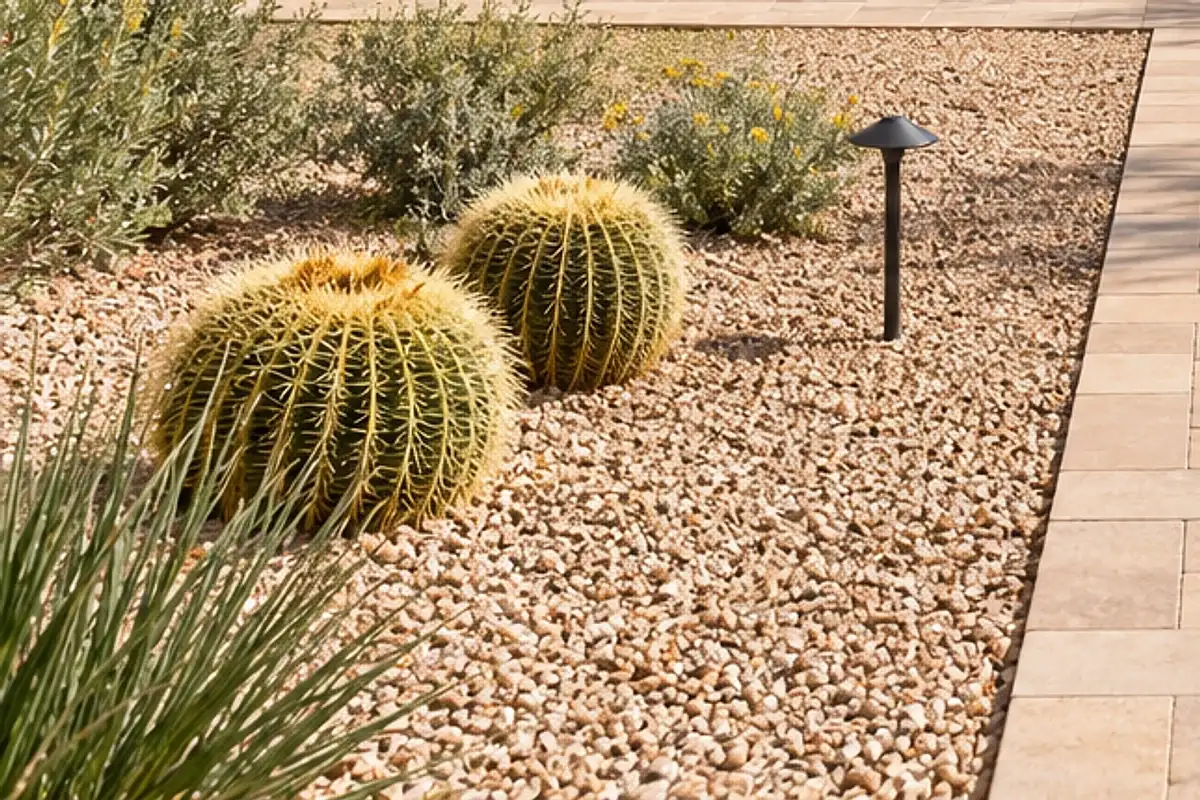
It works when the edge, the slope and the heat are all handled, and fails when any one of them is skipped. Turf next to a pool gets wet feet, splash out and chlorine, so the surface has to drain and the edge has to be restrained with aluminum or a curb rather than staples alone. Slope runs away from the coping, never toward it, because water pushed back at the pool deck undermines the joint. Surface temperature is the other issue, since a barefoot crossing at 3 pm on a 118 F day is where people notice it most (NWS Phoenix, 2024 climate review (opens in a new tab)). Keep a planted or paved border between turf and coping where the traffic is barefoot, and put the turf where people sit rather than where they run. A shaded lounging area holds up better than a full sun walkway.
3 questions
Questions people ask
Still have a question? Call (747) 243-2089 and describe the yard.
Does artificial turf need water in Phoenix?
A rinse now and then, not a schedule. Dust settles on the surface, a pet area needs flushing and a pass with a hose drops the temperature for a short while. Cap the old heads or move that zone to drip. A head that keeps running under the carpet wets the base and starts wrinkles.
Can turf go over an existing lawn?
Not directly. The sod comes out, the subgrade gets graded and compacted, and the aggregate base goes in over bare soil. Laying turf on top of a lawn traps thatch and roots under a surface that will not absorb water, and the result moves within a season.
What decides how long a turf install takes?
The base decides it, not the carpet. Demolition, caliche and haul off each add a phase, so a courtyard with clear access finishes well before a backyard that needs a machine to reach it. Weather and inspection timing add days on top. The base is the phase that sets the pace for everything after it.