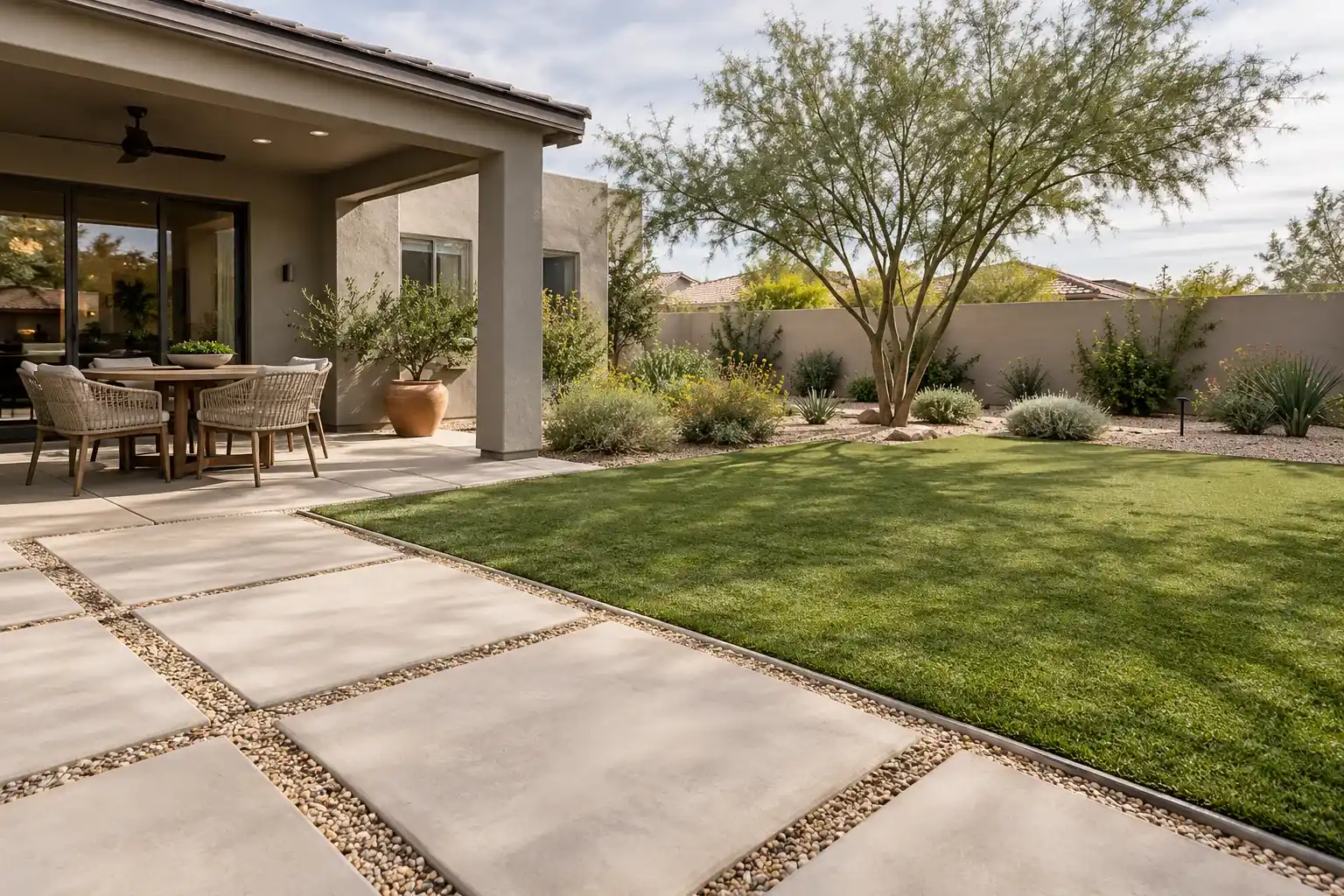
Backyard with large concrete pavers set in gravel, a strip of artificial turf, a covered patio and a shade tree

Guide · Scottsdale, AZ

Scottsdale Landscaping Guide: Water, Soil, Heat, Permits and Costs

Landscaping in Scottsdale is a set of decisions about water, heat and soil, made in that order. Make them in a different order and the yard gets built twice.

  1. What does landscaping in Scottsdale include?

    It includes the work that makes a yard usable and keeps it alive: grading for drainage, an irrigation system that can be zoned by plant type, hardscape such as a patio or a wall, planting chosen for the exposure of each bed, and a surface such as gravel, mulch or turf. It also includes the invisible parts that decide whether the rest survives: breaking through caliche where it exists, testing drainage before planting, and setting the controller for the season rather than for July all year. A landscaping project here is closer to a small construction job than to planting. A finished yard can be expected to need less water in year 3 than in year 1, and if it needs more, something in the design may be wrong.
  2. What are the signs a yard needs work?

    These 5 signs show up again and again. Plants that die every summer in the same spot, which can mean the water or the soil is wrong rather than the plant. Bare dirt where nothing has grown for 2 seasons. Water running off the yard or puddling against the house after a storm. A water bill that climbs while the yard looks worse. And a yard that only looks good for 6 weeks after the irrigation is adjusted. Any one of those is a reason for a walk of the property. 3 or more can mean the irrigation and the grade both need attention, and planting over the top of that is money spent twice. A plant that dies in the same spot 3 years running is the clearest signal, and it often points to water or soil rather than bad luck.

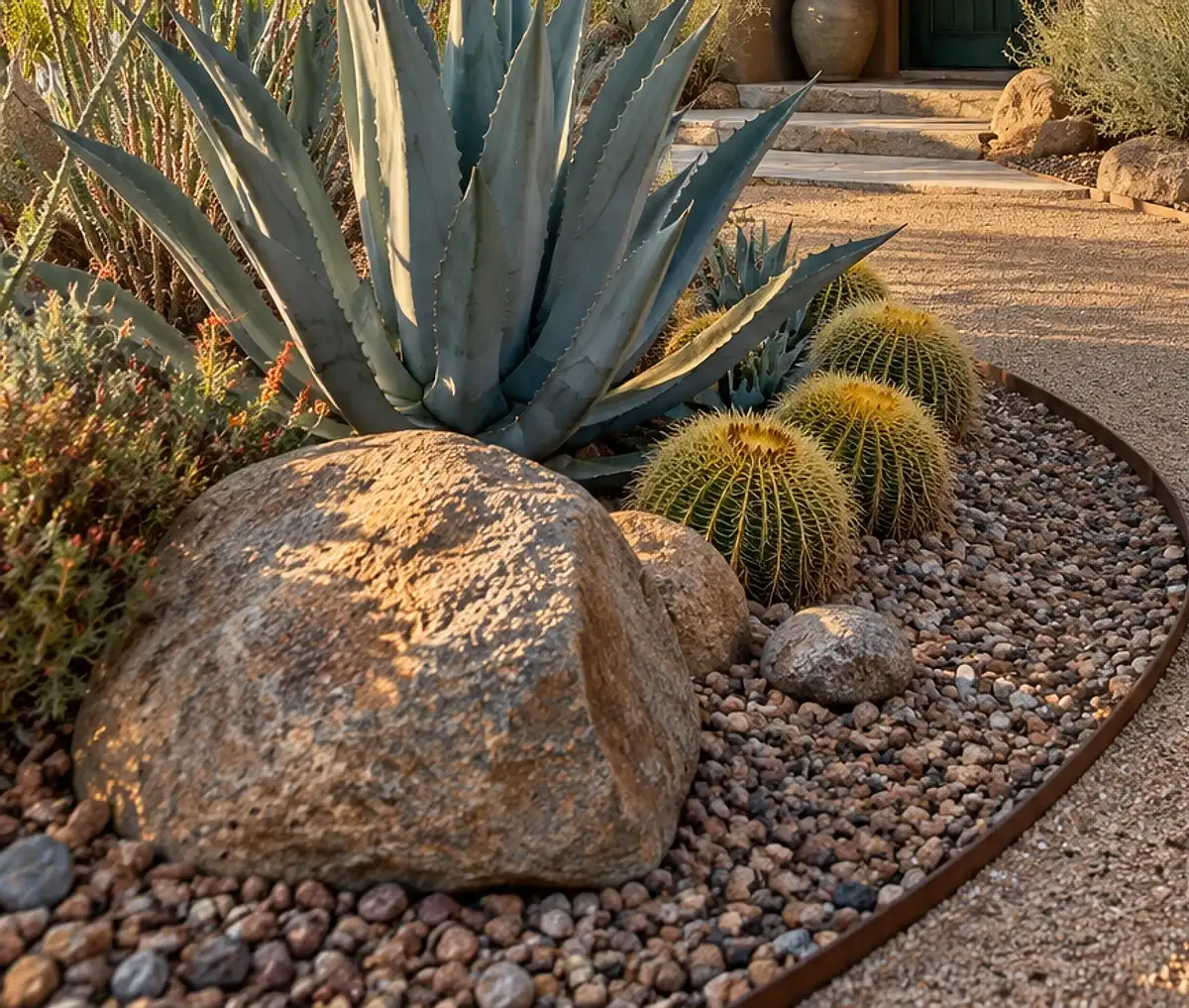
    Barrel cactus and a blue agave behind a granite boulder, edged with steel in river rock
  3. Why are Scottsdale yards different from other desert cities?

    There are 3 local causes that do most of the work. Caliche, a layer of soil cemented by calcium carbonate that can stop water and roots in their tracks. Heat, with Phoenix averaging 111 days at 100 F or higher and 21 days at 110 F or higher in the 1991 to 2020 normals (National Weather Service, extreme temperatures (opens in a new tab)). And the monsoon, which runs June 15 to Sept 30 and brings about a quarter of Scottsdale's yearly rain, often in short, violent storms. Add water rules and HOA design review and you get a market where the generic national advice fails. A yard built for a Mediterranean climate with 20 inches of rain will not work on the 8.73 inches a year that NOAA's 1991 to 2020 normals give for Scottsdale Airport, most of it in winter and during the monsoon.

  4. What does caliche do to a planting plan?

    Caliche restricts root growth and blocks drainage, so water sits on top of it, the root zone waterlogs, and salts build up because they cannot leach out (University of Arizona Cooperative Extension, managing caliche (opens in a new tab)). The practical test is simple: dig the planting hole, fill it with water, and if the level drops at least 4 inches in 4 hours, drainage is adequate. If it does not, the hole gets punched through the layer, or the planting is set into mounded soil. The extension guidance is a hole no deeper than the root ball and up to 3 to 5 times as wide, rather than a deep narrow one. Caliche is not universal in Scottsdale, so the test matters more than the assumption. Afternoon shade from a wall or a tree changes what can be planted in that bed, and it changes how much water the bed needs in July.

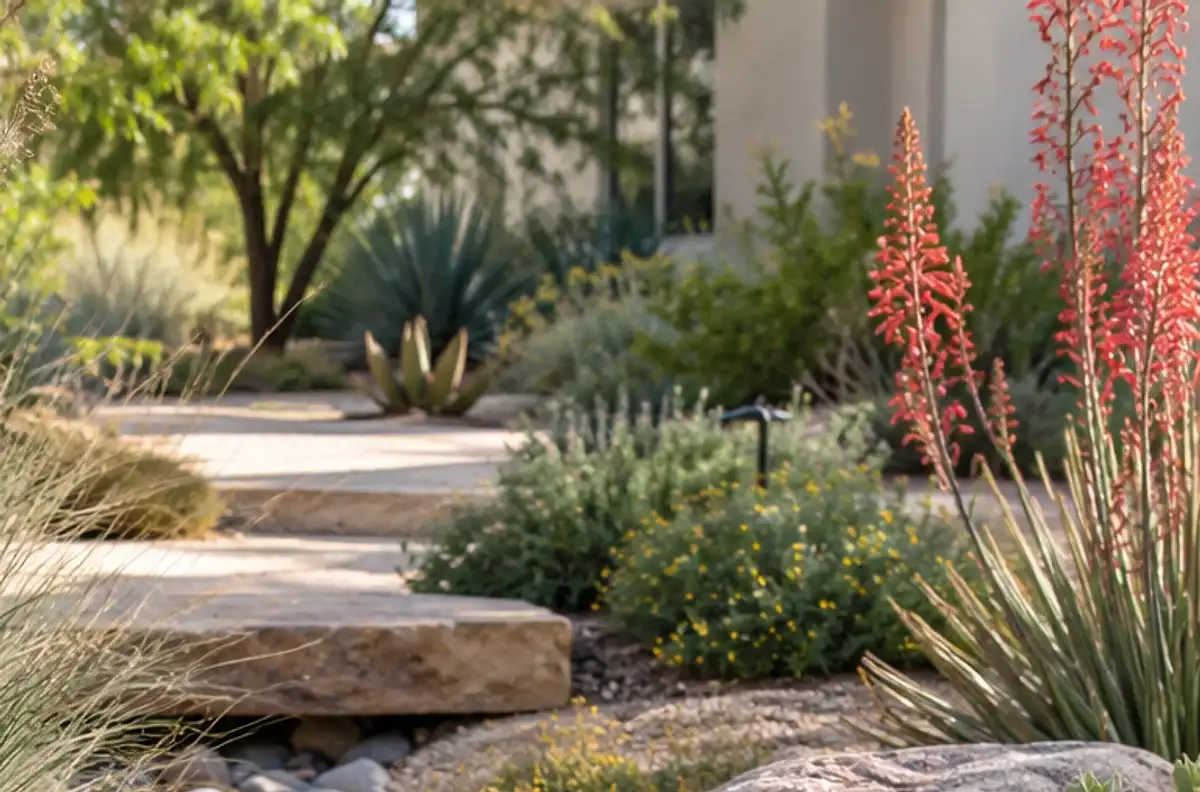
    Flagstone steps through desert grasses beside red flowering yucca
  5. How does the monsoon change a yard?

    The monsoon turns a dry yard into a drainage system in a single storm. In the northern areas of Scottsdale the city prefers to keep washes in their natural state rather than lining them in concrete, which preserves the desert but means an obstruction can push stormwater out of its path and into a wall, a patio or a house (City of Scottsdale, wash ownership and maintenance (opens in a new tab)). Filling a wash, or building a wall across one, is the classic mistake. A yard should move water to a planted basin, a gravel channel or the street, never trap it against the foundation. After any storm that produces flow, the wash gets walked and the debris gets cleared.

  6. What does the heat do to plants and materials?

    It decides the plant list and the material list. Plants that survive here either reflect sun, shed heat, or go dormant in the worst of it. That is why palo verde, mesquite and desert willow look right while a hydrangea does not. Materials matter too: bare metal and dark pavers get hot enough to be uncomfortable in July, artificial turf in full sun holds heat, and unshaded west facing walls radiate into the evening. Shade is the cheapest cooling tool on the property, and a tree planted on the west side can do more than an awning. Planting in the shoulder months reduces stress on new plants. Run each zone and watch it. A head spraying the wall or the street is water the yard never gets.

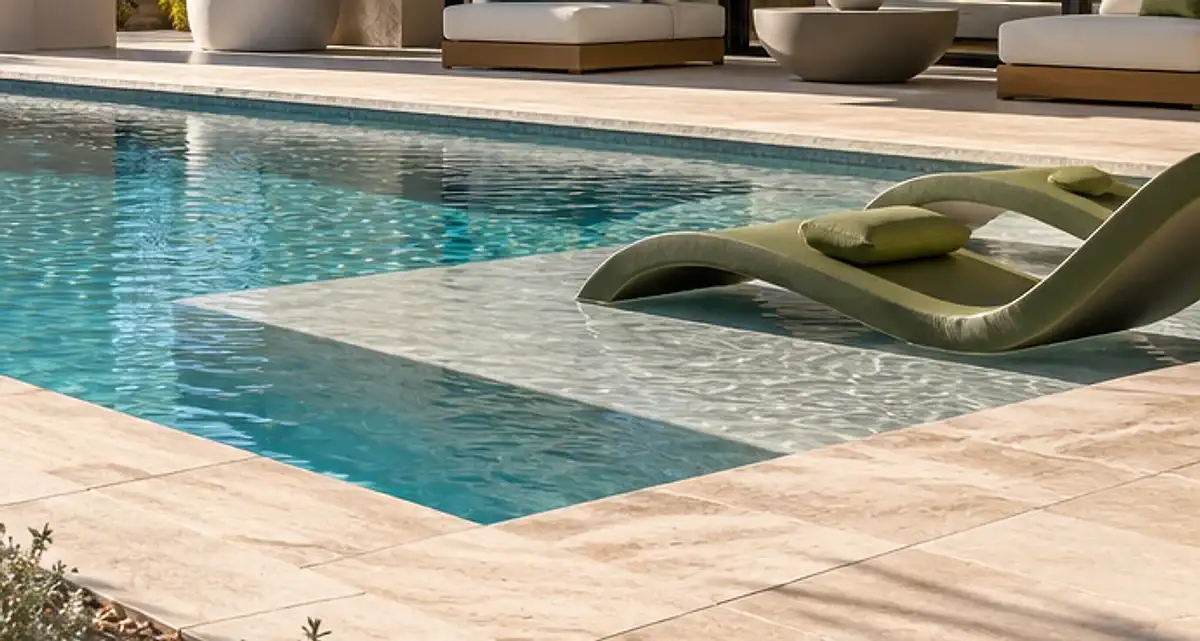
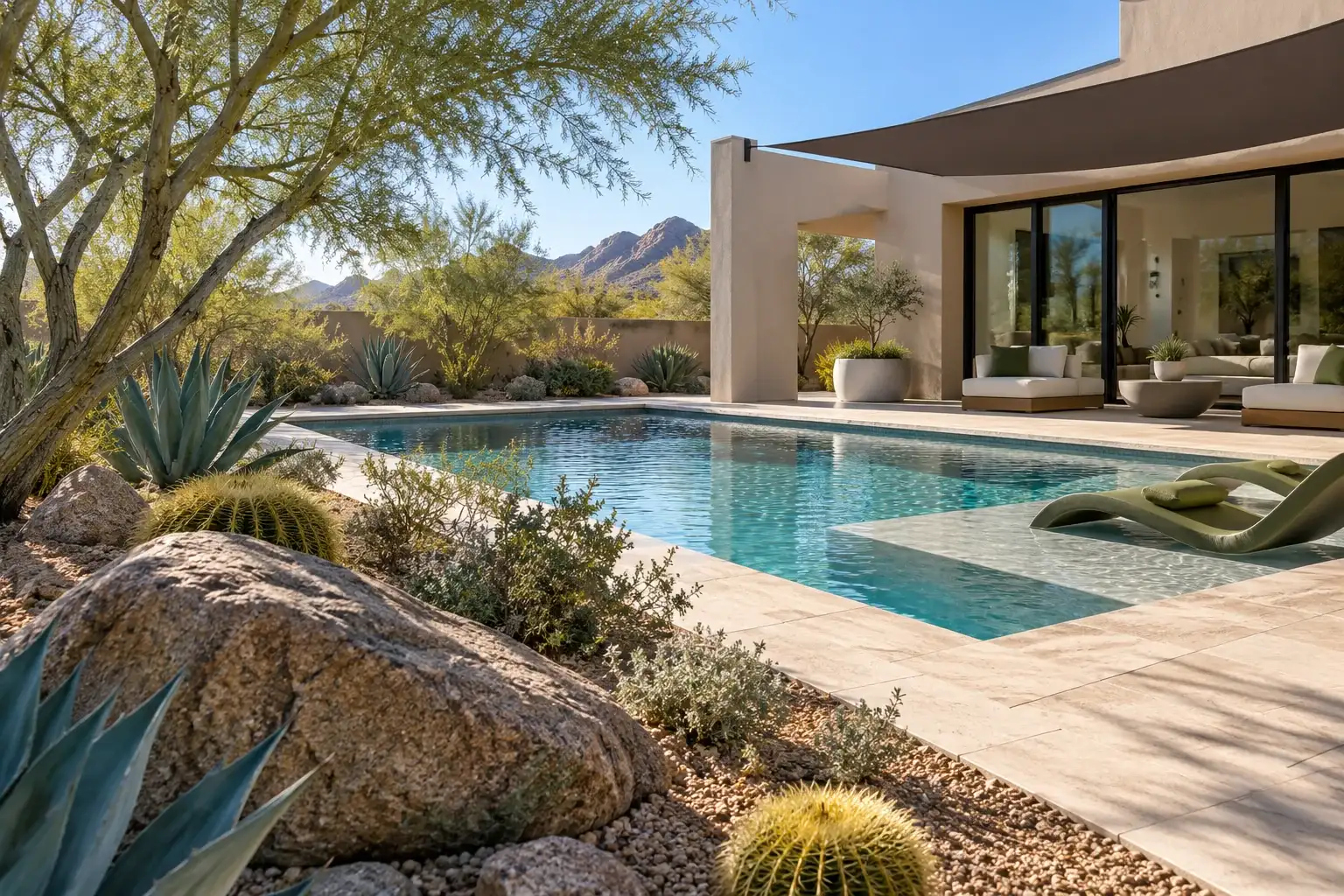
    Pool edge with a shallow sun shelf, a lounger and pale stone decking
  7. How much water does a Scottsdale yard actually need?

    Less than most people think, once the planting is right. A Bermuda lawn with a winter overseed in the low desert takes more than 55 inches of irrigation a year, while an average xeriscape takes under 18 inches (University of Arizona Cooperative Extension, turf versus xeriscape (opens in a new tab)). About 90 percent of the city's drinking water comes from the Central Arizona Project and the Salt River Project, with groundwater wells as backup (City of Scottsdale, water supply (opens in a new tab)). The city is in Stage One of its Drought Management Plan, which it describes as increased monitoring and evaluation (City of Scottsdale, water shortages and preparedness (opens in a new tab)). In the plan's residential options, limits on watering days start at Stage 2 (City of Scottsdale, Drought Management Plan (opens in a new tab)).

  8. What is the smartest way to cut water use?

    Fix the delivery before you change the plants. Drip on the shrubs and trees with a separate zone for any turf, a controller programmed by season, a filter and a flush point on the drip so emitters do not clog, and a walk of the zones once a month while they run. Then reduce the turf to the area that gets used. Scottsdale Water offers an Outdoor Water Efficiency Check, one per property, where staff read the meter and review the irrigation clock (City of Scottsdale, water conservation for homeowners (opens in a new tab)), and a WaterSense smart irrigation controller rebate of up to $250 (City of Scottsdale, residential rebates (opens in a new tab)). Both are worth doing before a single plant is bought. A controller with a seasonal setting does most of that work once it is programmed, and the rest is a monthly walk of the zones.

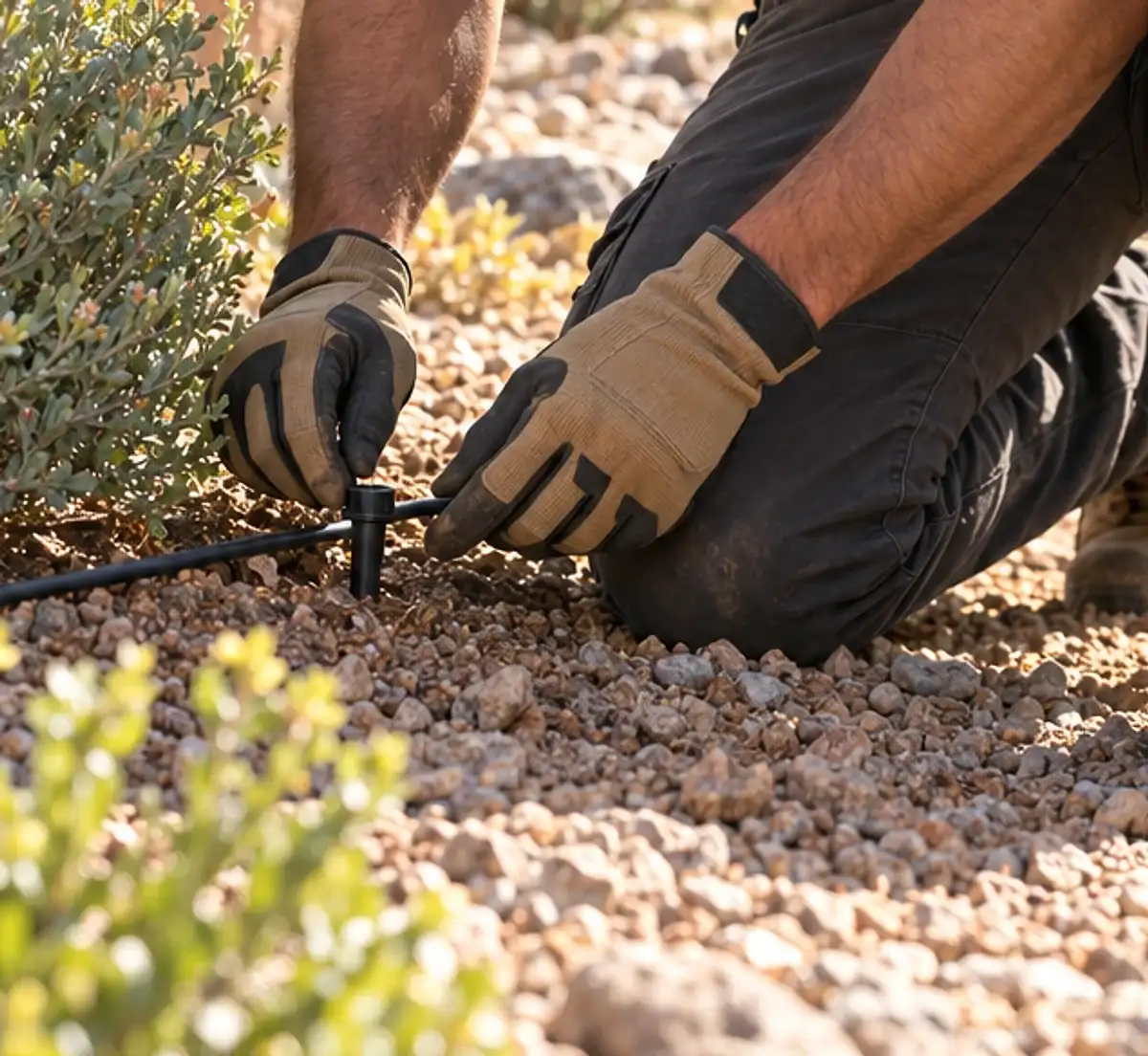
    Gloved hands setting a drip irrigation emitter into a gravel bed
  9. Do I need HOA approval to change my yard?

    Usually yes, if the property is in an association. Arizona law requires that a design review or architectural committee include at least one board member serving as chairperson, and the scope of what it reviews comes from each association's CC&Rs and design guidelines rather than from the statute (A.R.S. 33-1817 (opens in a new tab)). In practice that means a plant list, a site plan, material samples and sometimes the gravel color. An association's guidelines can include an approved plant list, a prohibited plant list, a required gravel color and limits on synthetic turf. Submit early. A rejection after the pavers are ordered is expensive. Ask the association for the current guidelines in writing, because the version in the welcome packet is often out of date.

  10. Which projects need a city permit?

    A fence or wall taller than 3 feet needs a building permit, and so does adding height to an existing fence or replacing one. Dry stack stone or interlocking block over 30 inches also needs a permit. Every retaining wall in Scottsdale requires engineered plans submitted to and approved by the city, regardless of height (City of Scottsdale, walls and fences (opens in a new tab)). In most residential zoning districts, walls and fences up to 3 feet do not need a building permit, but they still need courtesy site plan approval to confirm zoning and stormwater compliance, including easements and on site flows. For a patio or a planting bed, the city's permit desk can confirm whether any review applies. A permit is not only paperwork: the inspection is often the only outside look at the footing and the drainage before the finish covers them.

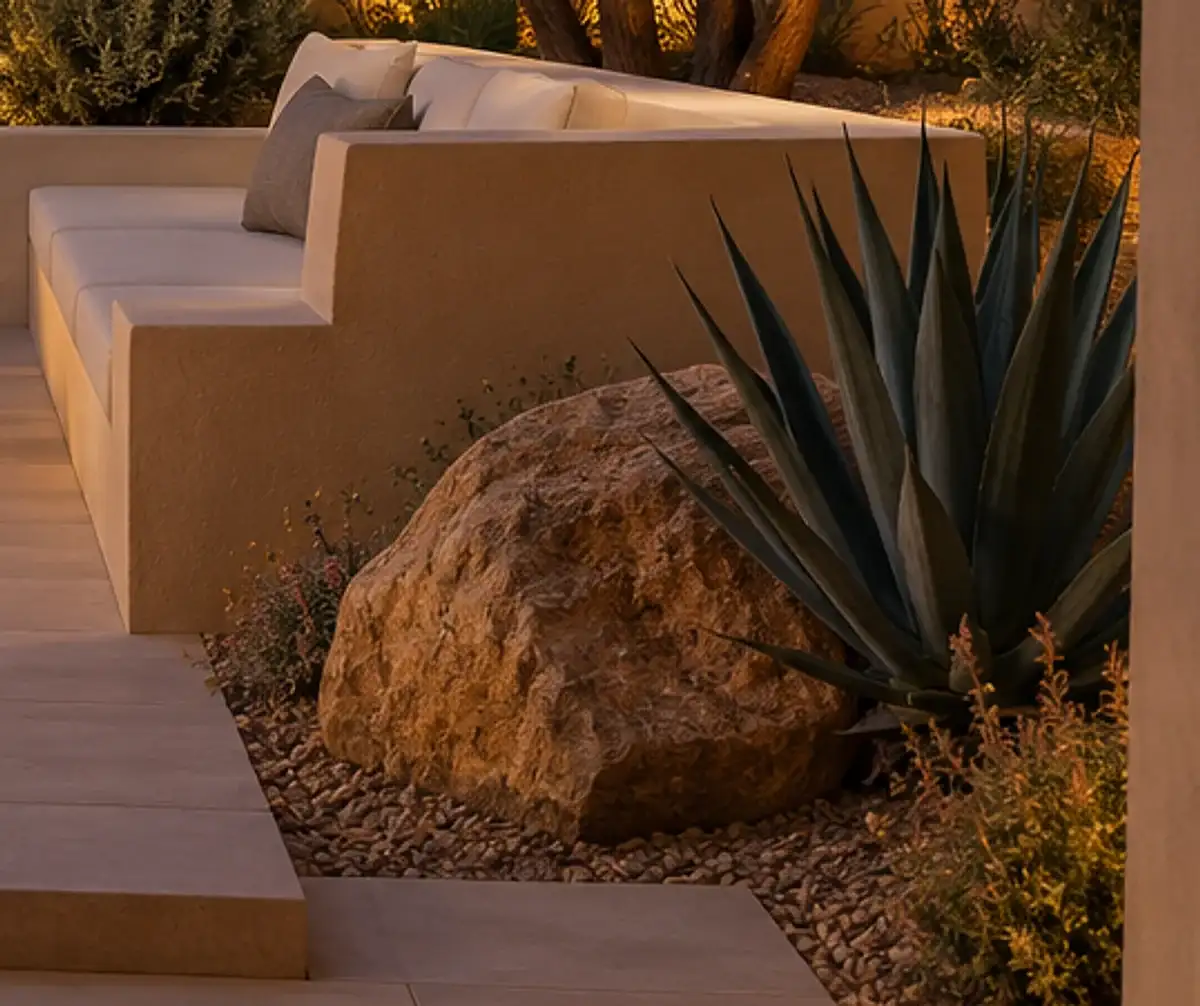
    Agave and a boulder beside built-in stucco seating in the evening light
  11. Which landscaping service does a yard need?

    There are 6, and each has its own page with the process, the rules and the published costs: landscape design and installation, patios and pavers including retaining and seat walls, artificial turf and putting greens, irrigation and sprinkler repair, and outdoor living builds such as kitchens, fire features and pergolas, and landscape lighting. The services page lists all 6 together. If you are not sure which service you need, describe the yard in a sentence and the answer is usually obvious: water where it should not be is irrigation or drainage, a surface that has failed is hardscape, and a yard with nothing alive is planting.

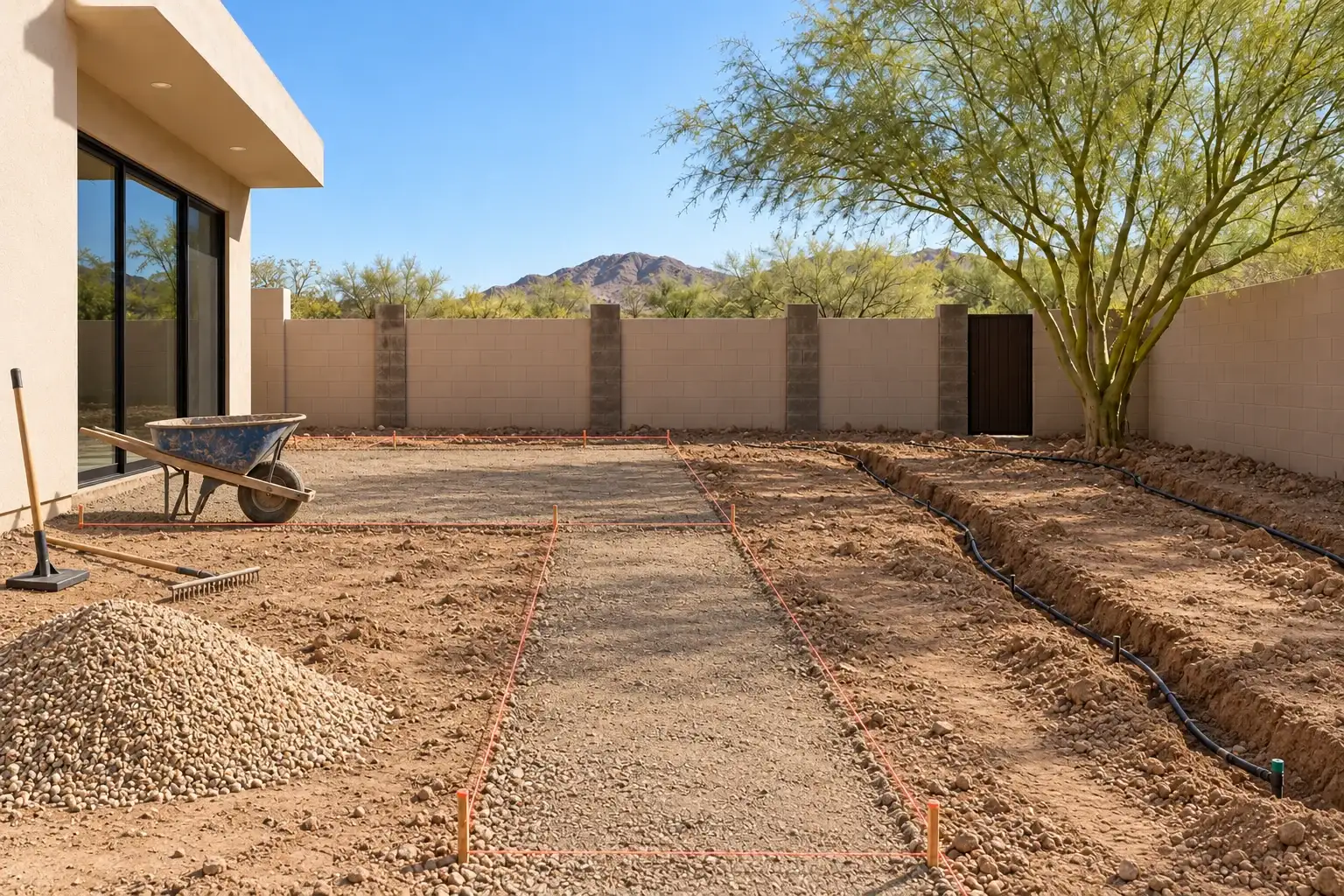
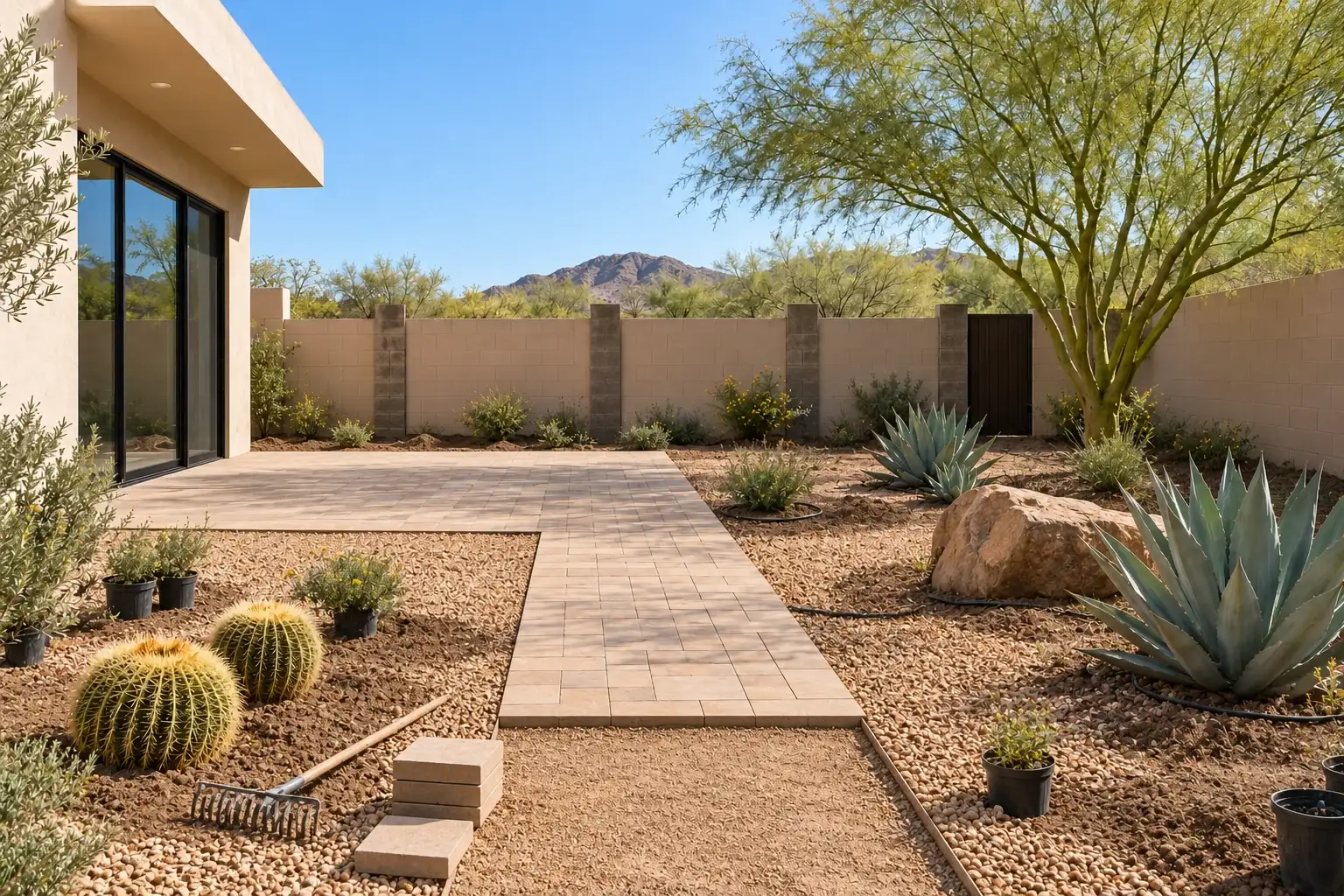
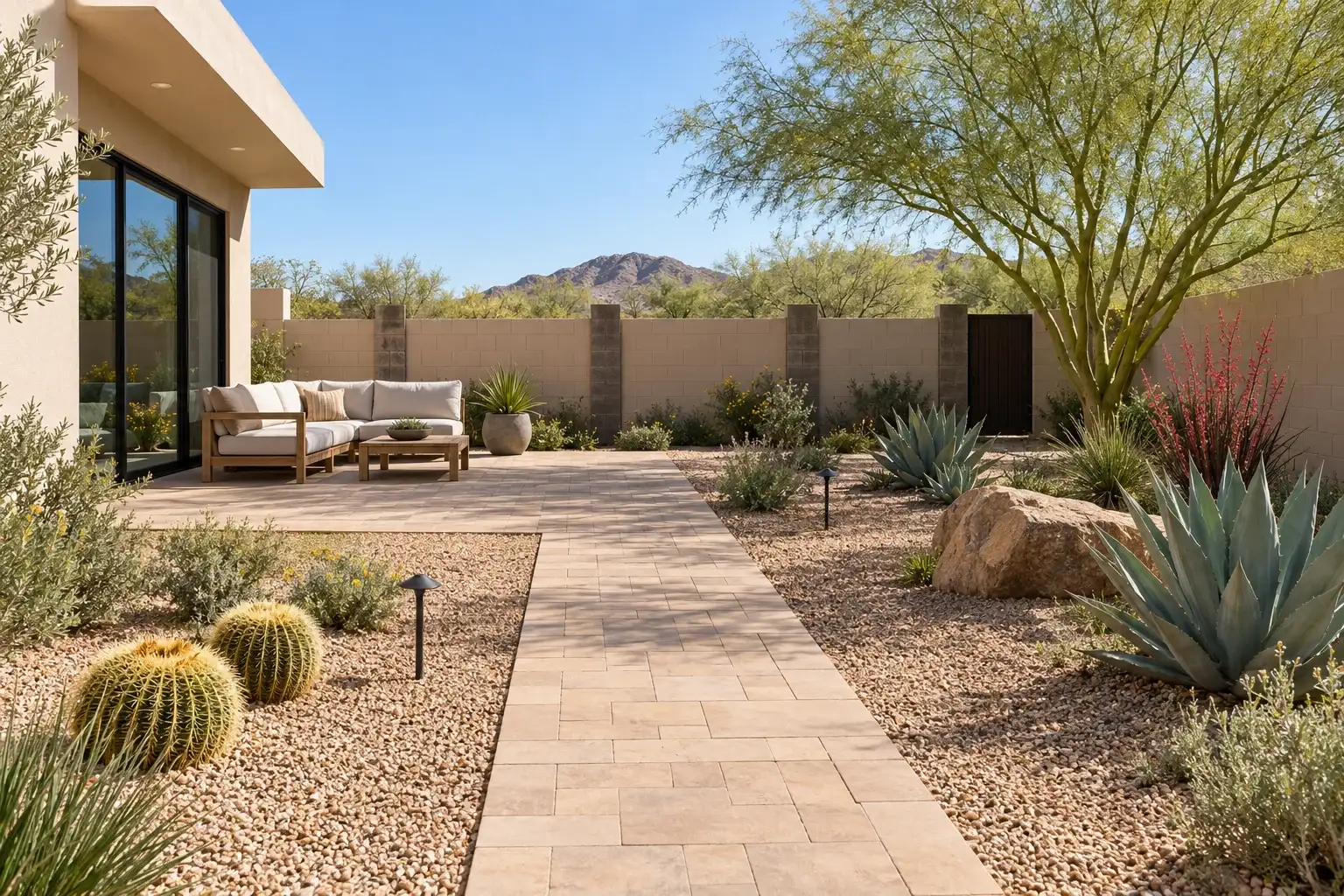
One backyard, 4 stages

How does a project run, step by step?

There are 5 steps. First a walk of the property with the slope, the drainage path, the soil and the existing irrigation assessed, and photographs taken. Second a written scope with the plant list, materials, square footage, irrigation zones and who pulls any permit. Third the approvals: HOA review and city permit where they apply, both before ordering. Fourth the build, in order: demolition and haul off, grading, irrigation rough in and test, hardscape, planting, surface, cleanup. Fifth a walk through with the controller program explained and a written record of the zones. The second step is the one that prevents arguments later.

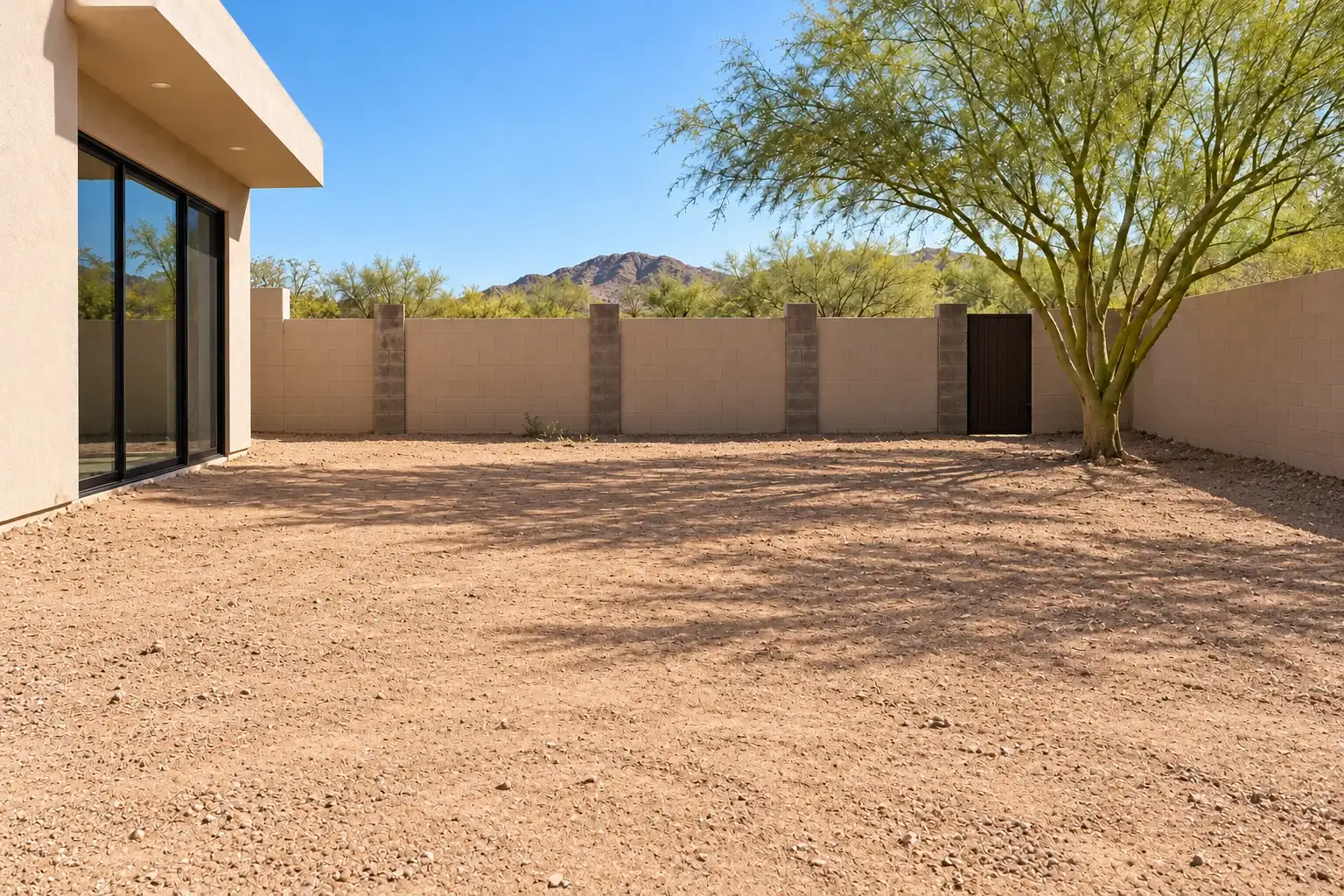
Bare dirt backyard behind a stucco wall with a mesquite tree and a sliding glass door
Bare yard
The same backyard graded, with irrigation trenches, a compacted path base and a wheelbarrow
Grading and irrigation
The same backyard with a paver path laid and barrel cactus and agaves going into gravel beds
Paving and planting
The same backyard finished: a paver path to a seating area, desert planting in gravel and path lights
Finished yard
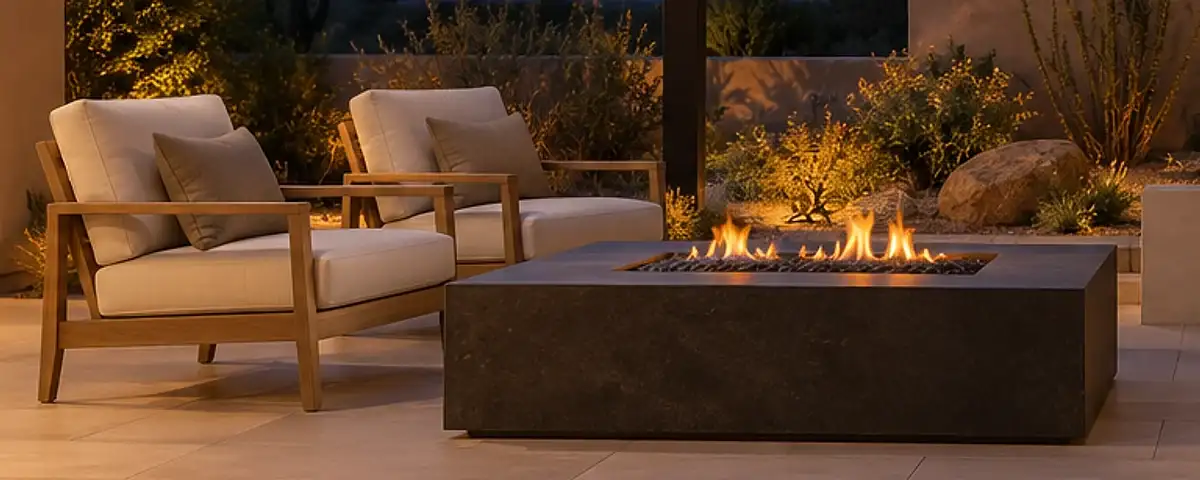
Gas fire table and lounge chairs on a stone patio at dusk
  1. What moves the price in Scottsdale?

    There are 5 local factors, and national cost pages rarely itemize them. Caliche, because a cemented layer has to be broken out before planting and the equipment costs money. Access, because a narrow gate or a steep drive adds labor on every load of base material. Grade, because a yard that has to be reshaped for drainage adds earthwork before any finish. Permits, because a wall over 3 feet, any retaining wall and a ramada each carry review. And HOA design review, which can add weeks and force a material change. The same square footage can differ a great deal between 2 yards on the same street for those reasons.

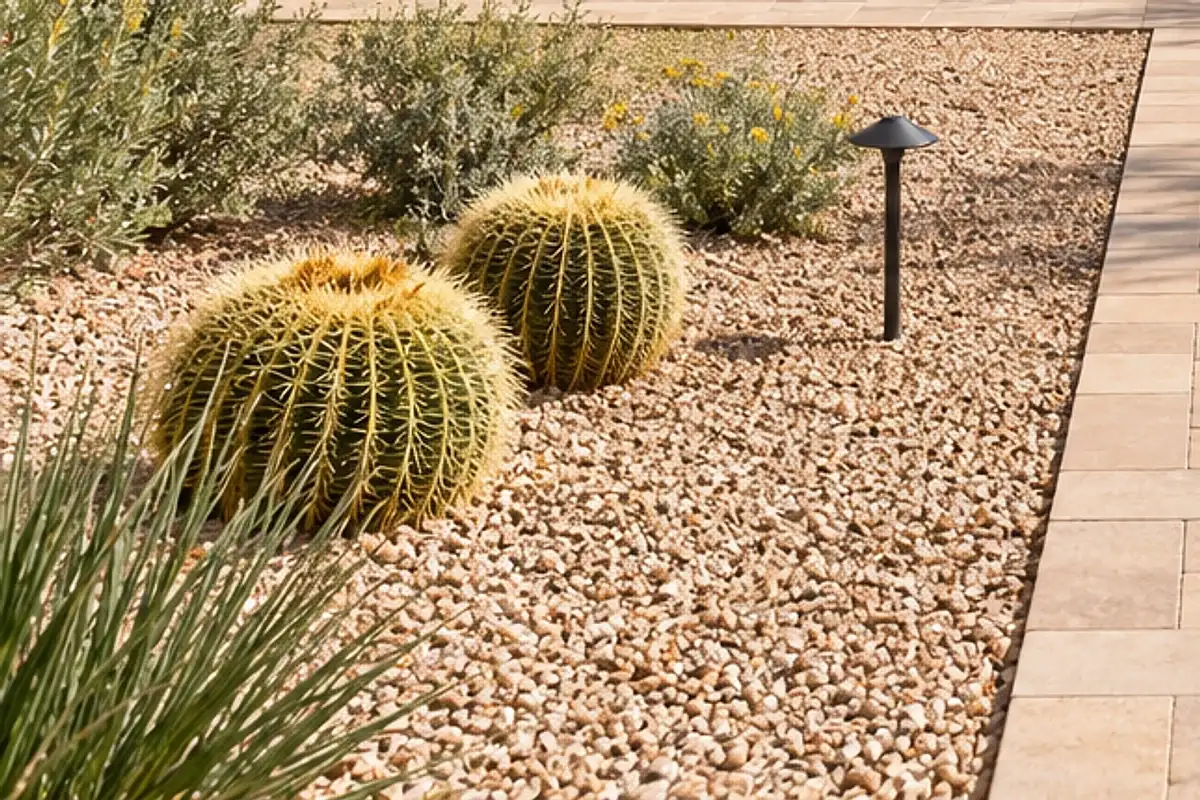
    Barrel cactus and a low path light in decomposed granite beside pavers
  2. Is artificial turf a good idea in Arizona heat?

    It is a good idea in the right place and a bad one in the wrong place. Good: a small play area, a dog run, a putting green, a strip where real grass has already failed. Bad: a whole west facing yard with no shade, where the surface gets hot enough to be unpleasant underfoot and the heat radiates into the evening. The honest case for turf here is water and maintenance, not appearance, and the base work is most of the labor. A turf job done over an uncompacted base with no drainage can look fine for a couple of summers and then wrinkle. The artificial turf page covers base depth, infill and what HOAs allow. The surface temperature at 3pm in July on the exact area under consideration is worth checking.

  3. Should I keep any grass?

    Keep it where it earns its place, and nowhere else. Grass works for a play area, a dog, a small entertaining lawn, or a courtyard where the green is the point. It does not work in a 3 foot strip against a wall, on a slope, or in a front yard nobody walks on. A Bermuda lawn with an overseed takes more than 55 inches of irrigation a year here, which is the number that decides the question. Removing the rest and keeping one usable patch is often a better outcome than a full removal, because a yard with no soft surface at all gets hot and a yard with no usable surface does not get used. Measure the area first. Many yards need less than the owner expects.

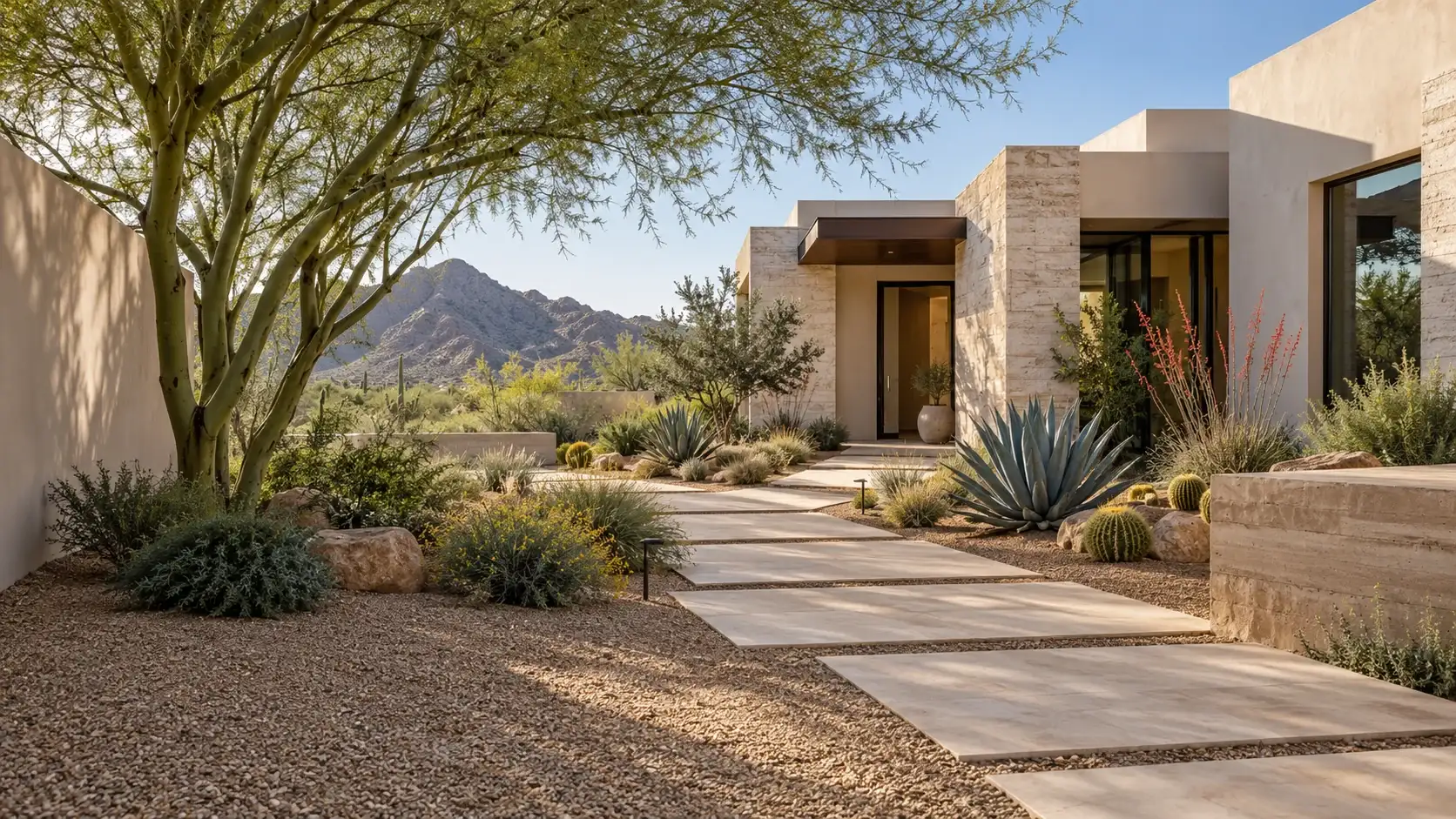
    Desert courtyard with a palo verde tree, agaves, decomposed granite and wide stone pavers leading to a stucco house
  4. What trees grow in Scottsdale?

    The native and desert adapted list is long, and the right tree depends on the job. Blue palo verde grows fast, reaches about 30 feet and takes very low water. Velvet mesquite is deciduous, about 25 feet, and gives broad shade. Desert willow is fast, about 25 feet, and flowers. Ironwood is slow and evergreen, which makes it a screening tree rather than a fast fix. Fruitless olive and leatherleaf acacia can be low litter choices near a pool. Citrus works in a sheltered spot, with grapefruit and orange hardier than lemon and lime (University of Arizona, citrus in the low desert (opens in a new tab)). Moving a saguaro more than 4 feet tall usually takes a state permit, tag and seal (A.R.S. 3-906 (opens in a new tab)).

  5. Which permit counter reviews a yard project near Scottsdale?

    The one for the city or town where the property sits, not the one on the mailing address. In Scottsdale, a site plan for a wall goes to the One Stop Shop at 7447 E. Indian School Road for courtesy approval from a Planner and a Stormwater Engineer (City of Scottsdale, walls and fences (opens in a new tab)). Paradise Valley, Fountain Hills, Cave Creek, Carefree, Tempe, Mesa and Phoenix each run their own permit counter and publish their own rules. The service areas page has the local notes for each one.

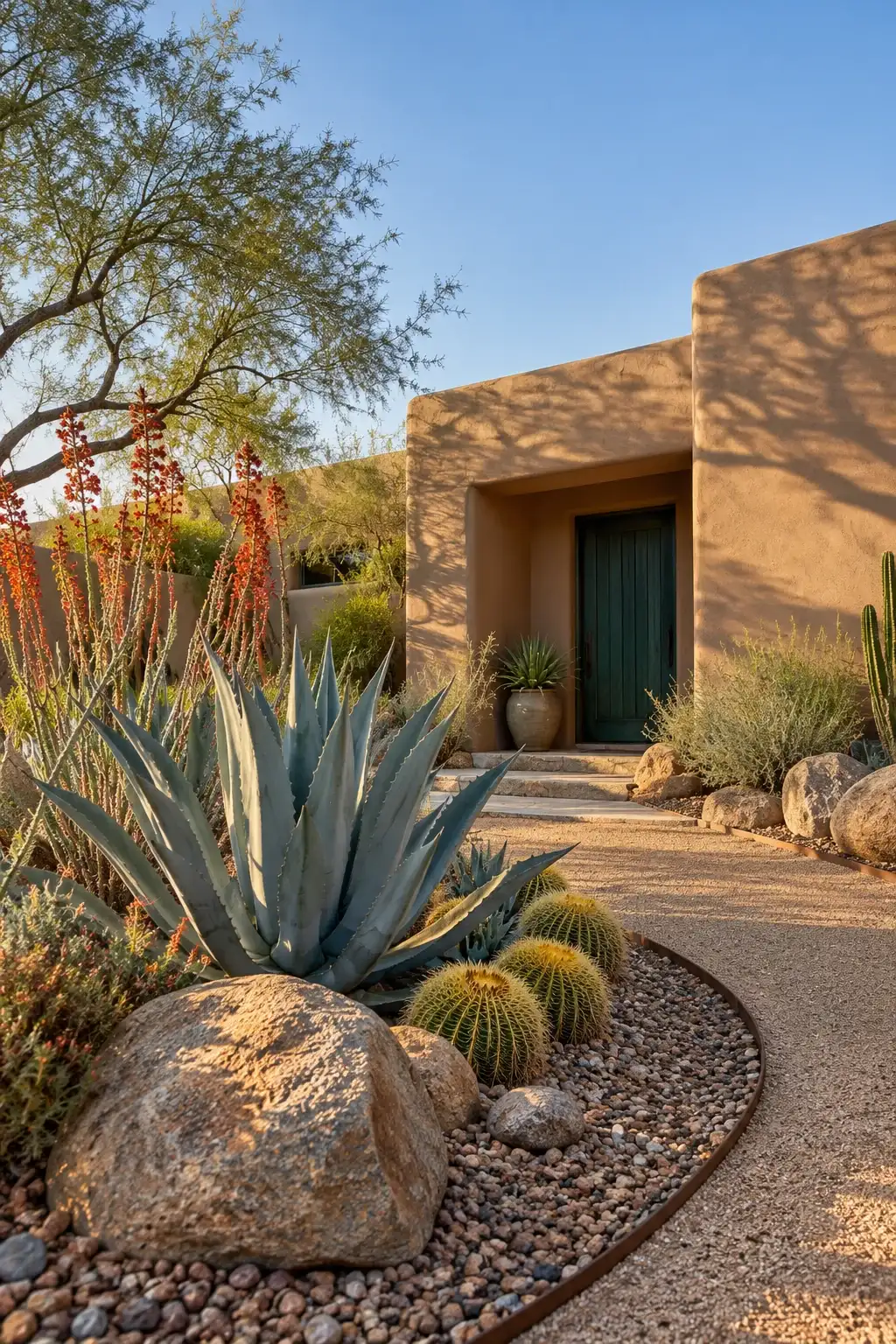
    Entry garden with a large blue agave, barrel cactus, boulders and a curved gravel path to a stucco doorway
  6. Which areas around Scottsdale are covered?

    Scottsdale itself, including Old Town Scottsdale, plus the towns around it: Paradise Valley, Fountain Hills, Cave Creek, Carefree, North Scottsdale, Tempe, Mesa, Phoenix and Glendale. Each one has its own page with the zip codes, the water provider, the lot sizes and the local rules that change a project. The differences are real: Paradise Valley has 4 water providers by address and one acre zoning, Cave Creek requires a 12 foot native habitat corridor inside the property lines of Desert Rural lots, and Tempe delivers flood irrigation to about 850 residential customers. The service areas page maps it out.

Landscape planting plan held open over a front yard path
  1. Can landscaping be done in summer?

    Yes, with adjustments. Demolition, grading, irrigation and hardscape are all fine in June and July, and scheduling can be easier because fewer homeowners want work done then. Planting needs more care: shade cloth for the first weeks, a watering schedule that is checked rather than assumed, and planting late in the day so the root ball is not cooked on arrival. Some species establish better in the shoulder months. The one thing that should not wait for summer is a drainage problem, because the monsoon will test it whether the work is finished or not. The first controller adjustment is often needed some weeks after planting, once the roots have moved into the surrounding soil.

    Pool deck framed by desert planting, a large boulder, agaves and a shade sail beside a modern house
  2. What happens after the yard is built?

    The first year is the establishment year, and it is not maintenance free. The controller needs adjusting as the seasons turn, the drip needs flushing, the trees need staking checked and then removed, and any plant that fails in the first season needs replacing. After that the yard should get easier: less water, less pruning, fewer replacements. If it gets harder every year, the planting may be wrong for the site, or the irrigation may never have been zoned properly. If a plant dies in year 2, the cause can often be seen at the base: a root ball that never spread, or a drip emitter that never worked.

  3. How long does a landscaping project take?

    It depends on the approvals more than on the work itself. A national cost guide says most landscaping projects take several weeks to grade, add topsoil and seed, and do the basic planting and hardscaping. A backyard with a patio, a wall and a ramada runs longer, because a wall can need engineered plans and city review before anything is built on site. HOA review adds time if the property is in an association. The work itself can be faster than the waiting. Weather and material lead times can move the end date more than crew size does.

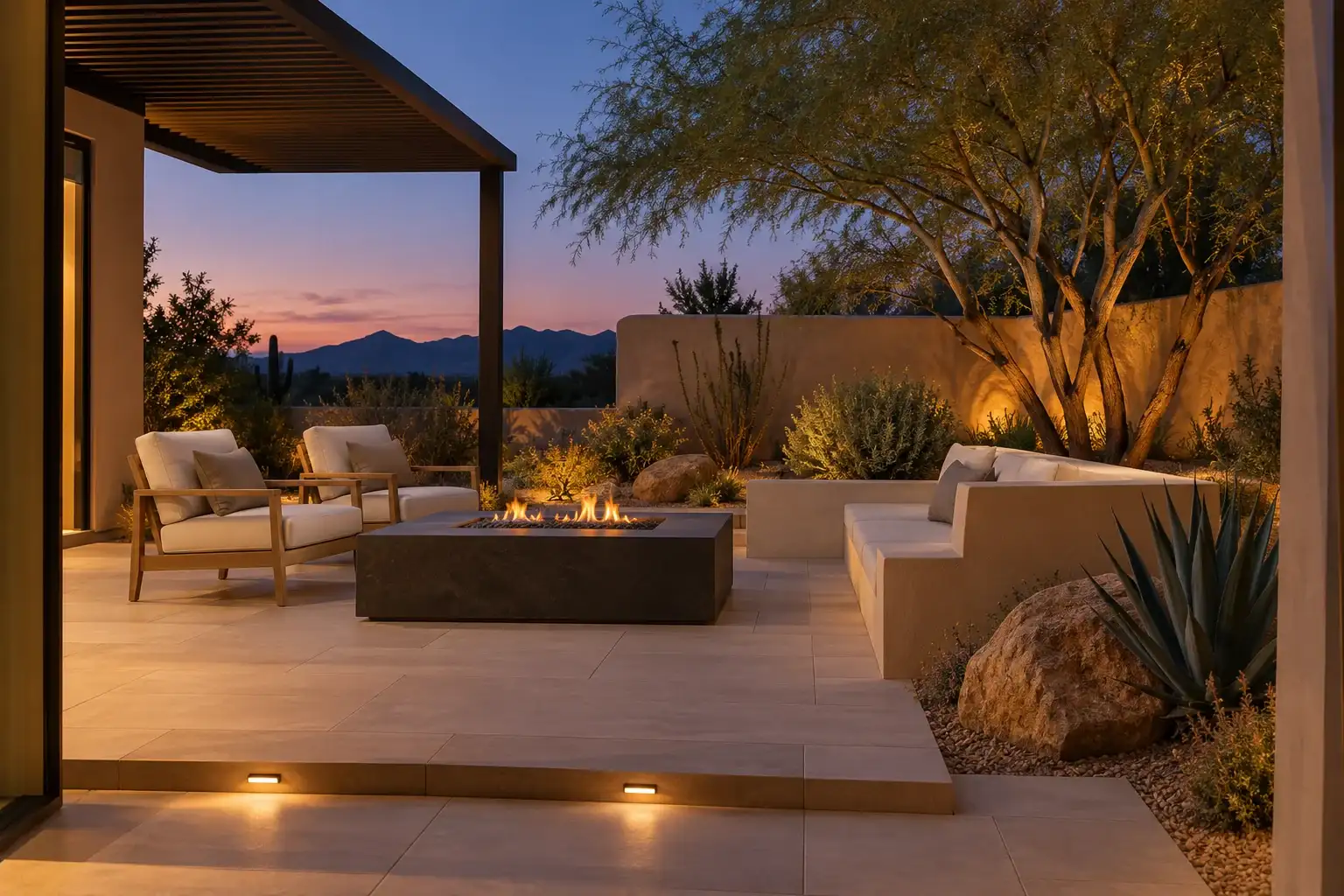
    Patio at dusk with a gas fire table, lounge chairs, built-in seating, step lights and a covered pergola edge
  4. How do I plan a landscaping budget?

    Stage it in the order that prevents waste. Water first: repair and zone the irrigation, because planting into a broken system is planting into a hole. Grade second, because water has to leave the property before a patio or a bed is built on top of it. Then the hardscape, then the planting, then the surface. Keeping part of the budget unspent until the excavation is done leaves room for caliche and old concrete, the 2 things nobody can price from the street. A staged plan also lets the yard look finished at each stage instead of being a construction site for a year. If the whole yard cannot be done at once, the water and the grade go first.

  5. What is xeriscape, and is it the same as desert landscaping?

    No, and the difference matters when you are shopping for a design. Xeriscape is a set of 7 principles about designing for low water use, and it was named in Denver in the 1980s, where the climate is nothing like this one. Desert landscaping uses plants that evolved here. A yard can be xeriscape and look wrong in Scottsdale, for example a gravel field with 3 agaves and no shade. A good desert yard is low water and also builds shade, holds soil and moves stormwater. The guide to the difference goes through the principles one by one. The word was coined for a place with about 15 inches of rain, not for a Sonoran yard.

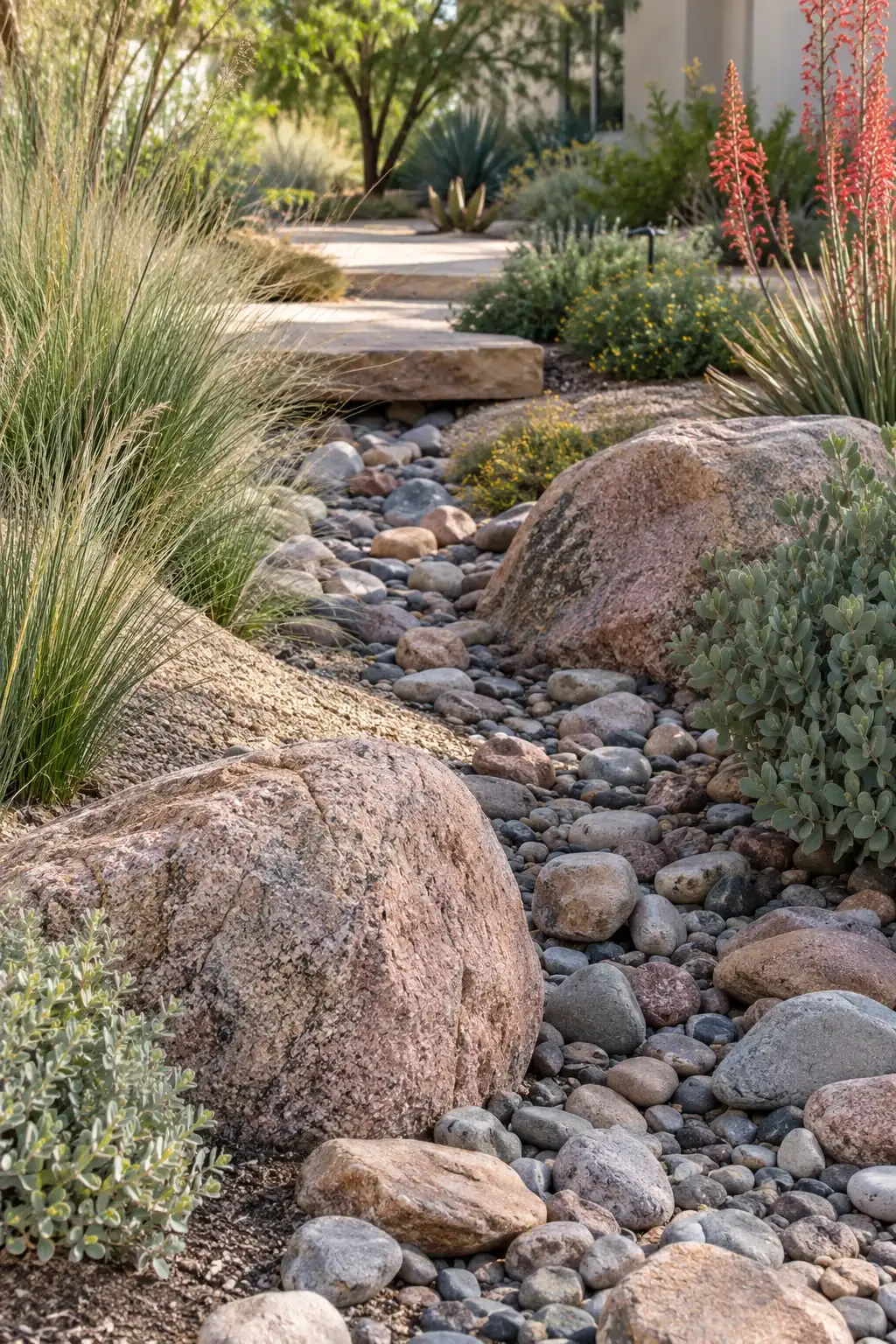
    Dry creek bed of river rock and boulders lined with desert grasses and red flowering plants
  6. What plants work on a west facing wall?

    One of the hottest exposures on the property, and a hard one on plants. Reflected heat from the wall adds several degrees and dries the soil from both sides. What works there: palo verde, mesquite, desert willow, Texas sage, oleander where the HOA allows it, lantana, rosemary, agave and most cacti. What fails: anything with thin leaves and a preference for afternoon shade, which includes most of the plants sold as full sun in a milder climate. Plant in fall if possible, mulch the root zone, and put the drip on its own zone so that bed can be watered differently from the rest. That bed is likely to be the thirstiest one on the property, and it is the first place to test drainage before planting, because a plant that sits in wet soil through a monsoon may not survive the summer.

7 questions

Questions people ask

Still have a question? Call (747) 243-2089 and describe the yard.

How much does landscaping cost an hour?

Labor runs $50 to $100 an hour, according to a national cost guide. Companies often quote the job rather than the hour for anything larger than a repair, and a repair often carries a one hour minimum. Travel may be billed on top.

How much does it cost to landscape a front yard in Scottsdale?

Published figures put a front yard project at $1,500 to $5,000, with a full backyard renovation at $15,000 to $50,000. The gap is hardscape and utilities, not plants.

Do I need HOA approval to change my yard?

Usually yes. Many associations review plant lists, wall heights and materials before work starts, and the rules live in the CC&Rs rather than in city code. Sending the guidelines with the first call lets the design be drawn to them.

Do I need a permit for a retaining wall in Scottsdale?

Yes. Every retaining wall needs engineered plans submitted and approved by the city, at any height. A fence or wall over 3 feet needs a building permit, and dry stack over 30 inches does too.

When is the best time to plant in Scottsdale?

Fall, roughly October into December, because the soil is still warm and the air is not. Late winter and early spring are the second window. Demolition, grading, irrigation and hardscape can run in any month.

Is artificial turf a good idea in Arizona heat?

In a small area with some shade, yes. As a full west facing yard, no. The surface gets hot in direct sun and the base work is most of the cost. It is a water and maintenance decision, not a look.

What trees grow in Scottsdale, AZ?

Palo verde, mesquite, desert willow, ironwood, acacia, fruitless olive, Texas ebony and citrus all grow here, with very different water and litter profiles. The trees guide compares them by job.

Your yard project

Next step

Send the address and one photo of the yard, and say what you want the space to do. The first visit is a walk of the property, and the scope comes after it.

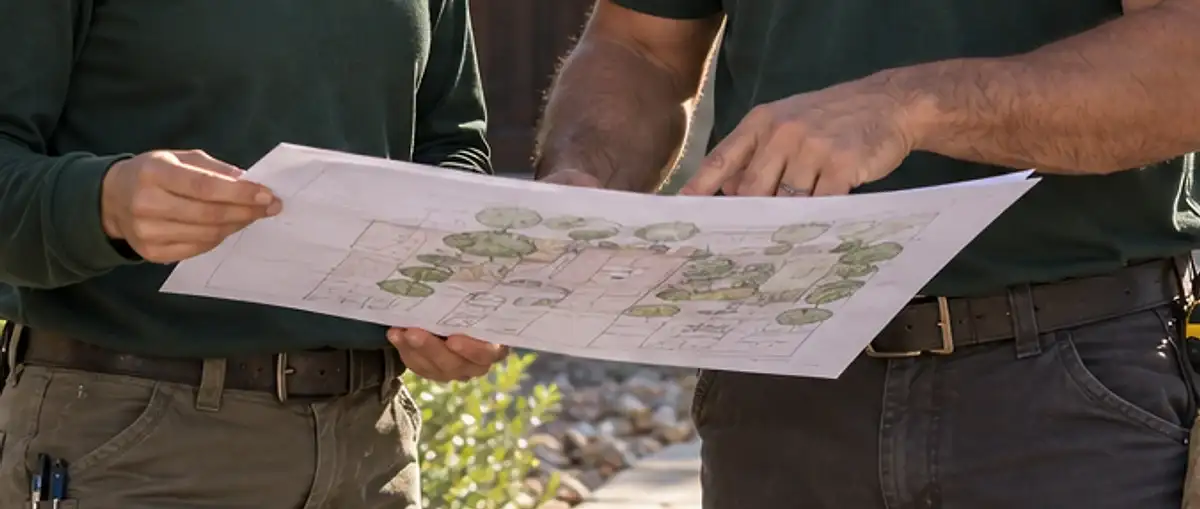
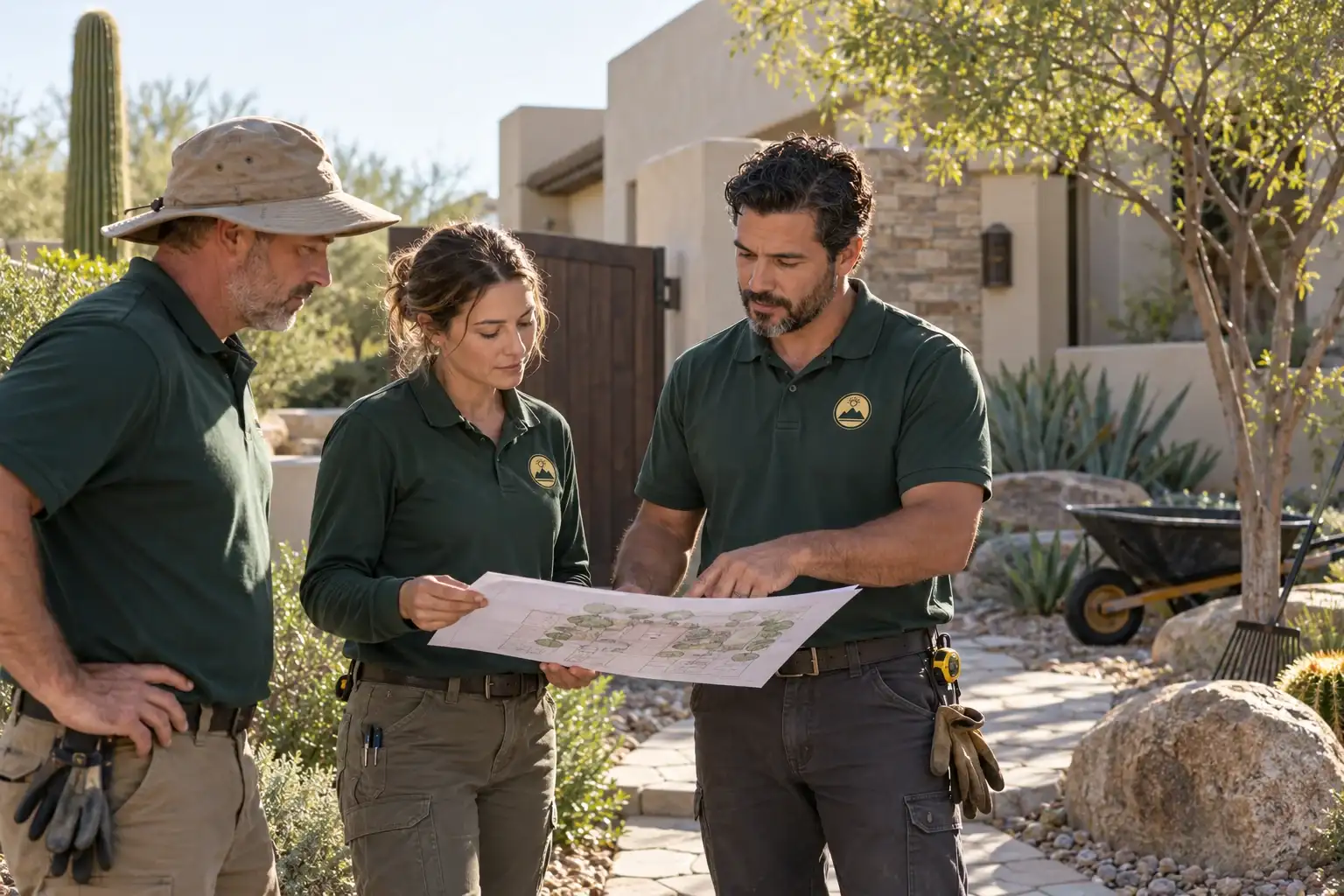
Three landscapers in green work shirts reviewing a planting plan in a desert front yard
Prefer to call?Call (747) 243-2089

Tell us what the yard needs

Tick the services, then leave your name, number and ZIP code (city optional). Someone will call you back to talk it through.

Thank you. You will be called back soon.

Services you need Pick one or more

Design and installation

Patios and pavers

Artificial turf

Irrigation and sprinklers

Outdoor living

Landscape lighting

Or email contact@landscaperscottsdale.com

Talk about your yard(747) 243-2089Get a call back

Before you go: want a call back?

Leave your name, phone number, ZIP code and the service you need, and someone will call you back about your yard.

Call (747) 243-2089

Thank you. You will be called back soon.