Service area · Gilbert, AZ
Landscaping in Gilbert, AZ
Gilbert incorporated in 1920, was known as the Hay Capital of the World until the late 1920s, and annexed 53 square miles of county land in the 1970s, when the population was still 1,971 (Town of Gilbert, history (opens in a new tab)). Call (747) 243-2089 and talk it through before anything is priced.
Service area
What do Gilbert lots look like from the Heritage District to Morrison Ranch?
Two shapes, and the recorded plat decides which one you get. Downtown Gilbert grew outward from a rail siding laid in 1902 on William Gilbert's ground, so the lots near the Heritage District date from a different era of planning than a recent master planned community (Town of Gilbert, history (opens in a new tab)). Newer master planned areas such as Morrison Ranch sit at the other end, where the recorded plat and the association rules set what a yard can hold. That changes what a plan can do, because the lot lines and any shared frontage are fixed before a design starts. Read the plat and the setbacks before pricing a patio, because a narrow side yard and a wide one are different jobs.
Costs
Where does Gilbert water come from, and how much is river water?
The town blends 4 sources, and the largest single share is Colorado River water delivered through the Central Arizona Project. Gilbert's portfolio runs 40 percent Salt River Project, 41 percent Colorado River through the Central Arizona Project, 15 percent reclaimed and 4 percent groundwater (Town of Gilbert, water system investments (opens in a new tab)). That mix is why a bad year on the river does not stop the tap at the meter. It is also why January 1, 2027 matters, when the new federal operating framework trims deliveries. The town says it has stored enough water underground since the early 1990s to fill Canyon Lake nearly 10 times, and it is developing 8 well sites as backup. For a homeowner the translation is simple: outdoor use is the flexible part of the bill, and the town's rebate page says Gilbert is in Stage 1 of its Water Supply Reduction Management Plan, which relies on requests to customers rather than limits (Town of Gilbert, residential grass removal rebate (opens in a new tab)).
Turf
How does the grass removal rebate work in Gilbert?
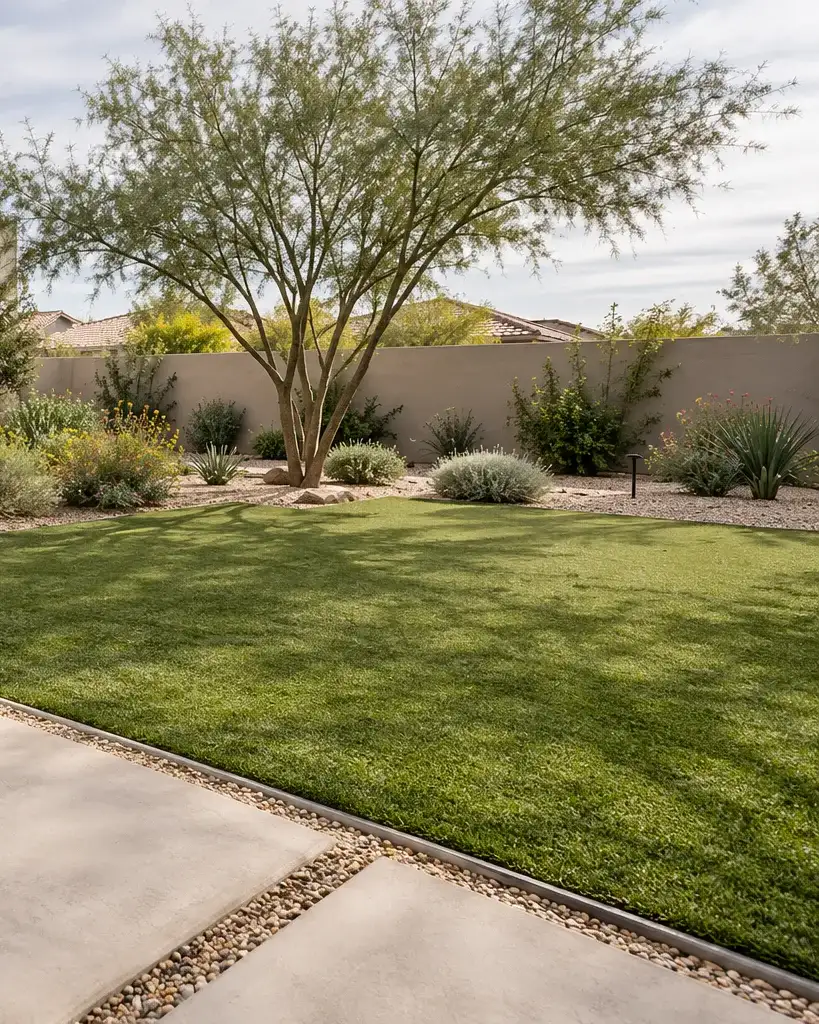
It pays up to $2,000 to take lawn out, with up to $1,000 more for desert plants, and the money moves on a first come basis. Gilbert runs the residential program on a limited fund, and a separate rebate of up to $250 covers a smart controller that adjusts to the weather (Town of Gilbert, water conservation rebates (opens in a new tab)). The reasoning sits in the town's own numbers: most Gilbert water is used outdoors (Town of Gilbert, newsroom (opens in a new tab)), and a conversion can cut a household's outdoor use by 50 percent or more (Town of Gilbert, residential grass removal rebate (opens in a new tab)). The order of operations is the part people get wrong. Apply first with photos of the living grass and a landscape plan, wait for the written approval, then demolish. A conversion that starts before the town's site inspection is not eligible, and an area left as bare soil does not qualify. Keep the installed plant list tied to the submitted plan, because the town asks for photos of the finished area and any receipts before the bill credit is applied.
Ground
What does caliche do to a Gilbert planting bed?
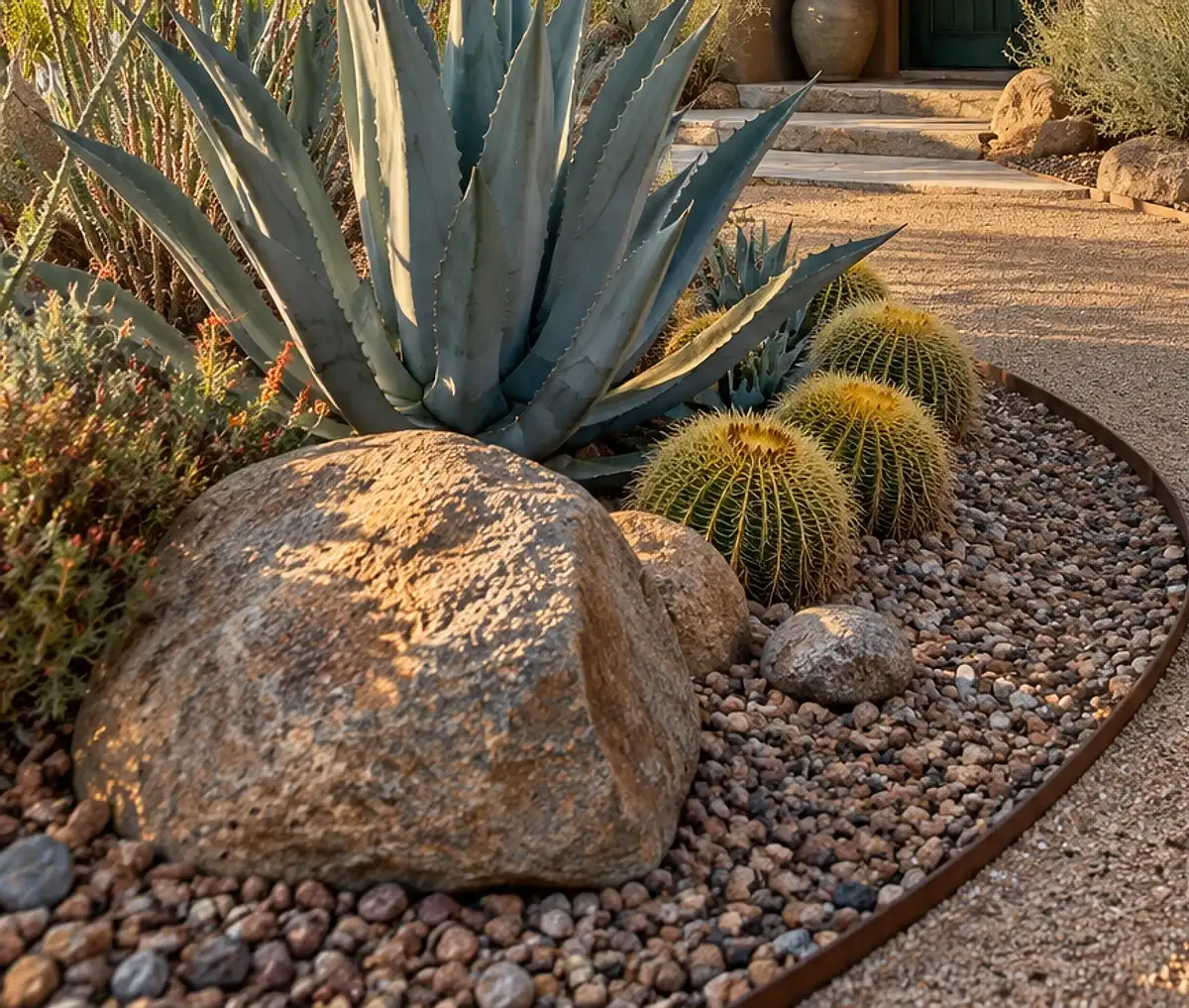
Caliche is common in Arizona soils, and where it sits it sets how deep a hole can go. The crust forms when calcium carbonate binds the sand and gravel under the topsoil, hard enough to stop a root and slow drainage (University of Arizona, managing caliche (opens in a new tab)). Test it for the price of an evening: dig the planting hole where a bed will go, partly fill it with water, and check whether the level drops at least 4 inches in 4 hours. A hole that does not drain means the bed needs mounded or added soil, and turf over that layer wants 8 inches of topsoil before sod has a chance. The same layer can stop a trencher, which can add cost to irrigation trenching where it sits. The layer can form at or below the surface, so a test hole in the actual bed says more than a grading plan does.
Rules
Which rules apply to a wall, a patio cover or a shed in Gilbert?
One threshold is published outright, and the rest goes to the town's Development Services. A storage shed under 200 square feet needs no building permit, while anything at 200 square feet or larger, fitted with electrical or plumbing, or connected to the house or another structure does (Town of Gilbert, land development code FAQ (opens in a new tab)). Fences and walls route to Development Services, which the town names as the best source for fence height and permit questions, and its code FAQ says a permit may be required (Town of Gilbert, code FAQ (opens in a new tab)). The town's permit page lists typical details for a covered patio, a masonry wall and a residential fence, so those are the items to raise with Development Services before anything is ordered (Town of Gilbert, permits and checklists (opens in a new tab)). One Gilbert rule catches people planning a side yard: a vehicle has to sit on an improved surface of asphalt, concrete or gravel in an approved area such as the drive or a pad beside it, and the town treats parking on grass or a landscaped front yard as a violation. A parking pad belongs in the drawing, not in a change order.
Costs
What does the work cost on a Gilbert lot?
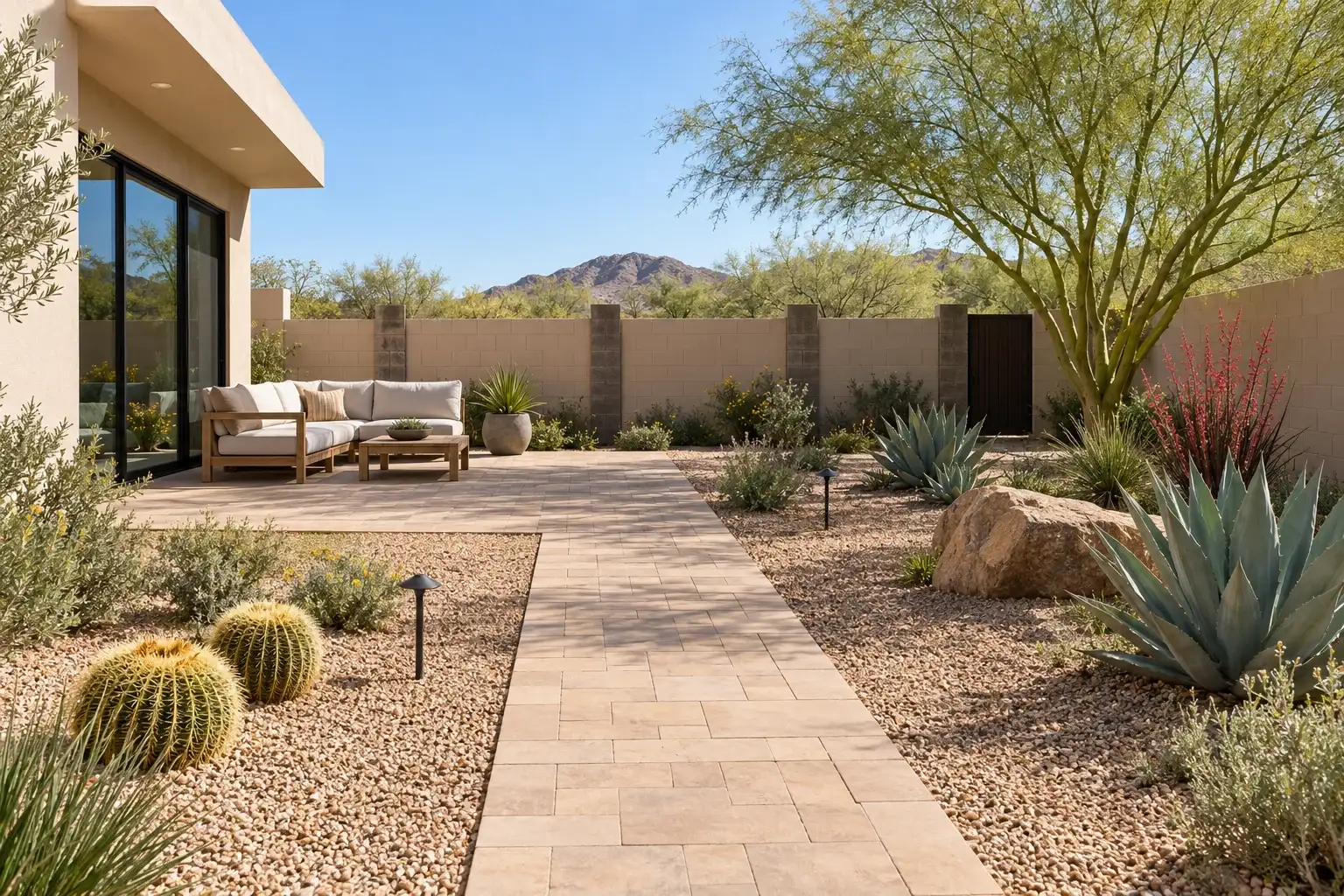
Two numbers frame it: the ground you are covering, and what the guides say that ground costs. According to a national cost guide, xeriscape runs $6,000 for a 500 square foot lawn with light planting, $17,000 for a typical 1,200 square foot project, and $24,000 for 2,000 square feet with a custom design. Another national cost guide prices pavers from $8 to $25 per square foot, with most patio jobs between $2,400 and $7,000 and a 280 square foot average near $3,800. Irrigation is its own line: a national cost guide puts a system on half an acre at $4,000 to $7,000, averaging $5,500. Published market ranges, not a quote: the final price is set after an on-site assessment. Access and caliche move the total on a Gilbert lot more than the paver color does.
Rules
How does an HOA change a Gilbert project?
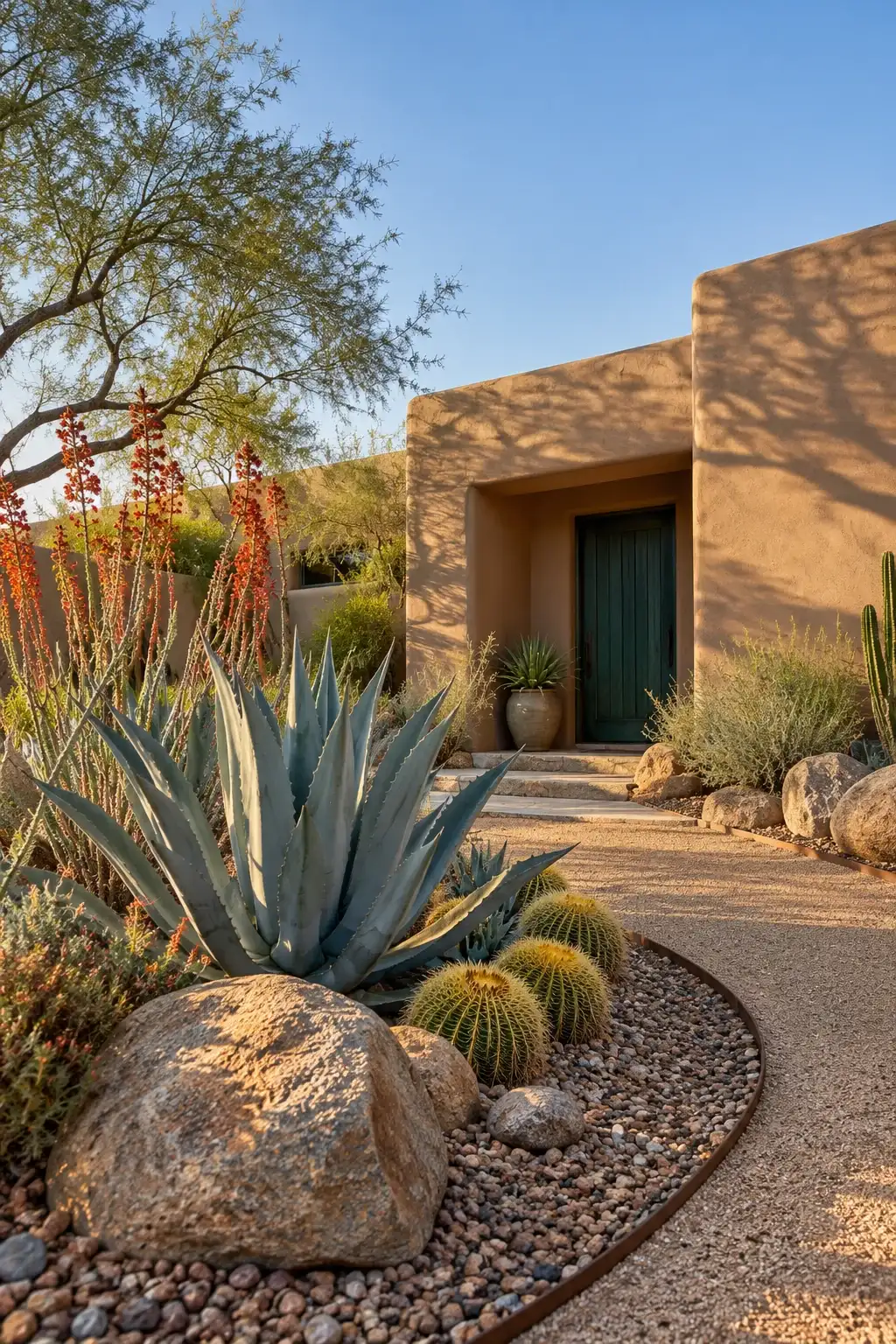
Both can stop work, and they answer to different rules. Gilbert's code office is direct about the split: CC&Rs are a civil contract between neighbors, the town does not enforce them, and where an HOA rule and a town code disagree the town code wins (Town of Gilbert, codes and covenants (opens in a new tab)). So the sequence runs association first, city second, because a design review board can refuse a wall finish or a plant list that the permit counter may approve. Ask the board for the approved material palette before samples are ordered, and write the approval date next to the start date on the schedule. A backyard that backs a green belt can carry an easement as well, which can limit what is built along the rear line.
Planning
What should be settled before a Gilbert crew starts?
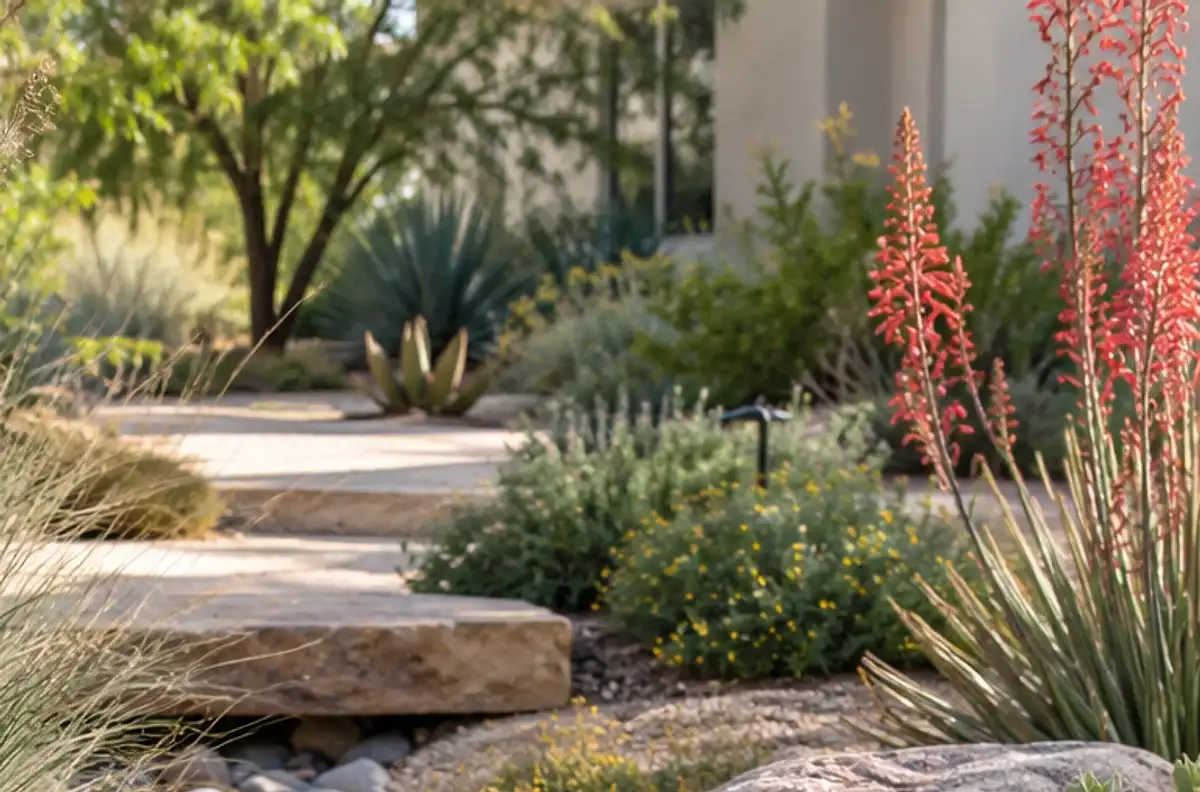
Four things, and the first is the plat. Setbacks, lot coverage and any easement come off the recorded document, not off what a neighbor built. Second, choose the trees you are keeping before a machine arrives, because a grade change inside the drip line of an old shade tree is one way a good tree is lost within a few summers. Third, settle access. Where an alley is the only route to the back yard, measure the gate, the turn and any overhead wire before a skid steer is booked. Fourth, stage material somewhere legal. Check with the town before a dumpster goes in a street or an alley, because a right of way permit may apply, and a pile of base rock left in an alley is a complaint waiting to happen. Call (747) 243-2089 once the dimensions are on paper.
3 questions
Questions people ask
Still have a question? Call (747) 243-2089 and describe the yard.
Does a block wall need a Gilbert permit?
A permit may be required. The town sends fence and wall questions to Development Services, which it names as the best source for fence height and permit information. Call with the height and the distance from the property line before any block is ordered.
Does artificial turf count toward the Gilbert grass removal rebate?
Yes, it can be part of the converted area. The town's rebate FAQ says artificial turf may be installed in the conversion area, but the Desert Plant Bonus of up to $1,000 needs at least 30 percent of the removal area covered by low water use plants or trees at maturity. Program rules may change at any time, so confirm the current terms with the town before choosing turf.
How long does a Gilbert conversion take?
The town's rebate gives 90 days from written approval to finish the work and send photos of the converted area, and it asks for 6 to 8 weeks of processing after approval. Demolition and trenching go quickly; planting and gravel are slow. A July or August start can lose days to heat, so a spring or fall schedule is easier to hold.
Keep reading
- Landscape Installation: for a full yard rebuild on a wide lot.
- Patios and Pavers: for slabs, seat walls and garden walls.
- Irrigation and Sprinkler Repair: for a controller that never got reset.
- Landscaping Cost: for every published range in one place.
- Artificial Turf vs Sod in Scottsdale:
- Landscaping Rock vs Mulch in Scottsdale: