Guide 04 · 5 min read
Landscaping Rock vs Mulch in Scottsdale, AZ
Rock is the Scottsdale default because xeriscape expectations favor it, and it is also the fastest way to cook a yard. Mulch cools the soil and feeds it, and it blows away in monsoon wind. The choice is really about what you plan to plant, and whether it has to survive a second Scottsdale summer.
Good to know
The short answer
Rock wins on permanence and on the look Scottsdale expects. Mulch wins on plant health and on the soil staying cool enough to root in. The right choice depends on the soil, what is planted in it, and how much reflected heat the walls already throw.
Good to know
Landscaping rock: what it actually is
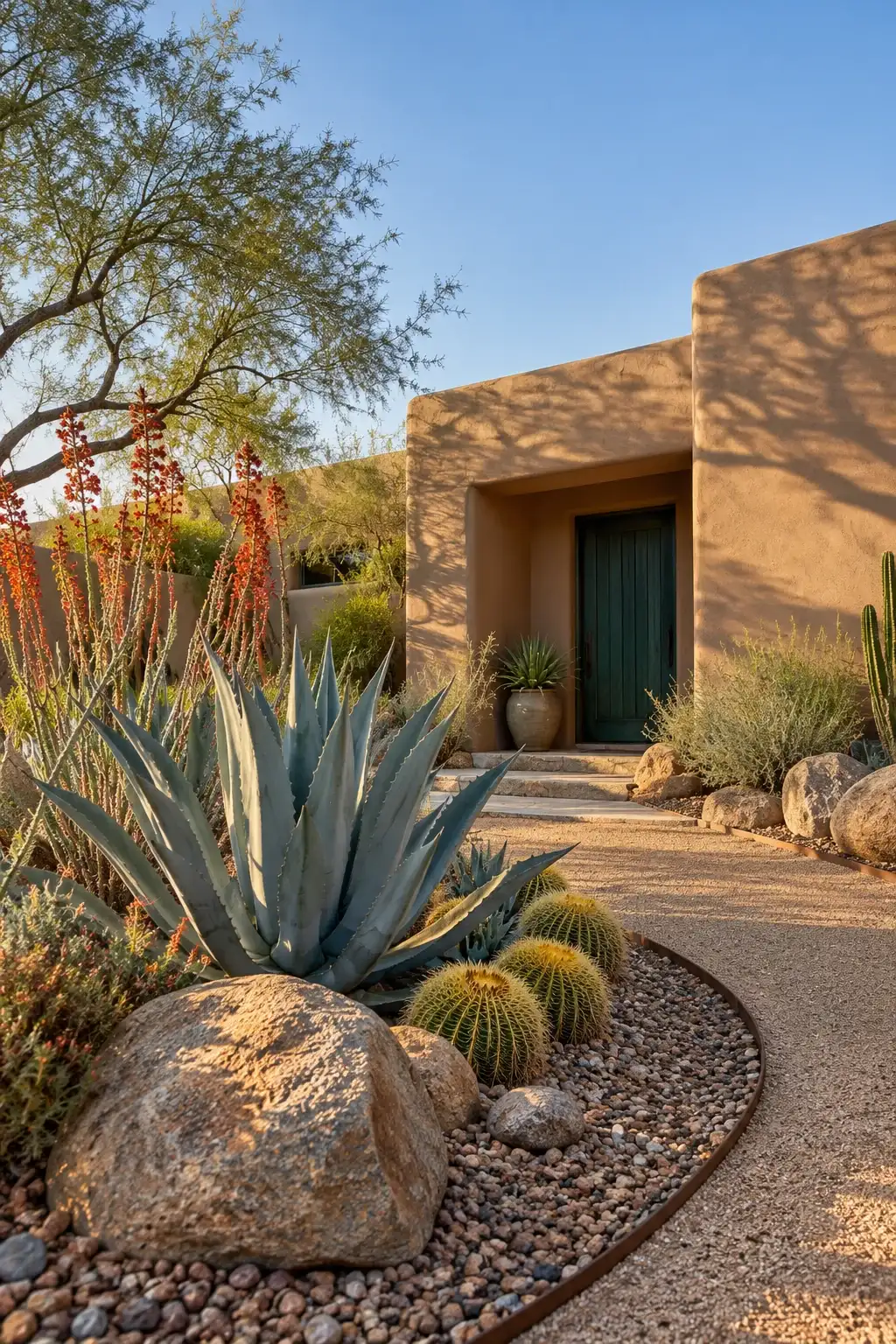
Landscaping rock means granite or decomposed granite, sometimes river rock, spread as ground cover, usually over fabric or a compacted base. It never breaks down, never needs topping up, and never feeds the soil. That is the entire bargain: permanence for sterility. Rock holds heat, sheds water fast, and contributes nothing to the plants growing in it.
Decomposed granite, the crushed version, is the one Scottsdale yards see most, and it has its own behavior. Without edging and compaction it migrates, and it walks toward the pool, the driveway, and the neighbor's yard one monsoon at a time.
Good to know
Mulch: what it actually is
Mulch is shredded bark or wood laid over the soil surface. It shades the soil, slows evaporation, and rots slowly into organic matter, which is the only reason it works as well as it does for plants. It also breaks down, which is the catch. Scottsdale heat cooks it faster than the national average, and the monsoon blows it, so a mulched bed needs a top up far more often than a rocked one.
Organic mulch is the plant's friend in the same way rock is the plant's enemy: it moderates soil temperature instead of amplifying it, and it holds moisture instead of shedding it.
Mistakes
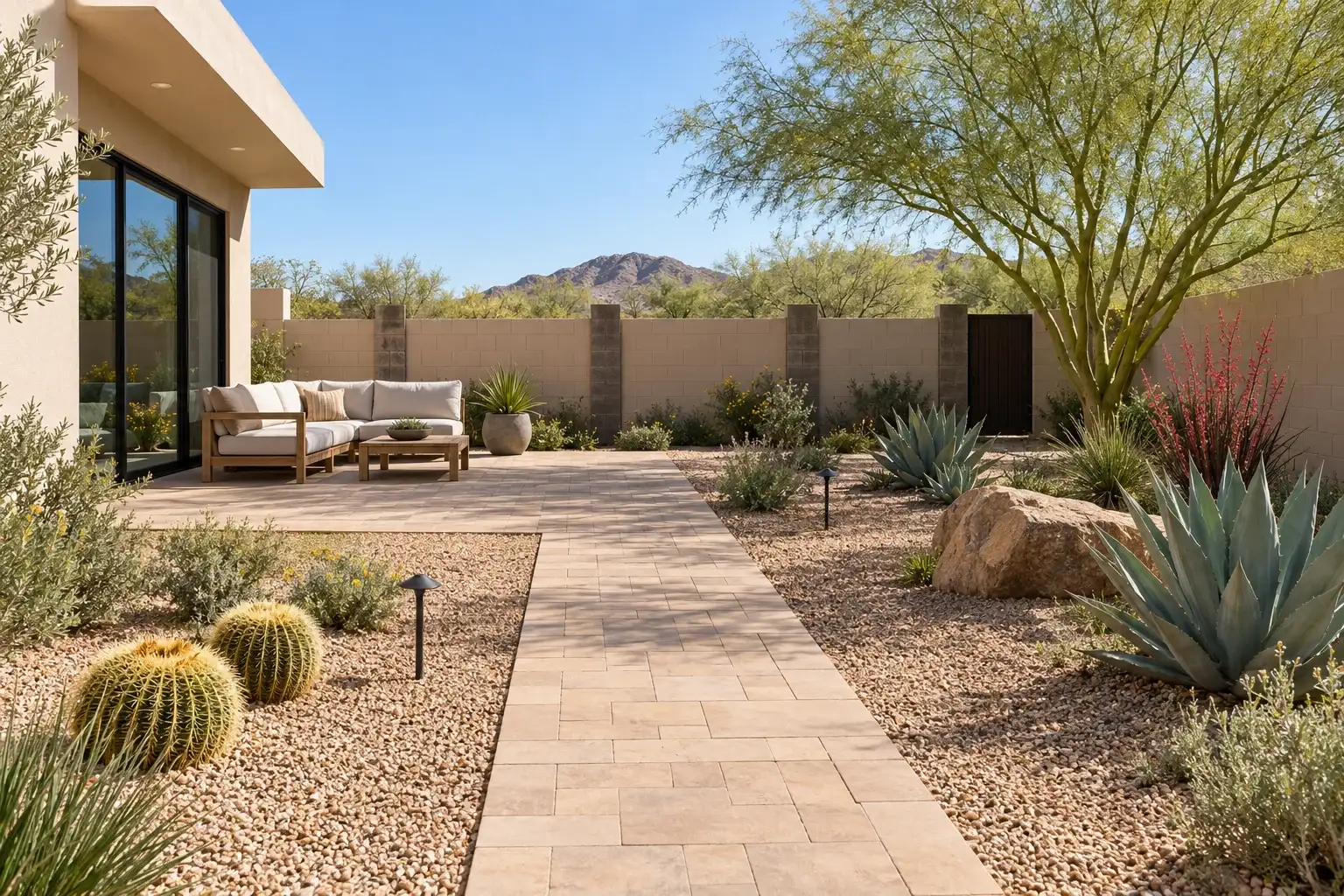
Where landscaping rock fails here
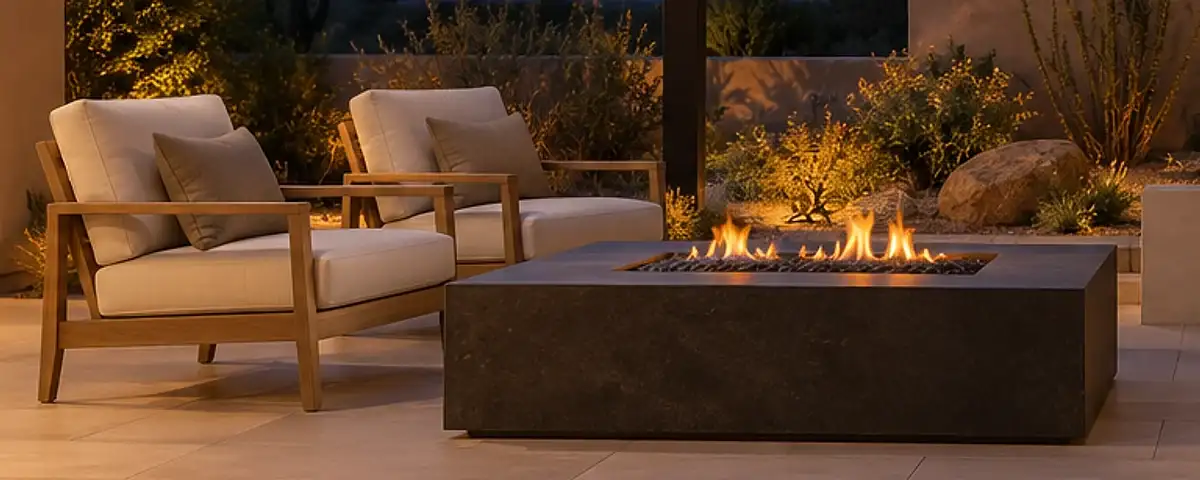
Heat is the failure, and it is the one people feel twice. Full rock coverage absorbs the day's sun and re-radiates it into the evening, which is what cooks a yard. Air temperature in July runs past triple digits, surfaces run well above air temperature, and a rocked yard keeps radiating after sundown. Walk the same yard at nine at night in July and the heat is still coming off it. The air has cooled and the yard has not. The walls matter too. A yard enclosed by block walls with rock at their base bakes from below and reflects from the sides.
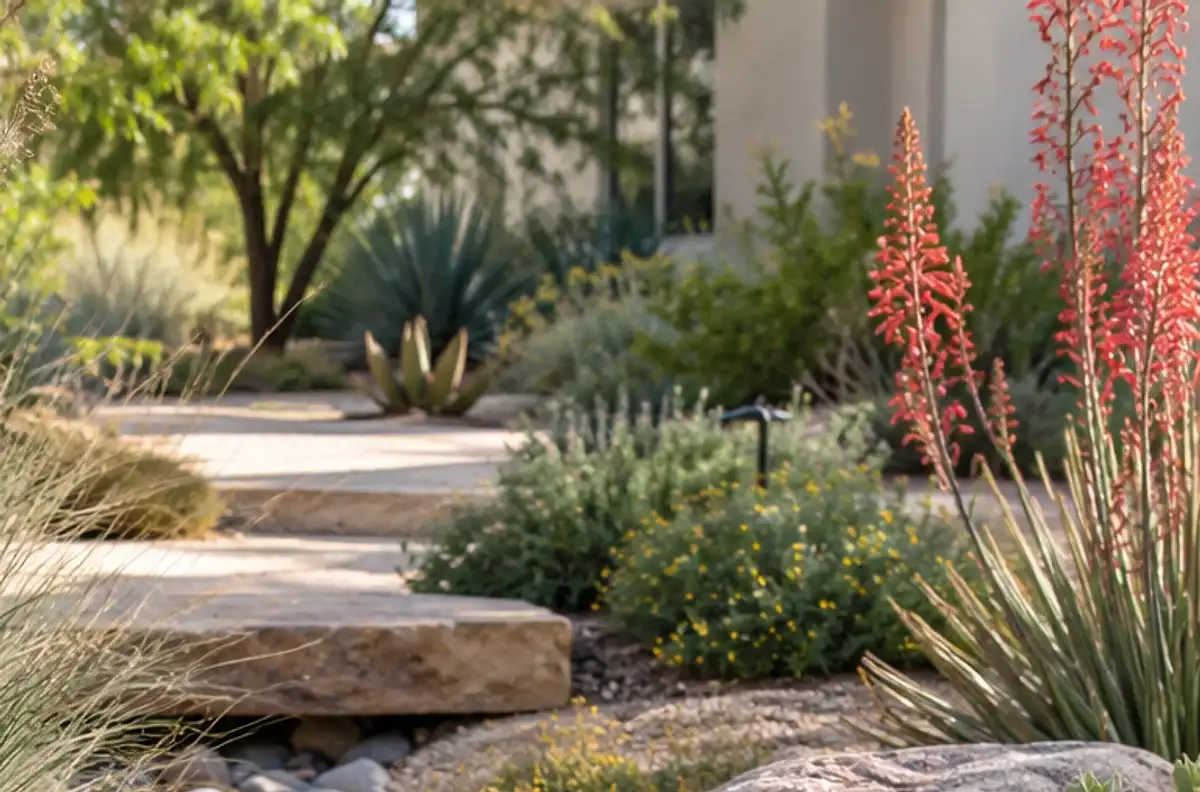
The plants are the second failure, and it follows from the first. Plants that live in zone 9b are adapted to heat, but not to the heat of their own root zone under rock. The classic Scottsdale story is the freshly rocked yard that looks sharp for one summer, then the planted things in it die in the second, because the rock was chosen for the look and the plant list never caught up. The plants that survive a rocked Scottsdale yard are the ones with shade, the right species from the drought-tolerant lists, and a drip line at the root, not the ones dropped into hot gravel as an afterthought.
Granite migration is the third. Without paver or steel edging and proper compaction, decomposed granite walks. It ends up in the pool, ground into the driveway, and swept into the neighbor's yard by every monsoon. The fix is edging and compaction done at the start, not sweeping after every storm. One good storm can move a wheelbarrow's worth of granite across a driveway, and the cleanup becomes a monthly job from July to September.
Mistakes
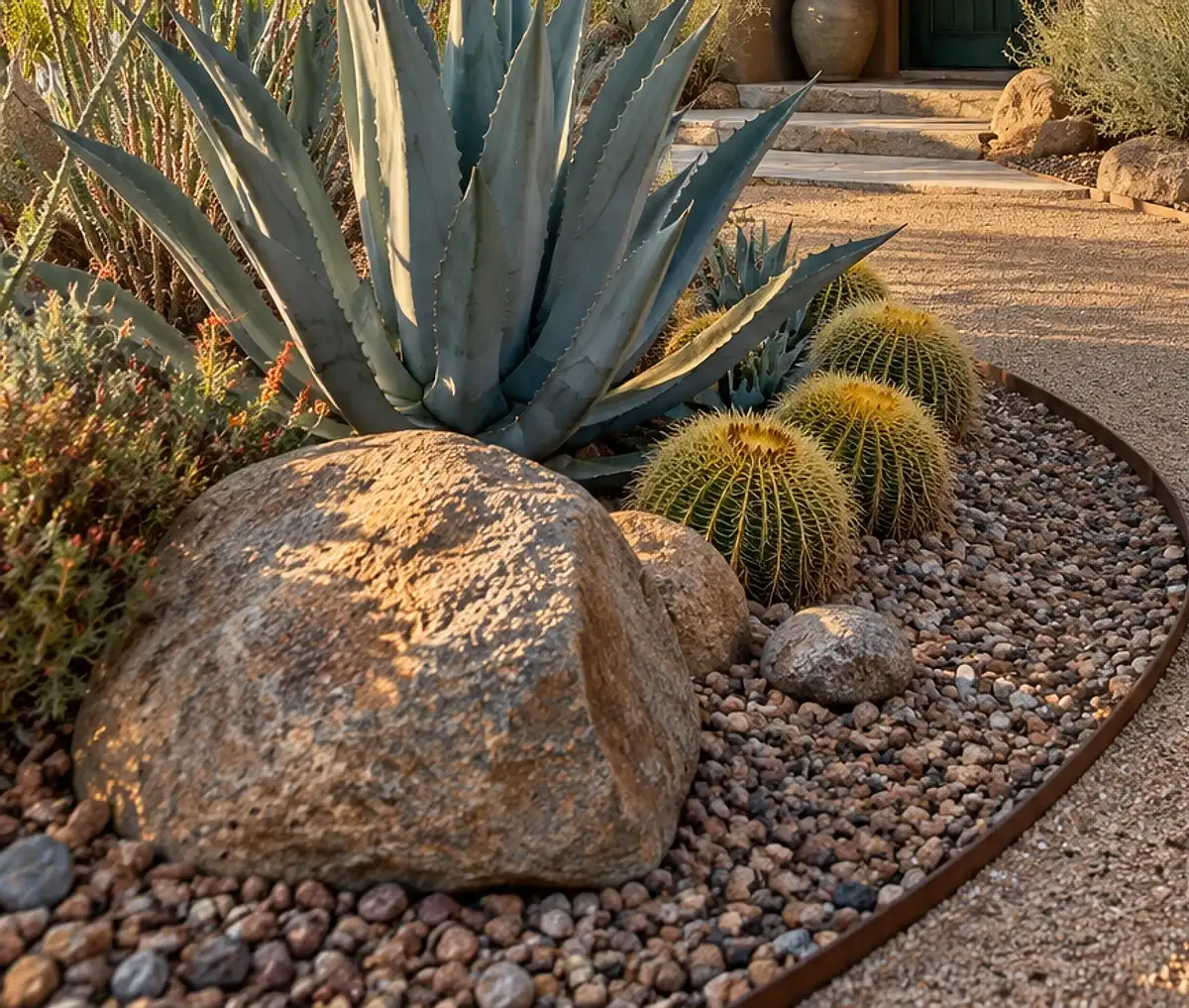
Where mulch fails here
Wind is the first failure. Monsoon season brings the storms, and the storms bring the wind before the rain. Shredded bark in an open yard catches that wind, and a freshly mulched bed can be half empty by morning. Heavier mulch and an edging that holds it help, but no mulch is immune.
Heat and dryness are the second. Scottsdale sun fades and dries mulch fast, and the breakdown that makes it good for the soil is the same process that means it disappears. A mulched bed needs a top up more often here than anywhere cooler, which puts the material back on the budget every year or two.
Water and slope are the third. Monsoon rain arrives faster than desert soil can absorb, so it sheets across the surface. Mulch on a slope floats and washes into the low points, and the beds near the walls end up bare. A rocked bed sheds the same water, but it stays put while it does it.
Costs
What it costs and what drives the number
Rock runs higher per square foot on day one, then costs nothing for years, which is why it wins the long math. Mulch runs low per square foot and repeats, year after year, because heat and wind consume it. The drivers for rock are the material itself, the depth, and the labor of moving it, and caliche does not matter much here because rock sits on top. For mulch the driver is simple: how often you top it up, and how much of it the monsoon leaves behind.
The real cost question is the plants. Whatever the cover costs, replacing a planted bed that cooked under rock dwarfs it. The landscaping cost page covers what a full yard rework runs, and it is the plants, not the cover, that drive the number. Over five years the two covers usually land close together once mulch top ups are counted, but that assumes the plants survive, and under rock that is the assumption that fails.
Good to know
What good work looks like in Scottsdale
- The cover is chosen for the plants, not the other way around, and the plant list comes from the drought-tolerant lists first.
- Rock gets edging and compaction specified before it goes down, so granite stays where it is put.
- Mulch gets a depth and a top up schedule written into the plan, not left to whenever it looks thin.
- The yard is planned as one system, so the cover, the irrigation, and the drainage agree with each other instead of fighting.
6 questions
Landscaping Rock vs Mulch: your questions
Still have a question? Call (747) 243-2089 and describe the yard.
Is rock or mulch better in Arizona?
For plants, mulch. For permanence and the expected Scottsdale look, rock. Most yards need both, rock in the open ground and mulch around the plants that need a cooler root zone.
Does rock make a yard hotter?
Yes. Rock absorbs and re-radiates heat, and a fully rocked yard stays hot into the evening. That is the main reason planted things in fresh rock yards die in their second summer.
Does mulch attract pests?
Bark mulch holds moisture, which pests like, which is why the usual practice here is rock against the foundation and mulch out in the open beds.
Will decomposed granite stay in place?
Only with edging and compaction. Without both, it walks into the pool, the driveway, and the neighbor's yard one monsoon at a time.
Do I need fabric under rock?
Fabric slows weeds but does not stop them, and it does nothing about the heat. The bigger choice is what gets planted above the rock, because that is what decides whether the bed survives.
Which one passes design review easier?
Scottsdale HOAs and design review expect xeriscape, and rock reads as xeriscape. What gets approved depends on the plant list, and a rock yard with the wrong plants gets flagged as fast as a green lawn in the wrong place. See xeriscape vs gravel for the difference.