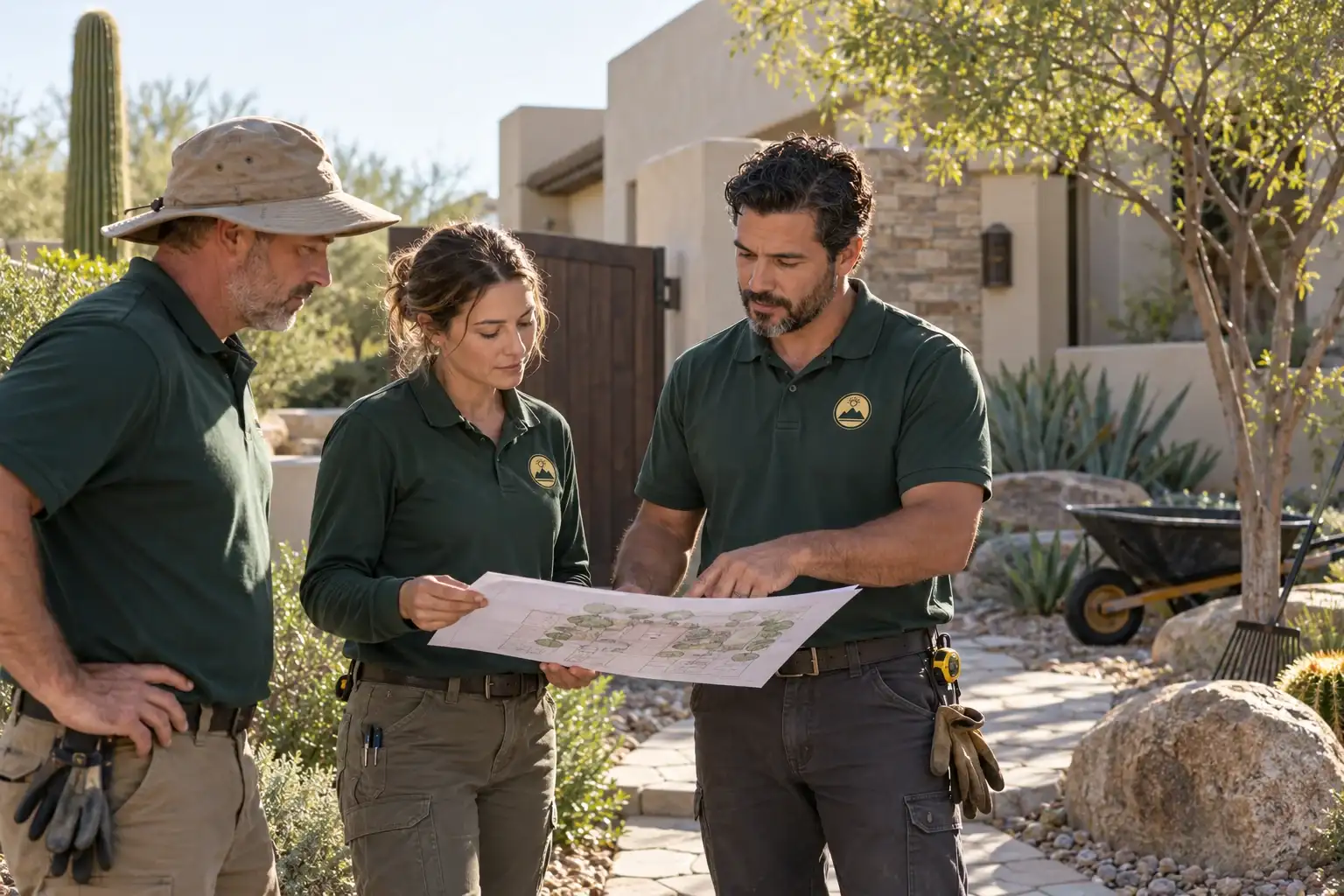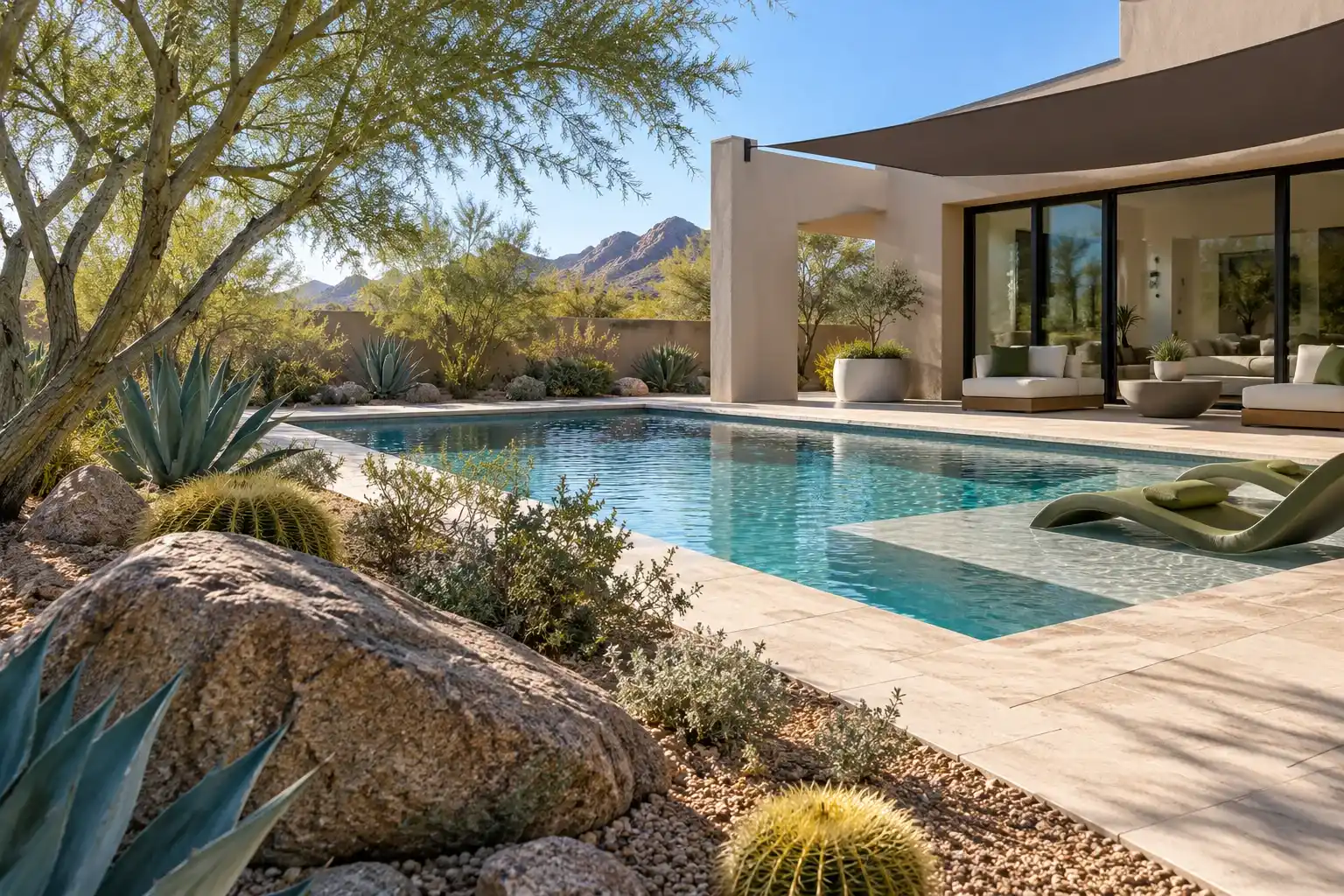
Service area · Paradise Valley, AZ
Landscaping in Paradise Valley, AZ
Landscaping in Paradise Valley starts with a lot that is usually an acre or more, and the town treats the slope as part of the plan. Most lots carry a one acre minimum, and hillside parcels go through a landscape review that decides what can be planted.
Service area
How big are the lots, and what sits on them?
Most of the town is zoned R-43, a one acre minimum, and R-175 parcels are 4 acres (Paradise Valley residents guide (opens in a new tab)). That changes a budget before anything is planted. Street frontage can be long, the driveway is often the largest hardscape, and the house can sit well back. Many yards are walled, with a motor court and a gate, and the plant palette is desert from the curb in. Many properties are on septic, so the drain field stays clear of trees with aggressive roots and of grading over the leach lines. The town allows 2 horses for each full acre in R-43 and R-175, which is why tack rooms, shade structures and arena footing can show up.
Water
Which of the 4 water providers serves my address?
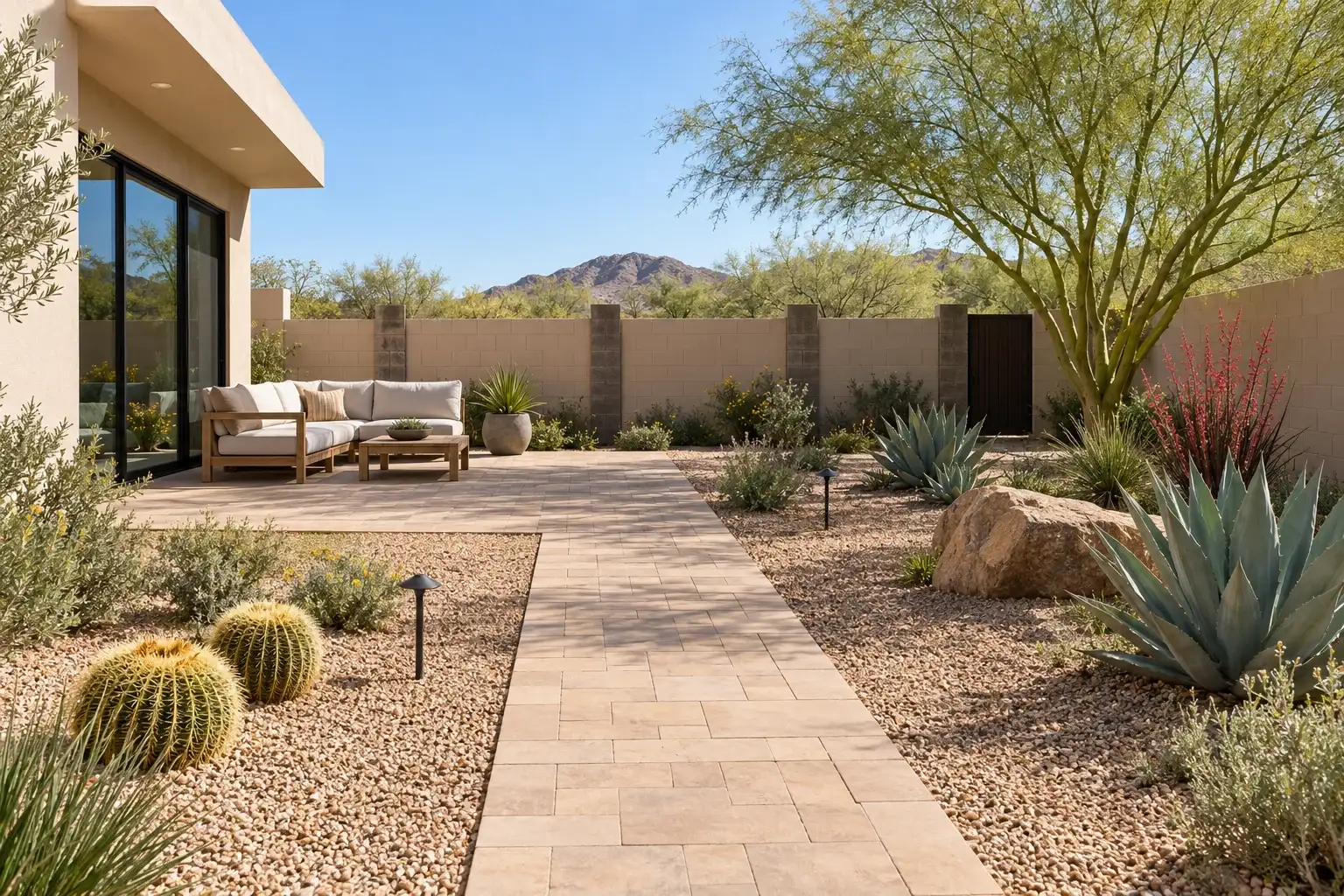
The Town lists 4 water providers, and the address decides which one serves a home: Berneil Water Company, the City of Phoenix, the City of Scottsdale and EPCOR (Paradise Valley utility services (opens in a new tab)). Which one serves you can change the pressure at the meter, the rate and whether a conservation rebate exists, so settle it before an irrigation plan is drawn. On the same street, 2 houses can sit on different systems. Design for the service you have: a 3/4 inch meter limits how many stations can run at once, so the schedule can split into more start times. Ask the provider for static pressure and meter size, then hand both to whoever lays out the zones. A system designed for 70 psi can behave badly at 45.
Ground
What do caliche and slope do to a planting plan?
Ground can run from granite grus on the slopes to caliche on the flats, and caliche is the one that stops a shovel. It is a calcium carbonate layer that restricts roots and drainage, and it is common but not universal (University of Arizona, managing caliche (opens in a new tab)). Test before planting: a hole that drops 4 inches in 4 hours drains adequately. If it does not, the pit can become a bathtub and the shrub can die in its second summer. On a slope the problem reverses, water crosses the surface instead of soaking in, so beds need a shallow berm on the contour. Where lawn goes over caliche, 8 inches of topsoil is the working number. On an acre that is truckloads.
Rules
Where do the hillside rules apply?
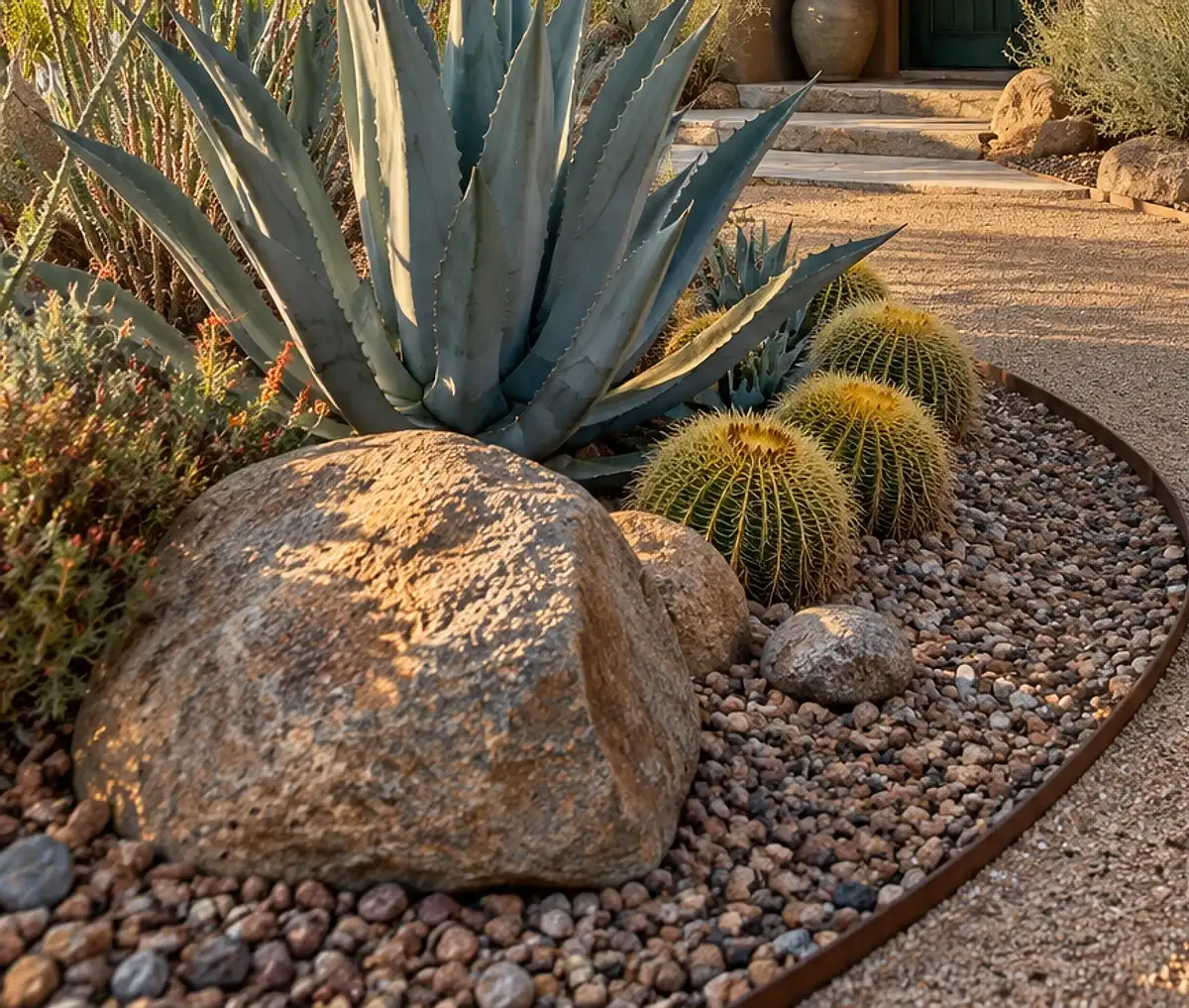
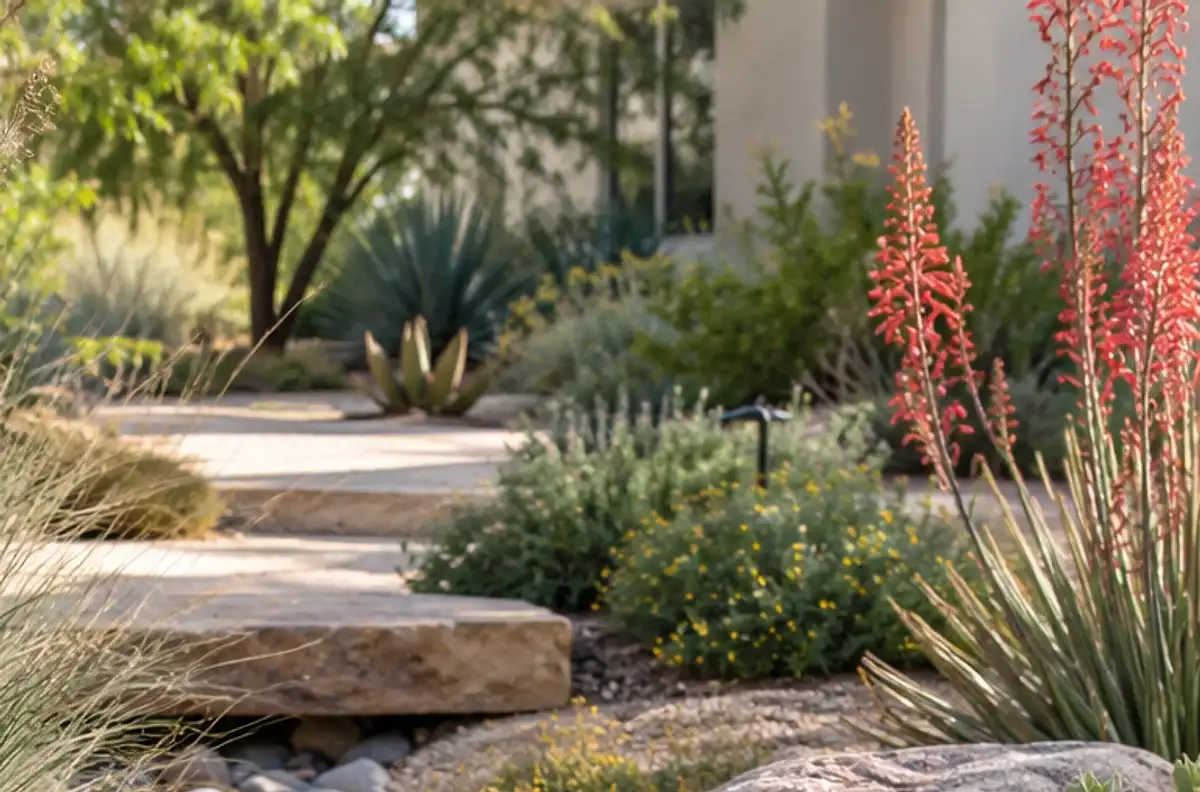
The hillside rules apply to land inside the mapped Hillside Development Area and to any building pad on natural ground sloping 10 percent or more (Paradise Valley hillside regulations, Article XXII (opens in a new tab)), and the hillside committee reviews the landscape, not just the house (Paradise Valley hillside review guide (opens in a new tab)). On those parcels only desert landscaping is allowed, non native plants need committee approval, and flammable grasses are prohibited. Retaining walls are capped at 8 ft on hillside lots and 6 ft elsewhere. On non hillside lots, landscape lighting is limited to 36 in of height and 300 lumens. Dry weeds over 6 in are a code violation. Any saguaro over 4 ft needs a state permit, tag and seal before it moves (A.R.S. 3-906 (opens in a new tab)).
Climate
How does the climate compare with central Scottsdale?
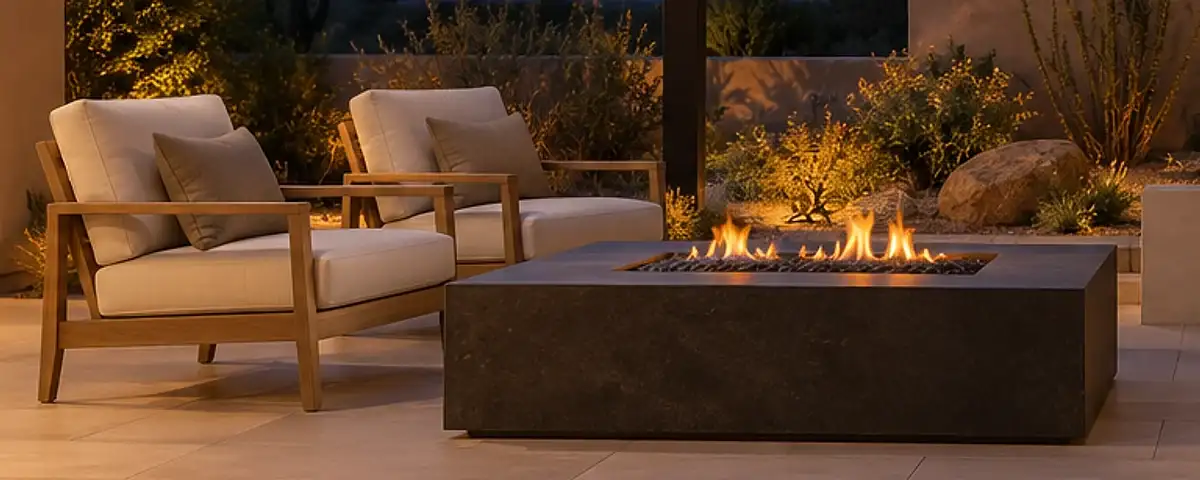
Paradise Valley sits on the same valley floor as Scottsdale, so it does not get the elevation relief that Carefree and Cave Creek do. Carefree town hall stands roughly 1,140 ft above Scottsdale, and a yard at the base of Camelback does not. Summer afternoons run long on a west facing wall, and masonry holds that heat and releases it after sunset, which is why a patio there stays warm at 10pm. What the town does have is slope and orientation. A north facing bank holds moisture longer and burns less, and a south facing bank dries faster. Cold air drains downhill at night, so the low corner of a lot is the frost pocket. Plant tender material high.
Costs
What does a yard project cost here?
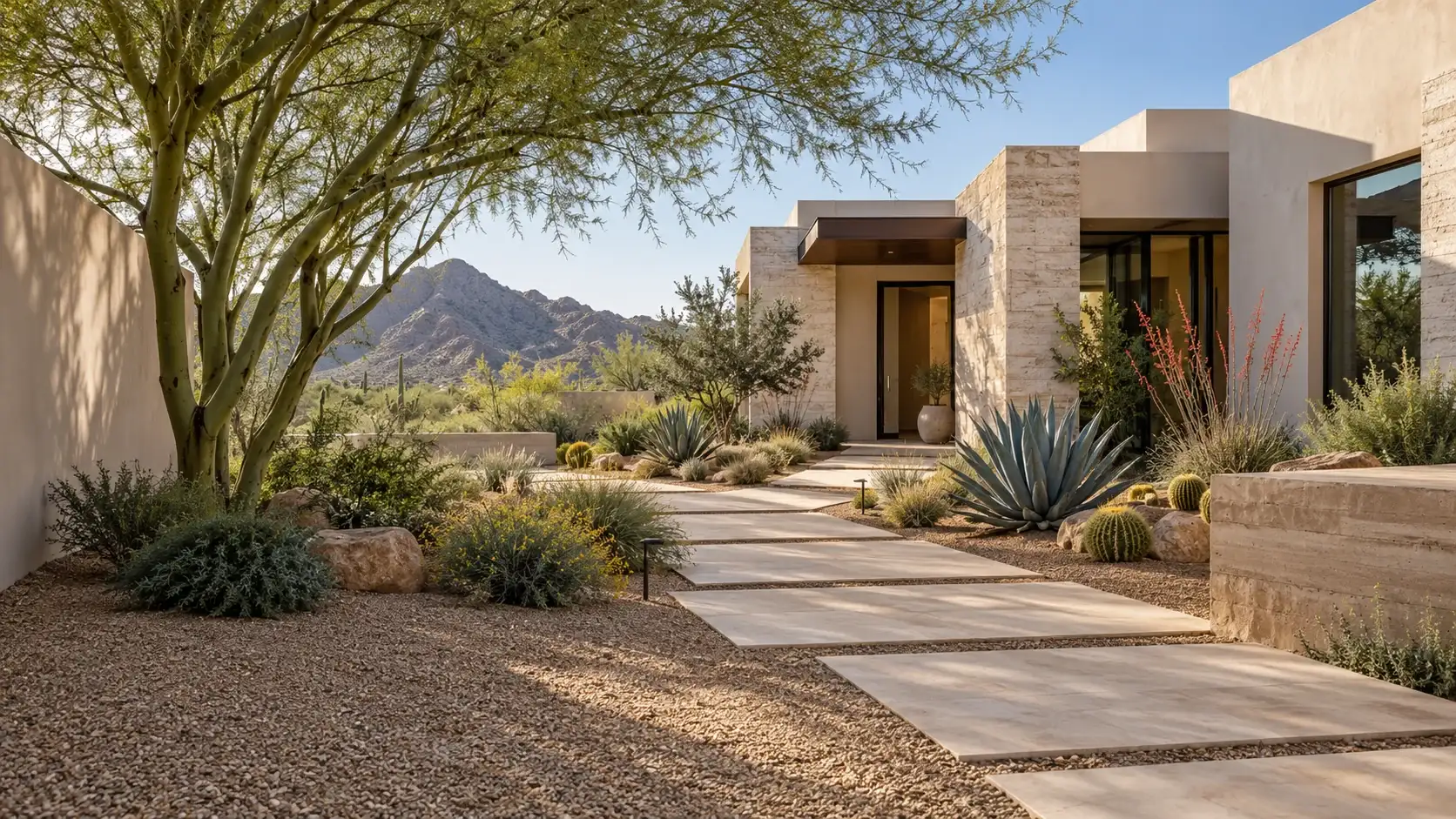
Landscaping prices off square footage and access here more than off taste. A national cost guide puts most landscaping at $4.50 to $12 per sq ft, a full tear out or an outdoor kitchen build at up to $40 per sq ft, and the average project at $3,517. A front yard typically lands at $1,500 to $5,000, while a backyard renovation runs $15,000 to $50,000. On an acre the front yard figure rarely applies, because a long frontage is not a suburban front yard. Published market ranges, not a quote: the final price is set after an on-site assessment. Add the hillside review and engineering on any wall, which a national range does not carry.
Planning
What has to be settled before work starts?
5 things, in this order. Confirm the provider and the meter size, because the irrigation design follows from both. Pull the parcel's hillside status and slope, since a pad on 10 percent ground pulls the whole project into review. Locate the septic tank and drain field on paper before anyone digs, and mark the lines in the field. Then settle the plant list against the desert only rule if the lot is in the hillside area. Access is last: an acre with a narrow gate and a long gravel drive needs equipment sized for it, and an excavator that cannot reach the back corner changes the price. Put the review step in the schedule instead of finding it in week 3.
3 questions
Questions people ask
Still have a question? Call (747) 243-2089 and describe the yard.
Do I need a permit for a retaining wall in Paradise Valley?
Plan on a submittal, and start from the height cap. Walls are limited to 8 ft on hillside lots and 6 ft elsewhere, and the hillside committee reviews the landscape on parcels inside the hillside area, so wall, grading and planting go in as one package. Engineered plans can be part of the submittal.
Can I plant anything I want on a hillside lot?
No. Hillside parcels allow desert landscaping only. A non native plant needs approval from the hillside committee, and flammable grasses are prohibited outright. The rule covers the landscaping on the parcel, so a palette drawn before the review is a draft.
What does the hillside review actually look at?
Land disturbance, heights, lighting, building materials, grading and drainage, according to the Town (Town of Paradise Valley, Hillside Building Committee (opens in a new tab)). The review guide adds that allowable disturbance and storm water retention scale with the slope, retaining walls are capped at 8 ft, and landscape up-lighting is limited in output and quantity, as is the visibility of light sources.
Keep reading