Service area · North Scottsdale, AZ
Landscaping in North Scottsdale, AZ
North Scottsdale is where the lot line, the HOA committee and the natural area open space line all get a vote before a shovel does.
Service area
What do the yards and lots look like?
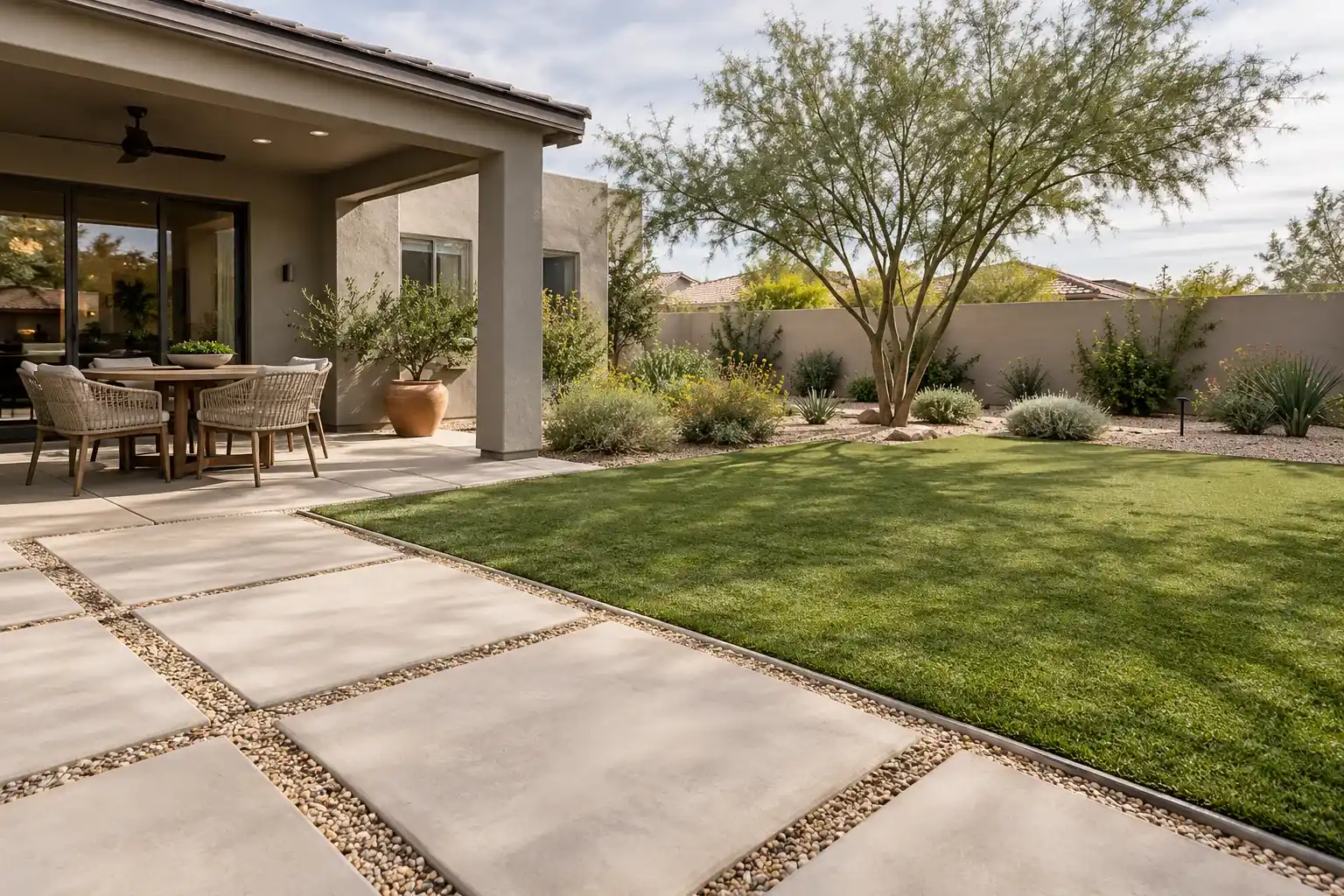
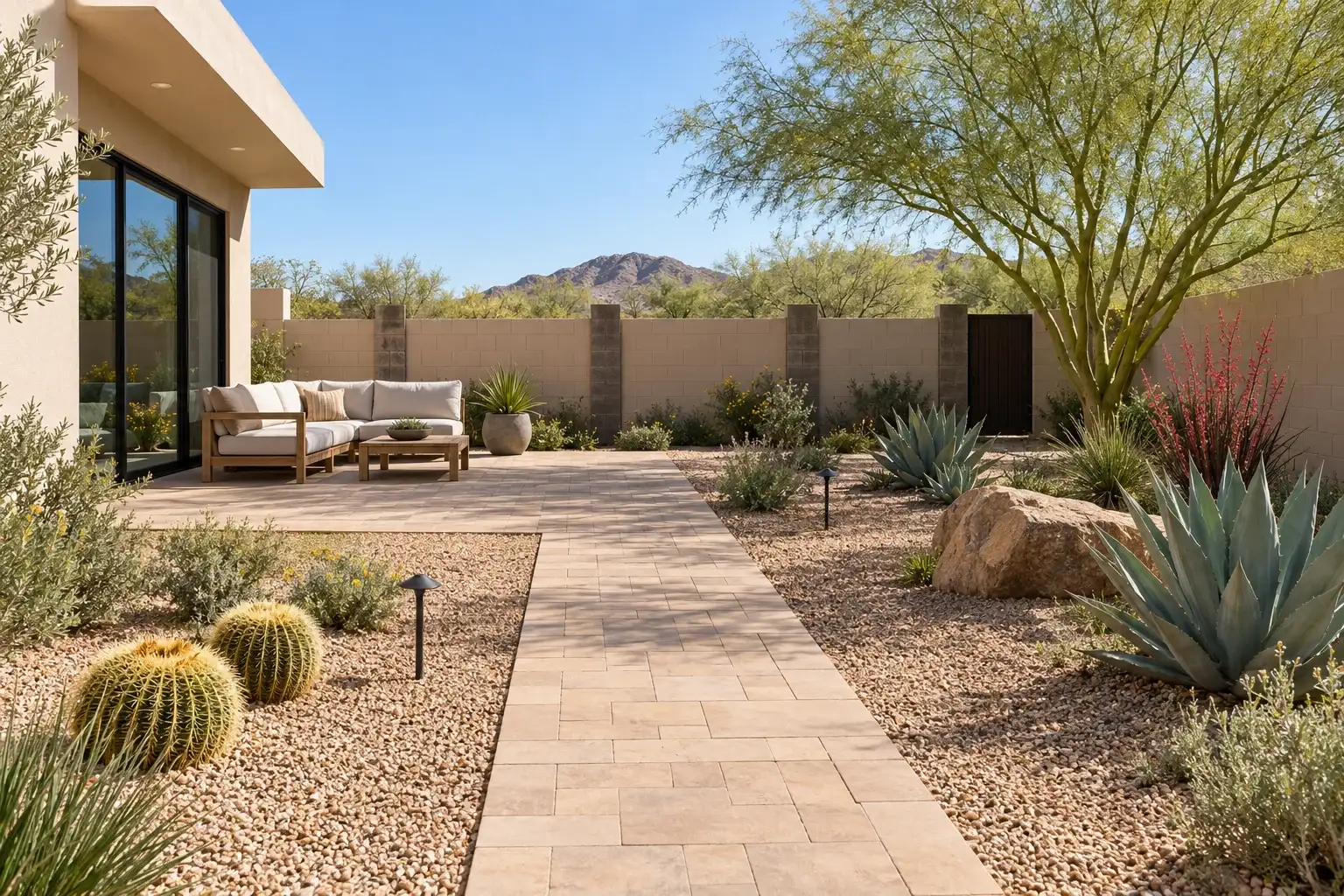
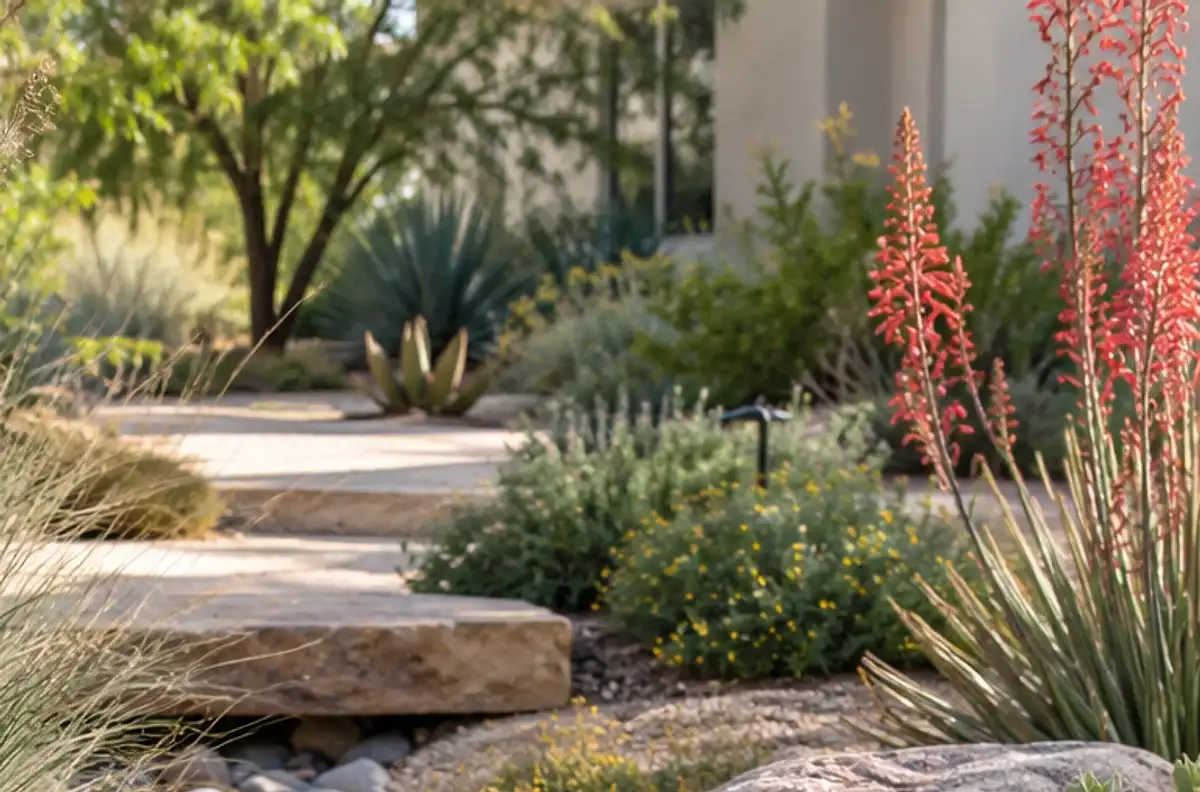
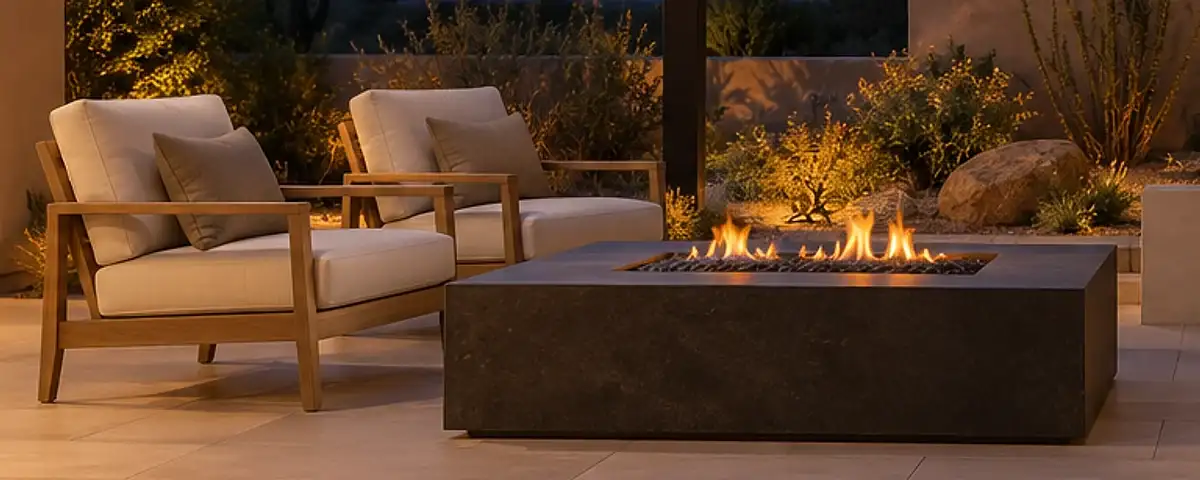
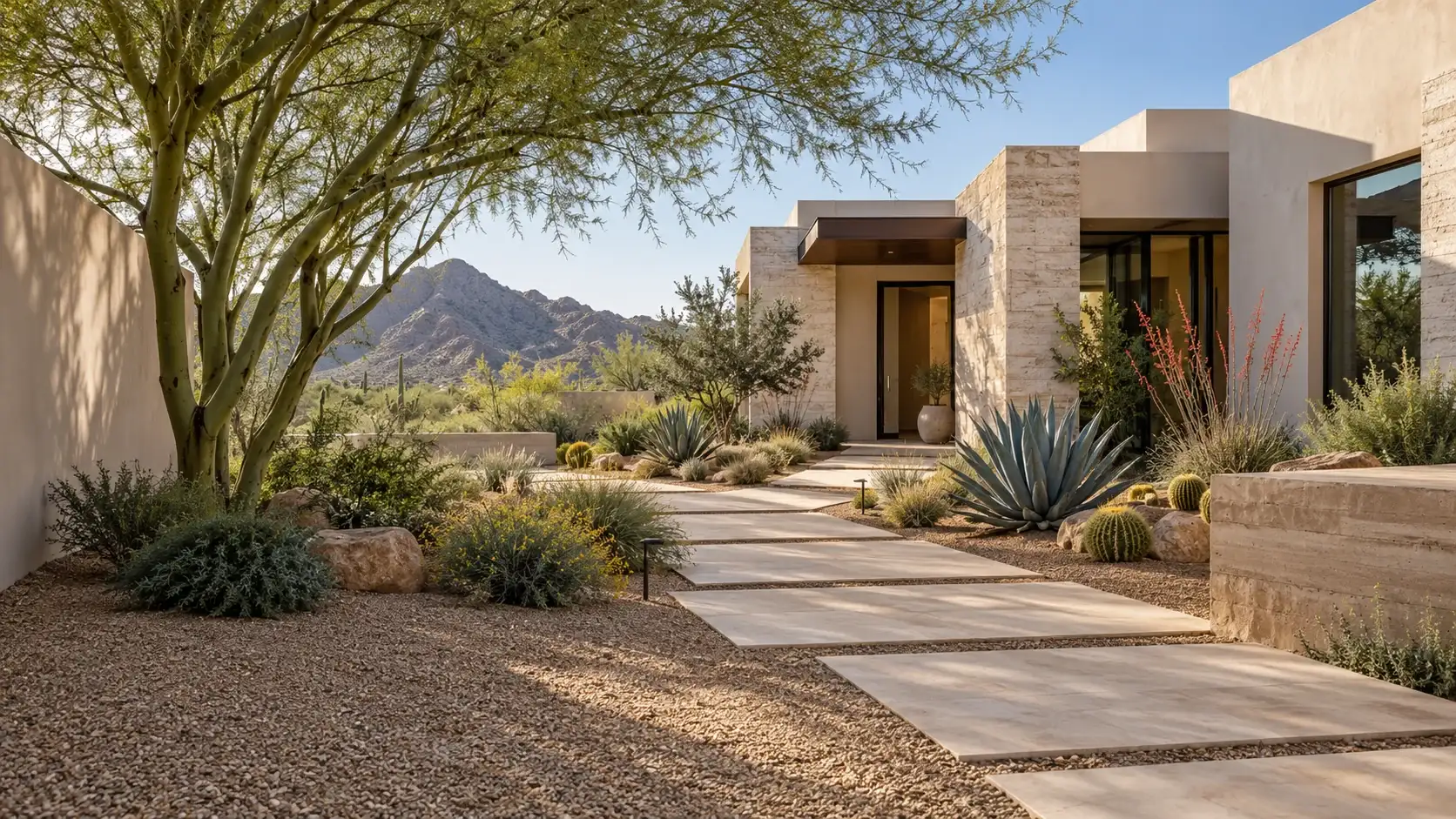
Many lots are wide, walls are often low, and the ground between houses is often left as desert on purpose. DC Ranch holds about 2,800 homes and 7,000 residents across 26 neighborhoods in 4 villages, with the first home finished in 1997 (DC Ranch (opens in a new tab)). Desert Mountain covers 8,300 acres built around private golf (Desert Mountain (opens in a new tab)). A North Scottsdale front yard can be gravel, boulders and a few large specimens, because the street side is the reviewed face of the house. The living space sits in back: a ramada, a paver patio, a turf strip, a built in grill. Fences tend toward dark steel view fence or stucco piers, kept low so the slope behind the house stays visible.
Water
Who supplies the water, and what does it mean for irrigation?
Scottsdale Water, and most of it arrives as Colorado River water through the Central Arizona Project. The Arizona Canal marks the edge of SRP's on-project land, which lies south of it, and these lots sit north (City of Scottsdale, water supply (opens in a new tab)). CAP provides about two thirds of the city total, and wells are backup. In practice a yard here is built for a dry decade rather than a wet year. The city says it is in Stage One of its Drought Management Plan (City of Scottsdale, water shortages (opens in a new tab)), which centers on increased monitoring, and the plan's watering day limits begin at Stage Two, at 3 days a week (Drought Management Plan (opens in a new tab)). The city lists a rebate for WaterSense labeled smart irrigation controllers (City of Scottsdale, water rebates (opens in a new tab)).
Ground
What is the soil and terrain like up here?
Decomposed granite on the slopes, caliche in the flats, and both change the plan. Caliche is a calcium carbonate layer that can restrict roots and drainage, and it is common in southern Arizona soils but not universal (University of Arizona, managing caliche (opens in a new tab)). The test is simple: dig a hole, fill it, and if the level drops 4 inches in 4 hours, drainage is adequate. If the water sits, the design changes before the plant list does. Slope is the second variable. A lot cut into a hillside can need a retaining wall, the city requires design calculations where a wall is over 4 ft at the heel, and footings bear at least 18 inches below undisturbed soil or engineer certified fill (City of Scottsdale, retaining wall policy (opens in a new tab)). Where a wall holds a grade change, the city highly recommends a geotechnical investigation first.
Rules
What do the ESL and NAOS rules change?
They take part of the lot out of the buildable area before anything is drawn. The Environmentally Sensitive Lands overlay covers 134 square miles, and inside it the Natural Area Open Space set aside runs from 20 to 80 percent of a site depending on slope (City of Scottsdale, ESL overlay (opens in a new tab)). Steeper ground carries the larger share. Inside NAOS there is no grading, filling, clearing or structures, and the easement runs with the deed, so it survives a sale (NAOS guide (opens in a new tab)). A patio, a wall, a shed, a turf panel: each one has to fit on what remains. That is why a sloped parcel starts with a survey and the NAOS exhibit, not a plant list.
Climate
How hot and how high is North Scottsdale?
Cooler than the valley floor, and not by much. DC Ranch and Grayhawk sit several hundred feet above Scottsdale city hall, which can buy a few degrees on winter nights and a slightly longer planting window. Summer still runs past 100 F for weeks, and Phoenix averages 111 days at 100 F or higher and 21 days at 110 F or higher (NWS, extreme temperatures (opens in a new tab)). The monsoon runs June 15 to Sept 30 and drops a large share of the annual rain, against a Scottsdale annual normal of 8.73 inches (NWS, normals (opens in a new tab)). Rain on a slope leaves fast, so grade matters more than the total. October planting gives roots months to establish before summer.
Costs
What does a project cost in North Scottsdale?
More than a flat lot in town. A national cost guide puts design at $50 to $150 an hour, about $100 on average, or $1,934 to $7,267 for a project. The same guide puts a retaining wall at $40 to $360 per linear foot by height, with labor at $15 to $50 per square foot and an average project near $6,083. This Old House puts installed turf at $15 to $19 per square foot. Published market ranges, not a quote: the final price is set after an on-site assessment. On a sloped parcel, engineering and access move the number more than the finish does.
Planning
What should I sort out before work starts?
3 approvals and 1 document. Start with the HOA: homeowners' associations have the legal authority to enact and enforce maintenance and design standards (City of Scottsdale, HOA resources (opens in a new tab)), and a community such as DC Ranch reviews landscape plans, walls and paint. Ask for the submittal calendar, because a review schedule can hold a start date by itself. Second, exterior lighting: the city's design guidelines say exterior lighting designs need Development Review Board approval and call for full cut off fixtures (City of Scottsdale, site lighting (opens in a new tab)). Third, a saguaro over 4 ft needs a state permit, a tag and a seal to move, at $7 for the permit and $8 per saguaro tag (A.R.S. 3-906 (opens in a new tab); Arizona Administrative Code R3-3-1106 (opens in a new tab)). The document is the written scope.
3 questions
Questions people ask
Still have a question? Call (747) 243-2089 and describe the yard.
Do I need permission to move a saguaro?
Yes, if it is over 4 ft. Moving one takes a permit from the Arizona Department of Agriculture plus a tag and a seal, at $7 for the permit and $8 per tag. A smaller saguaro still falls under the city Native Plant Ordinance, so ask before digging.
How long does HOA approval take?
It depends on the community and its review calendar. A community such as DC Ranch reviews plants, walls, lighting and paint before a start date is set. Send a complete package: site plan, plant list with sizes, material samples, and the fence or wall detail.
Can I use artificial turf here?
Often in a back yard, if the HOA allows it. The front is the reviewed face of the house, so ask the architectural committee before ordering material. Turf needs a compacted base and an edge that holds, and the base is where problems often start. Inside natural area open space, structures cannot be built and grading, filling and clearing are not permitted.
Keep reading
- Landscape Installation: for a rebuild that starts with a survey.
- Artificial Turf: for base depth on a slope.
- Retaining Wall Permits: for the engineering step.
- Old Town Scottsdale: for the older lots near downtown.
- Service Areas: for the towns around the valley.
- Artificial Turf vs Sod in Scottsdale:
- Drip Irrigation vs Sprinklers in Scottsdale: