Help guide · 9 min read
Resort-Style Desert Backyard in Scottsdale: Courtyards, Fire Features and Lighting
A resort-style backyard in Scottsdale is built from four layers: an enclosed courtyard, a hard surface that stays walkable in July, one vertical element that blocks the view out, and a light layer that changes the yard after dark. Start with the enclosure and the drainage, because the grade decides where the walls, the deck and the planting go, and all three are expensive to move later. Call (480) 757-2074 or send the form and we call you back about the layout.
Good to know
What actually makes a yard read as resort-style?
The enclosure does, not the furniture. A resort feels private because the sight line stops at a wall, a boulder mass or a raised planter close to where you sit, and because the ground plane changes level at least once. Open desert views with a nice patio table tend to read as a patio, not a resort, whatever gets spent on the chairs.
The piece most plans miss is an order of work that most Scottsdale yards get backwards. Lighting is usually bought last and installed last, when it is the least expensive layer to plan early and the only layer a guest remembers after dark. Planting is usually bought first, when it is the layer that has to wait for the grade, the walls and the irrigation to be finished, or it gets dug up twice.
Planning
Which pieces do you build first, and why that order?
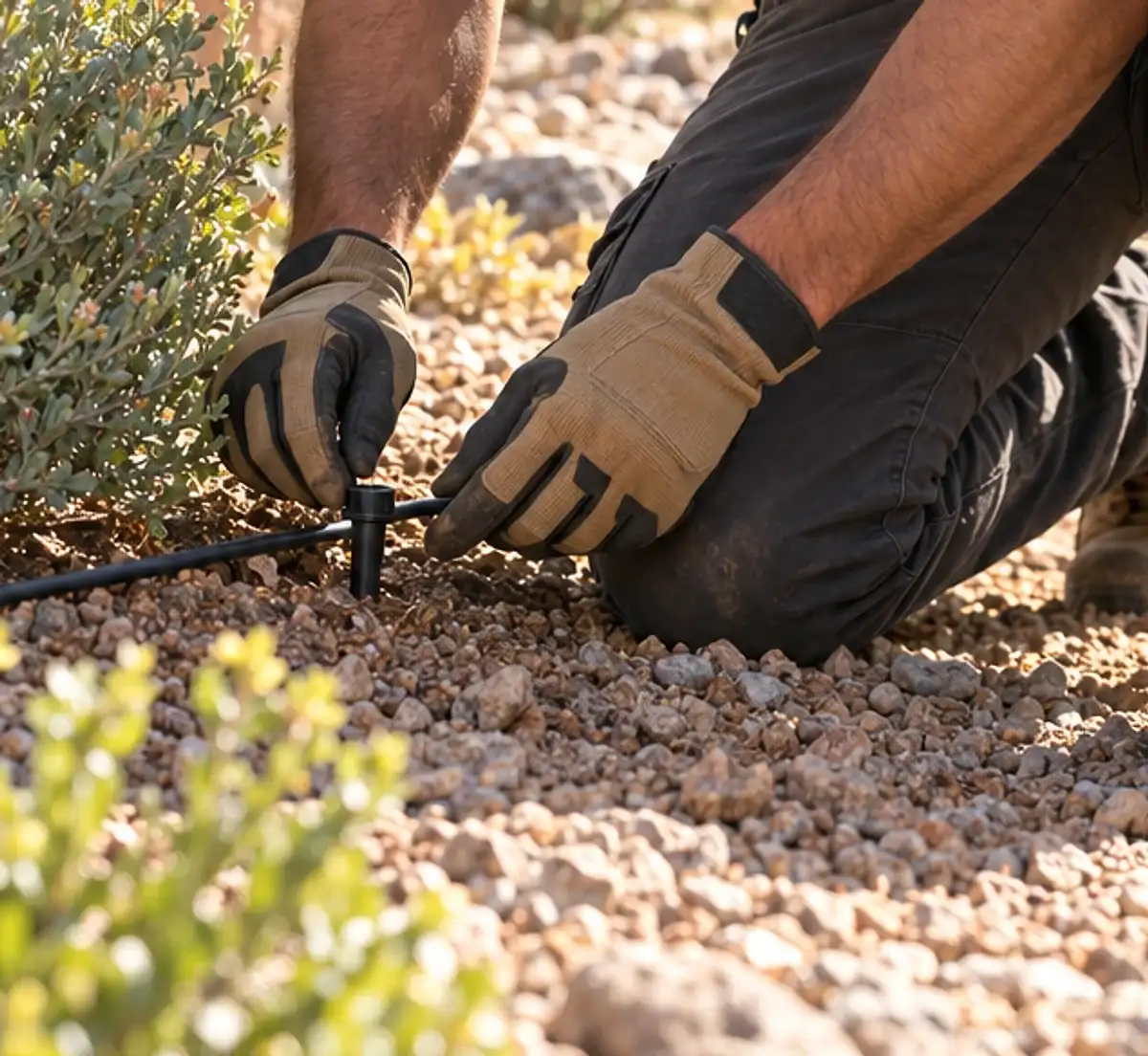
Build in this order: grading and drainage, then underground utilities and irrigation, then walls, edges and deck, then fire and water features, then planting, then lighting, then furniture. Each step locks the one after it. A gas line to a fire table cannot be added under a finished travertine deck without lifting the deck, and a boulder wall built before the grade is set will hold water against the house instead of away from it.
| Step | What it fixes | Material that lasts here | What it locks |
|---|---|---|---|
| Grade and drainage | Where water goes in a storm | Swale, channel drain, river rock | Walls, deck, planting |
| Utilities and irrigation | Gas, power, water to the far corner | Copper or poly gas line, drip and hose bibs | Fire feature, lighting, beds |
| Walls and edges | Privacy and the shape of the space | Masonry, boulder, steel edge | Deck outline, planting depth |
| Deck and patio | The walking surface and the level change | Travertine, sand-set pavers | Furniture, fire table, pool coping |
| Fire and water features | The evening focal point | Gas fire table, sheer descent | Seating layout |
| Planting | Shade, screen and color | Desert-adapted trees and accents | Irrigation zones |
| Lighting | How the yard reads after dark | Warm white low voltage | Which vertical elements get lit |
The monsoon window the National Weather Service uses runs June 15 to September 30 (National Weather Service (opens in a new tab)). That window is the test date for everything below the surface. A new grade, a swale and a retaining wall either move water correctly in the first August storm or they do not, so a build that ends in spring gets its real inspection within a few months.
Service area
How does a courtyard work on a Scottsdale lot?
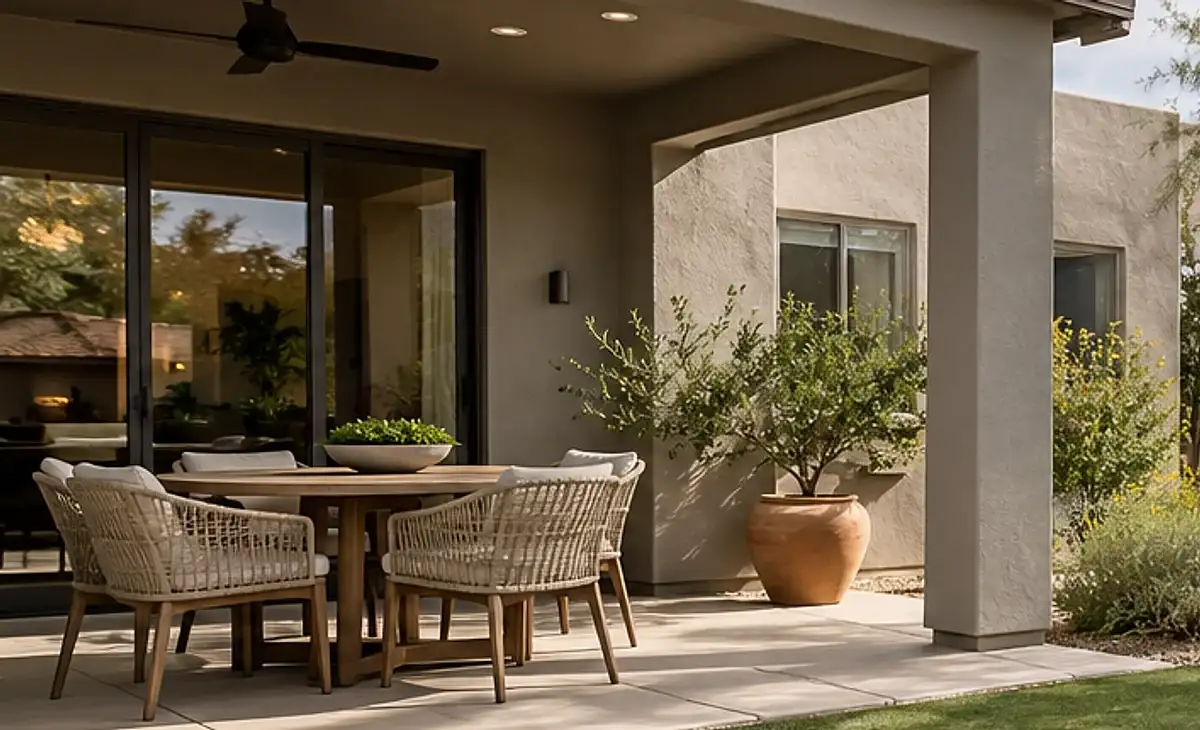
A courtyard is a defined outdoor room with three sides and a controlled opening, and it is the least expensive way to buy privacy on a lot with neighbors close on both sides. The three sides do not have to be tall. A low seat wall, a raised planter and a boulder mass at the third corner will stop a sight line from a seated eye level, and they cost far less than a block wall.
The classic Scottsdale version is a walled entry court off the front door and a second court off the primary bedroom, with the pool and the main patio behind them. Both courts do the same job: they give the house a private face and they shade the glass behind them in the afternoon.
Good to know
What belongs in the courtyard, and what should stay out?
Put the things used daily near the door: two chairs, a small table, one specimen plant, and light at knee height. Keep the things used occasionally, such as the fire feature and the long table, on the larger patio. A courtyard that has to hold everything ends up with a walkway down the middle, and a walkway through the middle of a seating area is what makes a small space feel tight.
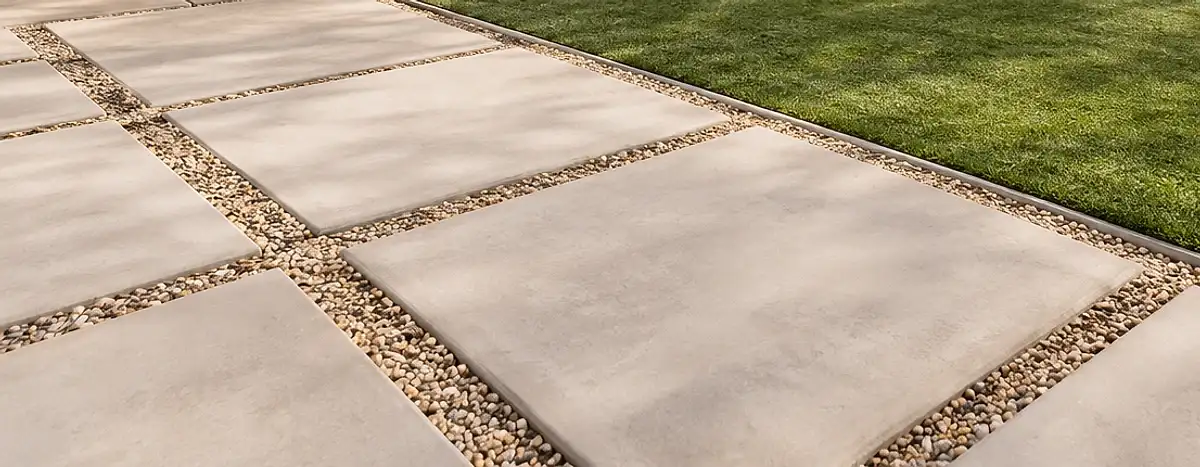
Material matters more here than anywhere else on the property because the space is small and the eye is close. A sand-set paver floor, a steel edge holding gravel, and one large boulder read as designed, which is a palette that suits outdoor living projects in Scottsdale. Six materials in a small space read as a sample board.
Outdoor living
Where should the fire feature go?
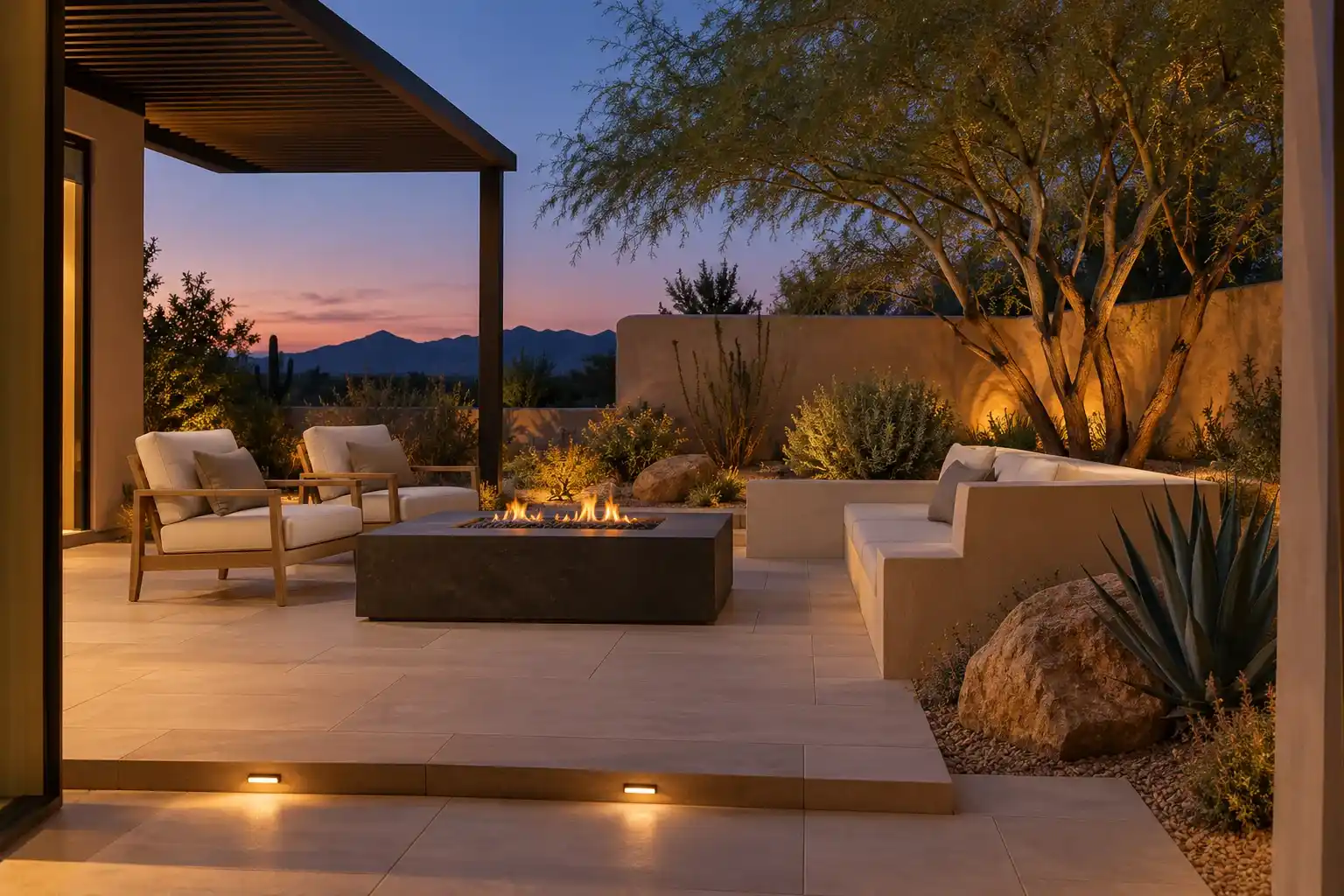
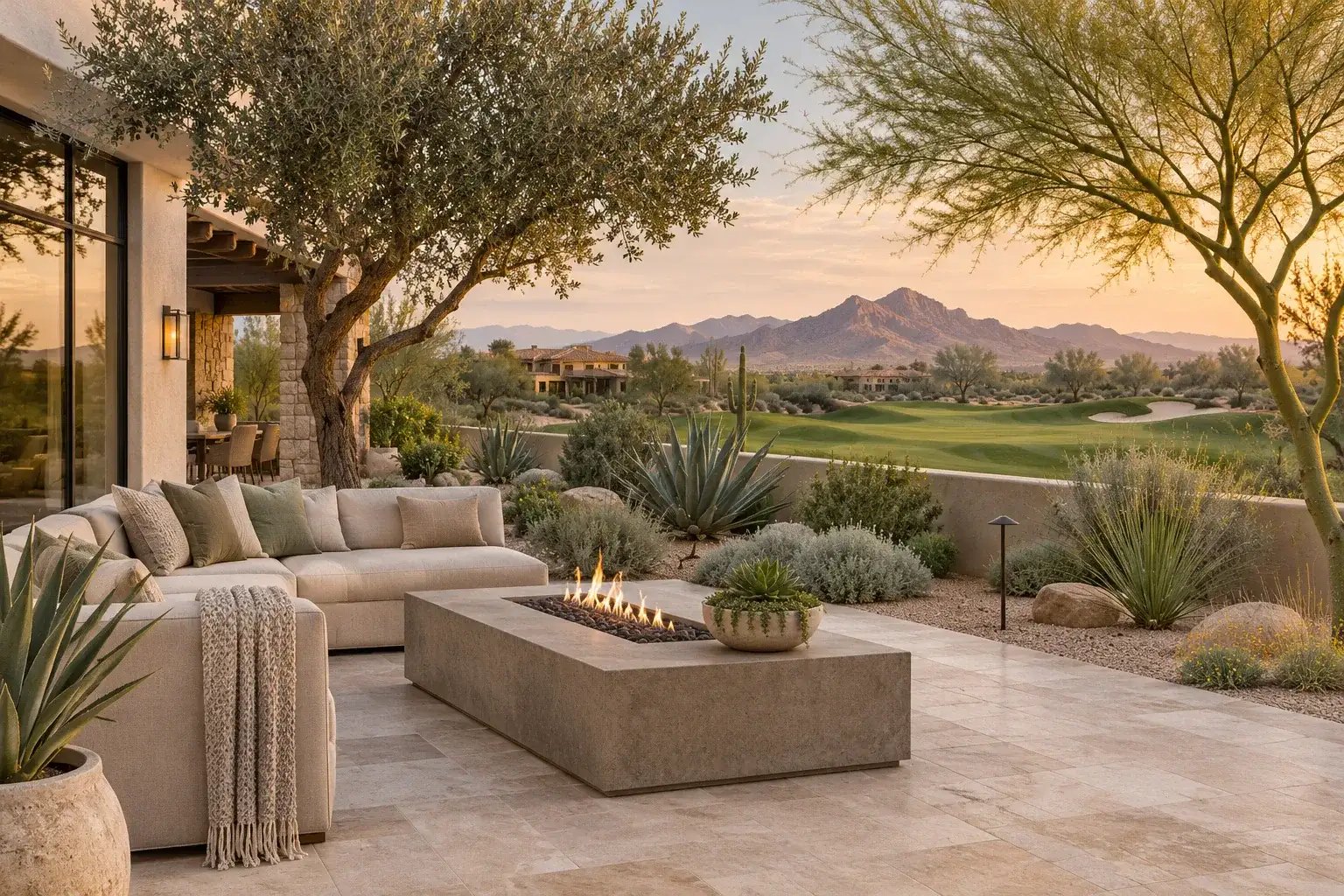
Put a fire table or fire pit where the wind does not funnel, back from the house wall by the clearance the burner maker and the city require, and on the side of the patio that is used after sunset. Gas is easier to plan than wood: the line goes in before the deck is finished, and the flame comes on with a switch and there is no ash to clean off a light colored surface.
The fire feature is also the piece that decides the seating. A linear fire table gives a long edge for a bench and two chairs and works in a narrow patio. A round pit needs a ring of clearance on every side for a walkway, which takes a lot of space in a narrow yard.
Specifics to settle before the gas line is drawn: the burner length, the ignition type, the clearance to any wall or pergola beam, and whether the table sits on the deck or in the planting. All four change the layout, and three of them are hard to change later.
Good to know
How cool does the deck actually stay?
Cooler than asphalt, but not cool, and the difference is mostly color and shade. The EPA reports an Arizona pilot study in which conventional paving such as asphalt reached surface temperatures up to 152 F at midday, while cool pavements remained 10 to 16 F cooler (EPA (opens in a new tab)). A surface can be cooler than asphalt and still be too hot for bare feet in July without shade or water.
That is why the deck and the shade structure are designed together. A pergola, a ramada or a tree placed to shade the west edge of the deck does more for comfort than a change of stone. Lighter surfaces generally start cooler than dark ones, and shade, joint material and the bedding under the pavers all affect how much heat the surface holds by late afternoon.
Surface temperature is also the reason a pool deck is a different specification from a patio. Wet feet, splash and chlorine change what finishes hold up, and the surface has to be textured enough to grip when wet without being rough enough to hurt a bare foot.
Climate
What survives the reflected heat around a pool?
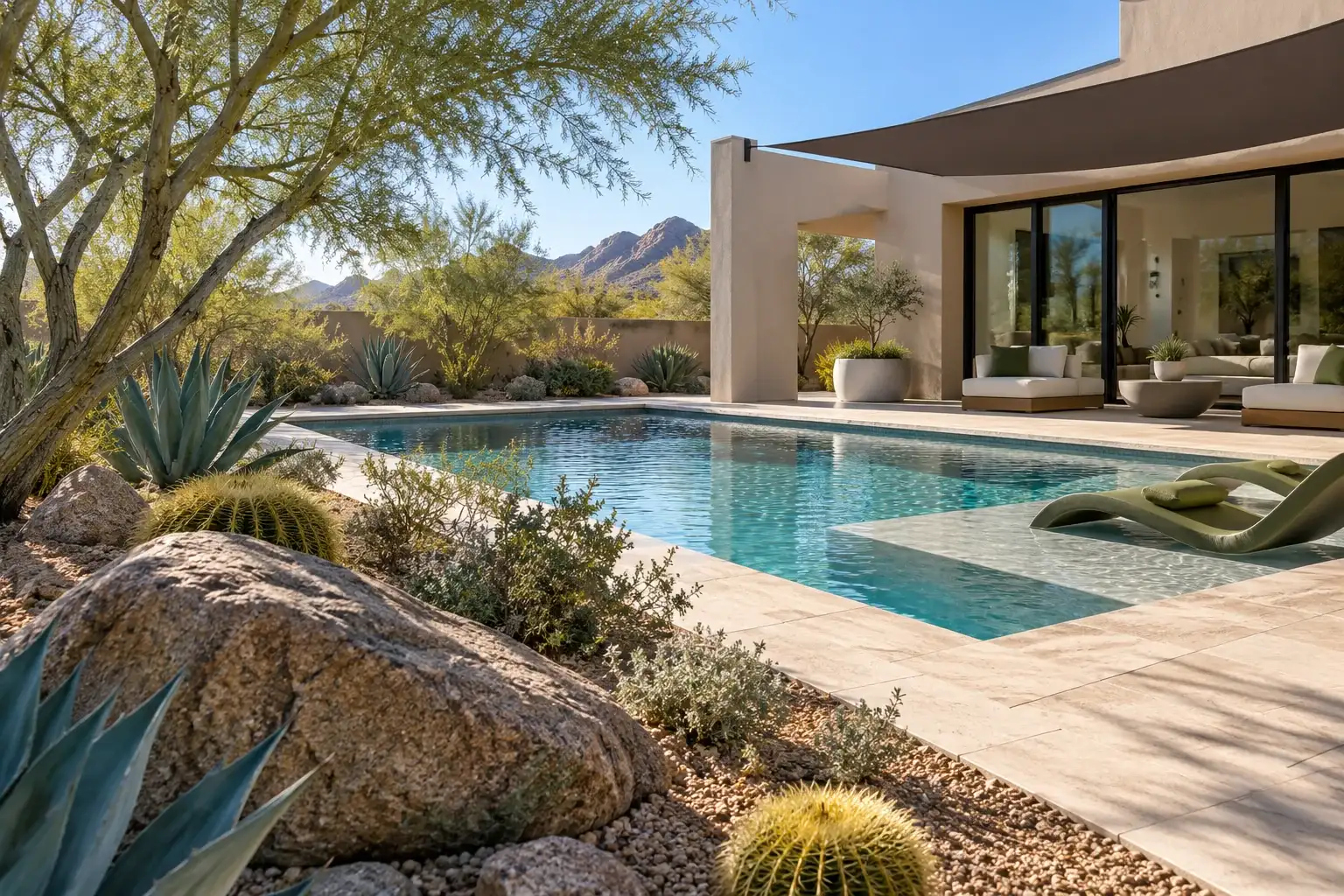
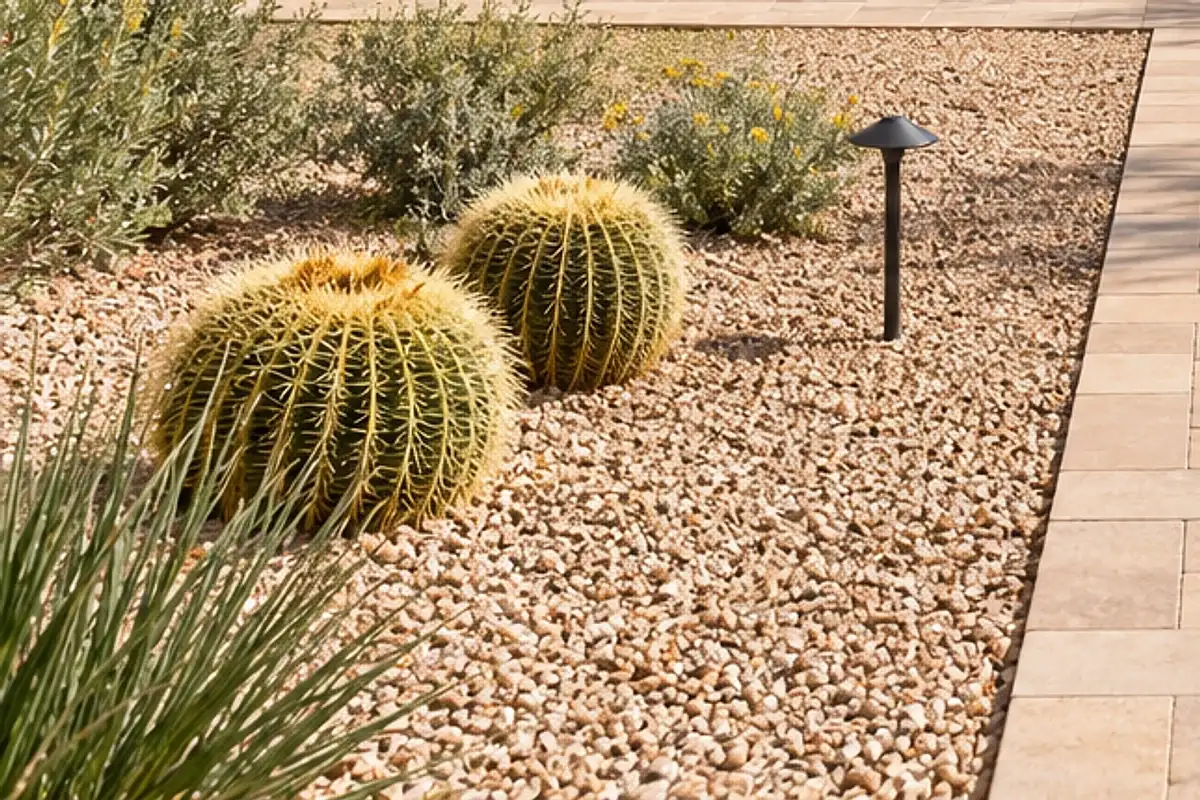
Plants that evolved in full sun and can take a second dose of light bouncing off water and pale decking. University of Arizona Cooperative Extension notes that a pool and its deck reflect a tremendous amount of the already intense Arizona sun, so plants there have to take it (University of Arizona Extension (opens in a new tab)). The same guide recommends plants with minimal litter, calls cacti and succulents excellent choices because they produce almost no litter, and says plants with a small amount of seasonal litter belong downwind of the pool.
That rules out a lot of the plants that look right in a photograph. Any tree that drops leaves, flowers or fruit through summer will put it in the water. AMWUA rates red yucca for full or reflected sun with low litter, and the extension guide lists agave and aloe among suitable poolside plants. The plant list for the pool edge in Scottsdale is short, and it is worth following rather than fighting.
Outdoor living
Where does the lighting layer go?
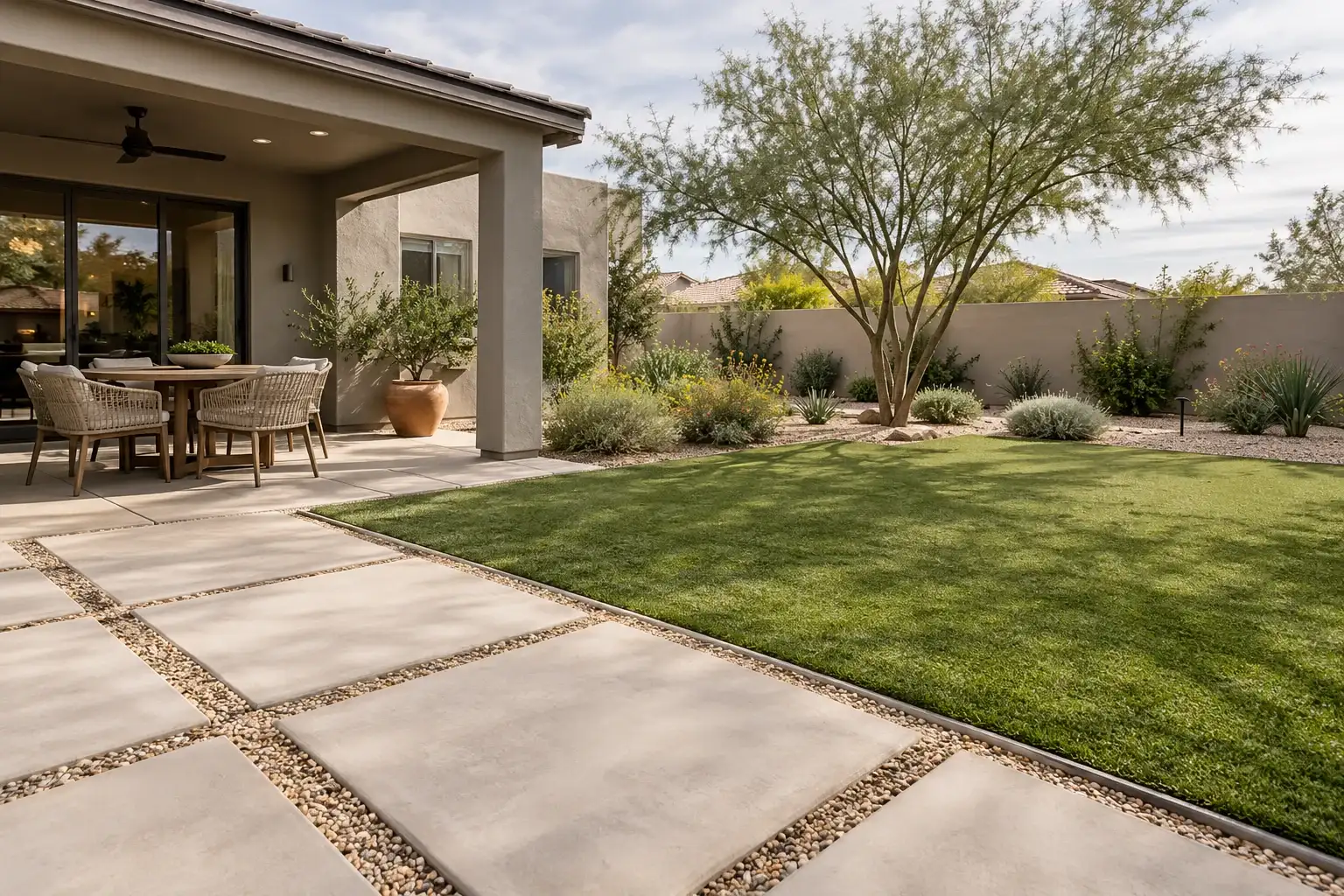
Light in three layers: path light at ankle height, uplight on the two or three vertical elements worth seeing, and one low source for the seating area. A yard with every fixture on one circuit tends to look like a car park, and a yard with three layers on separate zones tends to look like a hotel.
Two decisions need to be made before the planting goes in. First, the transformer location and the home runs, because a line that has to cross a finished deck is a line that does not get installed. Second, which vertical elements get lit, because a boulder wall that is lit needs to be built with an even face, and a palo verde that is lit needs its first branch high enough to see under.
Warm white light, not blue white, is what makes a desert yard read as resort rather than clinical, and the fixture layout is set out in landscape lighting. The fixtures facing the seating area should be shielded or aimed away from the eye, and the fixtures on the west side can come on later than the rest, since that is where the last light stays.
Good to know
What can be added later without tearing anything up?
Lighting, furniture, pots, and the plant layer inside an existing bed. Those four are additive. The grade, the gas line, the irrigation main, the deck and any wall are not. If the budget has to be staged, stage it so that everything permanent is done in one pass and the additive layers come in over the next two seasons.
This is where a city programme can change the sequence. Scottsdale closed its residential grass removal rebate on October 31, 2026 for the season and says it reopens next season, with a Notice to Proceed required before any grass comes out (City of Scottsdale (opens in a new tab)). Grass removed before the city issues that notice is not covered, so the calendar is part of the design.
Planning
What decides the layout for a specific yard?
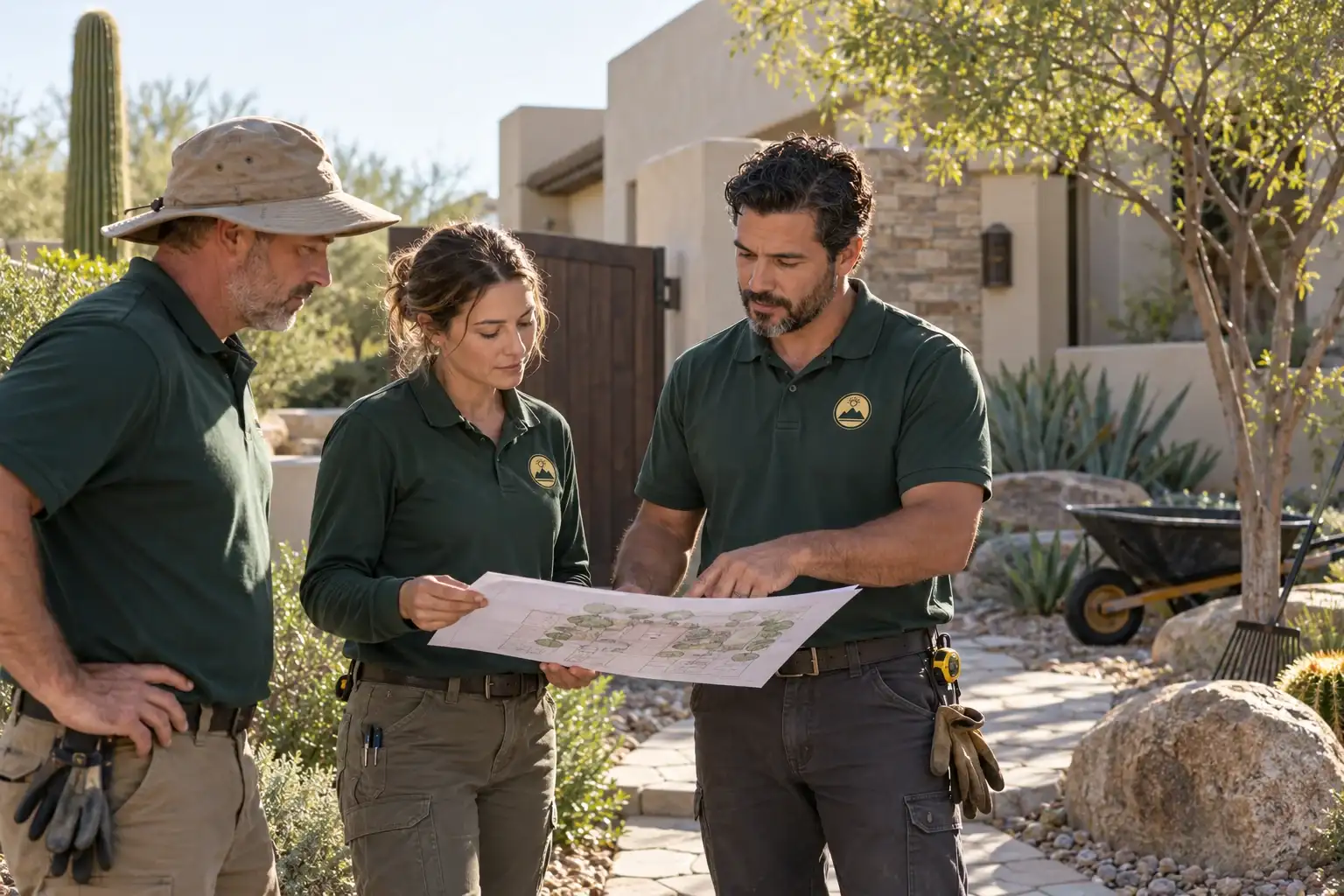
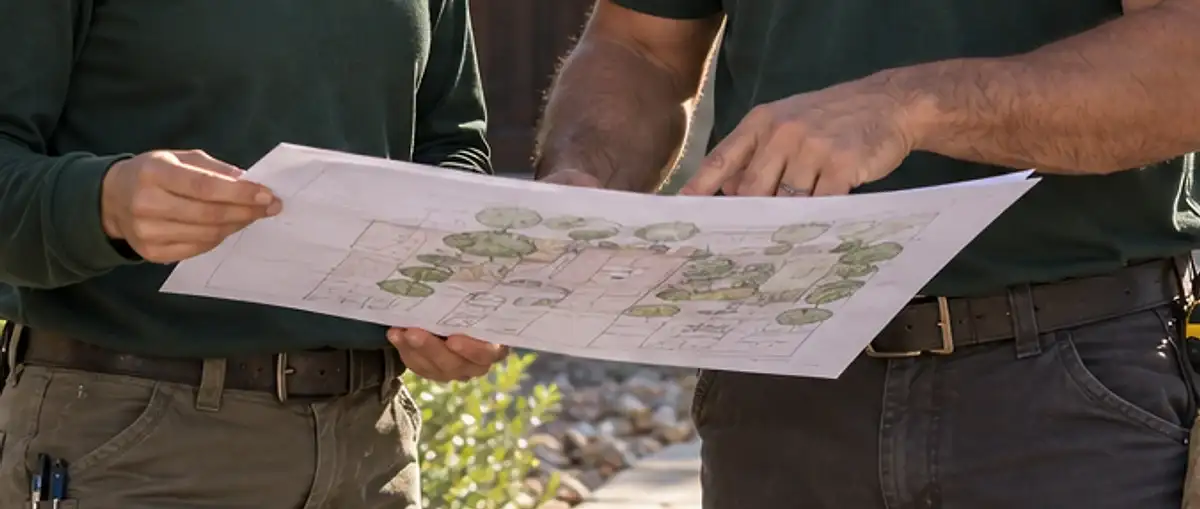
Five things decide it, and all five are read on site: where the afternoon sun lands, which direction the wind comes from in a monsoon, how the lot drains toward the street or the neighbour, how much shade the house itself casts, and what the HOA allows in height and material. A plan made from a photograph ignores all five. The landscape installation scope is where all five get built in one pass, so the deck and the gas line are not opened twice.
The contractor walk-through is where those five get measured and where the layout gets priced. Call (480) 757-2074 or use the form on this site and we call you back, then go over the yard with you before anything is ordered.
5 questions
Questions people ask
Still have a question? Call (480) 757-2074 and describe the yard.
What is the difference between a courtyard and a patio?
A courtyard is enclosed on three sides and works as a room. A patio is an open surface attached to the house. A courtyard gives privacy and shade; a patio gives space. Most Scottsdale yards end up with one of each.
Do fire tables work in a Scottsdale summer?
The flame is mostly decorative in the heat of summer and most useful on cool evenings. Plan the seating so the fire table is not the only thing to look at in summer.
How long does a full backyard build take?
It depends on the wall and deck area, the utility work and the inspection schedule, and it can depend on the monsoon. A pool, a ramada and a full grade change take much longer than a courtyard and a planting package.
Can lighting be added to an existing yard?
Yes, and it is the easiest layer to retrofit, provided there is a power source at the right corner and the beds are not solid rock. The hard part is the transformer and the home runs, not the fixtures.
Does a resort-style yard use more water?
Not if the planting is desert-adapted and the irrigation is zoned. The water goes to a few accent plants and the trees, and turf, if any, stays small and in one shape. Desert plants generally need much less water than a lawn.
Sources
Sources
- National Weather Service Phoenix, 2025 Monsoon Season Review
- University of Arizona Cooperative Extension, Plants for Poolside Landscapes (AZ1058)
- Environmental Protection Agency, Using Cool Pavements to Reduce Heat Islands
- City of Scottsdale, Residential Rebates
- AMWUA, Plants for the Arizona Desert: trees