Help guide · 4 min read
Which Patio Surface Stays Coolest Underfoot in a Scottsdale Summer?
Light-colored surfaces generally stay coolest underfoot in a Scottsdale summer, and shade does more for comfort than any surface choice. The stone name matters less than its color, its thickness and whether anything is over it, which is why two patios built from the same travertine can feel very different at 2 pm. Call (480) 757-2074 or send the form and we call you back about the patio.
Costs
Which surface wins, and by how much?
A surface in full July sun can be too hot for bare feet whatever it is made of, so the honest comparison is how fast each one gets there. Pale surfaces tend to heat more slowly than dark ones, and flagstone is mixed because the stone varies from piece to piece.
The measured figures available come from paving studies, not from a stone catalogue. The EPA reports an Arizona pilot study in which conventional paving such as asphalt reached surface temperatures up to 152 F at midday, while cool pavements remained 10 to 16 F cooler (EPA (opens in a new tab)). The City of Phoenix reports a 2024 Arizona State University study finding that its cool pavement coating reduced summer surface temperatures by up to 12 F compared to conventional aged pavement during the day (City of Phoenix (opens in a new tab)). Those numbers are for roads and coatings, not for a patio, but the mechanism is the same: cool pavement reflects a higher portion of the sunlight that hits it, so it absorbs less heat.
Hardscape
Does travertine really stay cooler than pavers?
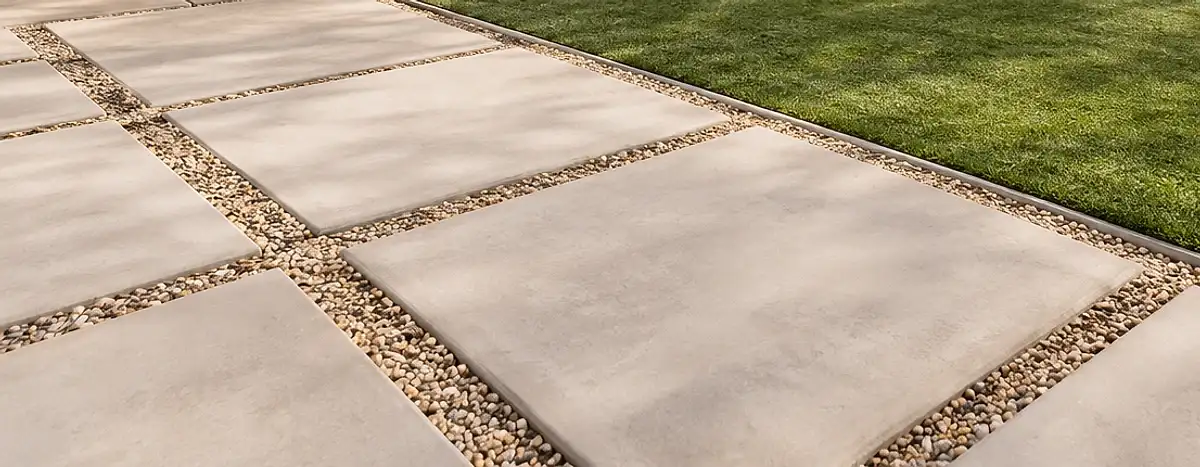
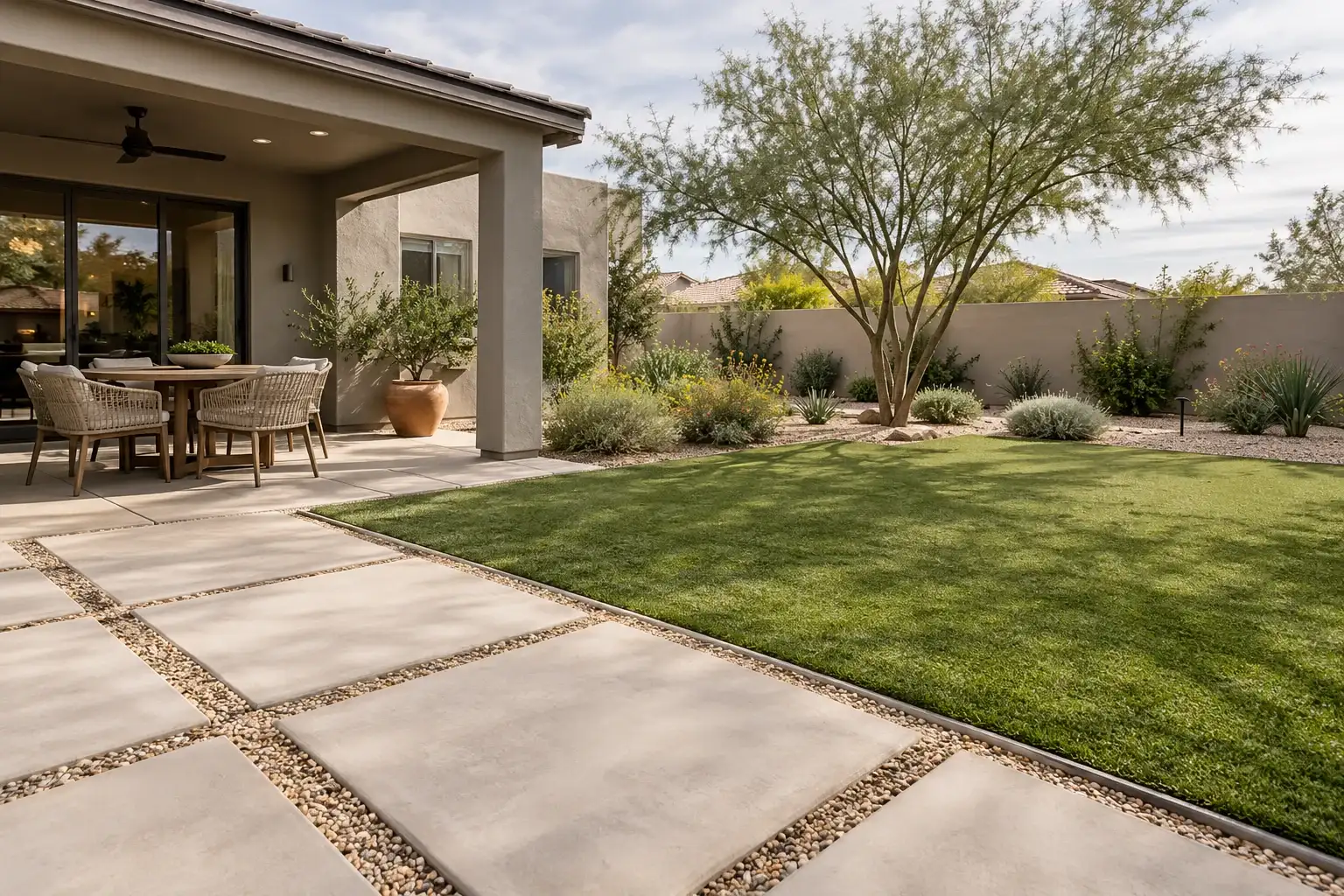
Not always, and not because travertine is magic. A pale travertine paver stays cooler than a dark one for the reason any pale surface does: it reflects more of the sun. A thin paver also holds less mass per square foot than a thick poured slab. A dark travertine in full sun can burn a bare foot, and so can a dark paver.
The comparison that matters is like for like: pale travertine against pale concrete pavers is close, and the decision usually turns on how the surface feels, how it grips when wet, and how it ages, not on temperature alone.
Costs
How much of the heat is color, and how much is the stone?
Color is one of the biggest levers a homeowner controls. Two pavers from the same maker, one ivory and one charcoal, can behave like different materials under the same sun. Thickness and bedding are next, because a thick slab on a compacted base stores more heat through the day and gives it back after sunset, which is why a patio can still be warm at 9 pm.
The material itself matters most for how it handles that heat over years and for how it looks and grips. Flagstone varies stone to stone, so a patio can have a hot patch and a cool patch in the same run.
Hardscape
Does a cooler surface mean a cooler person?
Not automatically. The city's own findings describe the air temperature effect of cool pavement as small even when the surface is cooler (City of Phoenix (opens in a new tab)). Comfort comes from the combination: a light surface, something overhead, and air moving.
That is why a pergola, a ramada or a well-placed tree changes a patio more than a stone upgrade does. University of Arizona Cooperative Extension notes that a pool and its deck reflect a tremendous amount of the already intense Arizona sun, which is why it tells homeowners to choose plants that can take it (University of Arizona Extension (opens in a new tab)).
Ground
Which surface handles Scottsdale sun and monsoon worst?
The failure is rarely heat alone. Hard surfaces need a base that drains and stays put. Water that sits under a surface, or a base that settles, shows up as a hollow spot or a crack whatever the material is.
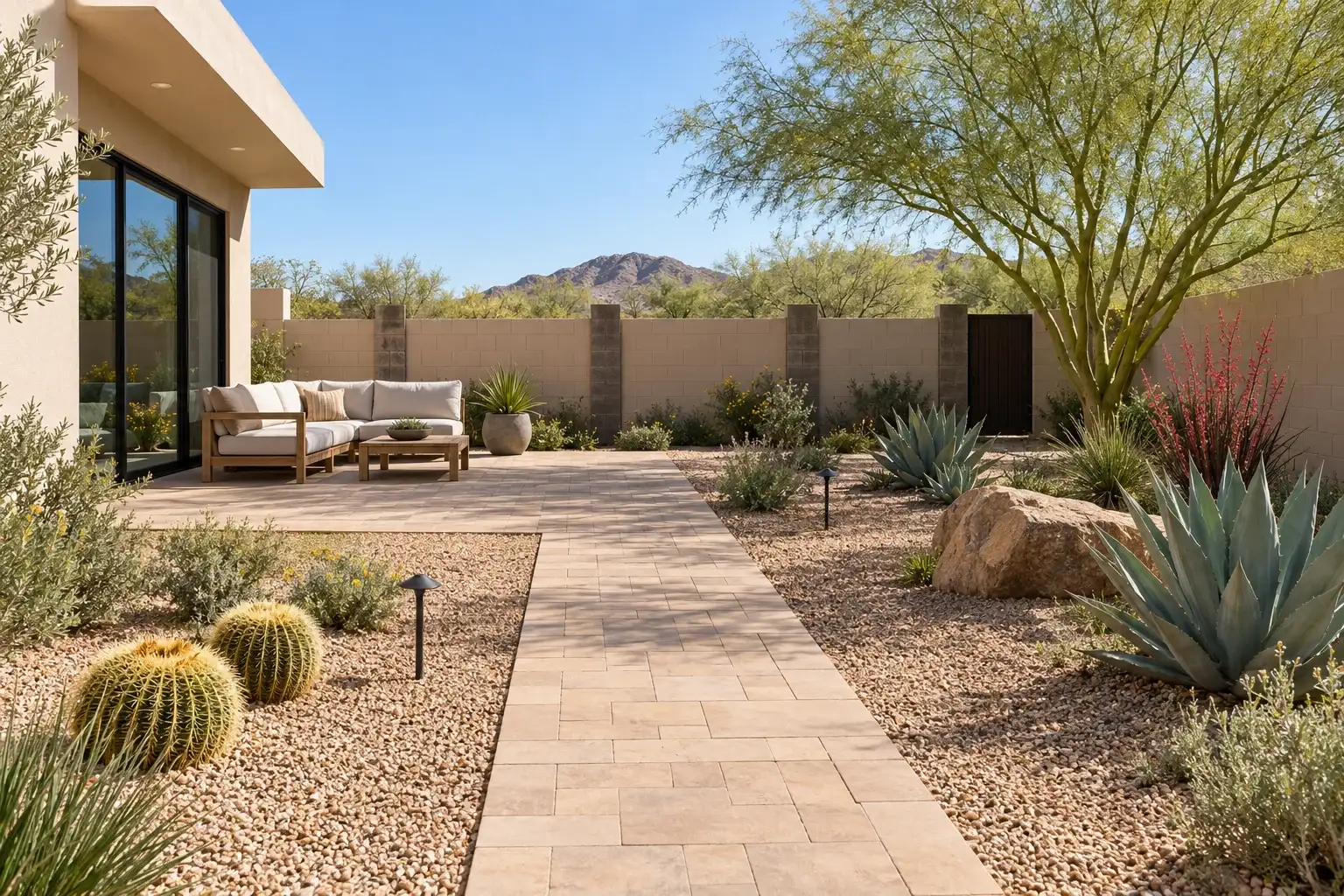
Sand-set pavers tend to handle heat and water well because the joints can flex and drain, and they are easier to lift and re-set if a line or a root has to be reached. Mortar-set stone looks tighter and is harder to repair. The base is often what fails first, not the surface.
Hardscape
How do you test a surface before buying it?
Get two or three full-size samples, lay them in the actual spot in full afternoon sun, and check them with a hand at 2 pm and again at 8 pm.
Bring the sample indoors afterwards and look at it in the room light, because a paver that reads warm and pale outside can read grey and cold against a wall. Ask what the paver's color is through its full thickness, not just the face, since a chip in a through-colored paver is invisible and a chip in a surface-coated one is not.
Planning
What decides it for your yard?
Five things: how much of the patio is shaded at 2 pm, which direction it faces, whether it is around a pool, how the base will drain, and how much of the surface a bare foot actually crosses. A patio used for evening dinners and a patio used by children at midday need different answers.
The on-site read is where those five get settled, along with the base depth and the fall away from the house. Call (480) 757-2074 or use the form and we call you back, then go over the patio with you. The patio and paver scope covers materials and bases, and the surrounding layout is in the resort backyard guide. Everything above sits inside the wider landscape installation work.
4 questions
Questions people ask
Still have a question? Call (480) 757-2074 and describe the yard.
Is travertine too hot to walk on in Arizona?
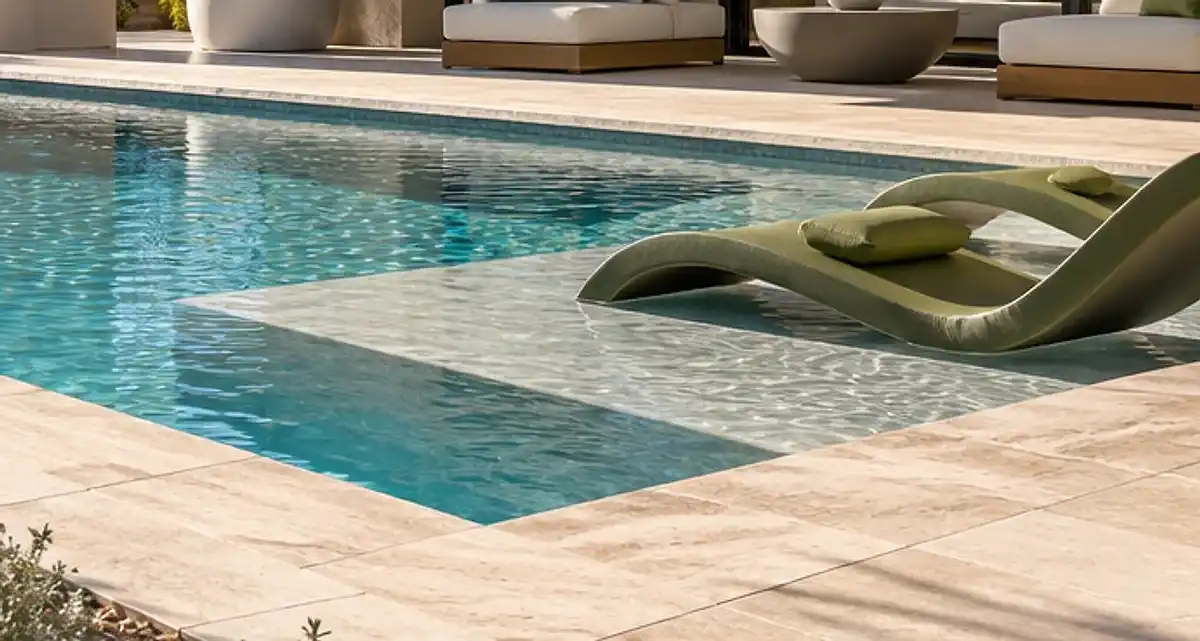
In full sun at midday in July, it can be. A pale travertine tends to be cooler than dark stone and cools faster once shaded, which is why it is popular around pools where wet feet and shade are part of the design.
What is the coolest patio material for bare feet?
A pale, unpolished stone or pale concrete paver, under shade. An unshaded surface can be uncomfortable in July whatever it is.
Does artificial turf get hotter than pavers?
Artificial turf can also get hot in direct sun, so a turf area benefits from shade as well.
Can I put pavers over an existing concrete patio?
Sometimes, if the concrete is sound, the heights work at the doors, and drainage is handled at the edges. The threshold and the fall away from the house decide it more than the pavers do.