Help guide · 6 min read
Best Low-Litter Desert Plants Around a Scottsdale Pool
The six plants below are ones AMWUA rates for a Scottsdale pool deck's sun and low litter, with two exceptions noted below: desert spoon is rated for full sun, not reflected sun, and cascalote has seasonal litter. Judge them on litter, not on size: a small shrub that flowers for months can drop more into a skimmer than a larger tree. Call (480) 757-2074 or send the form and we call you back about the planting plan.
Good to know
What actually ends up in a pool?
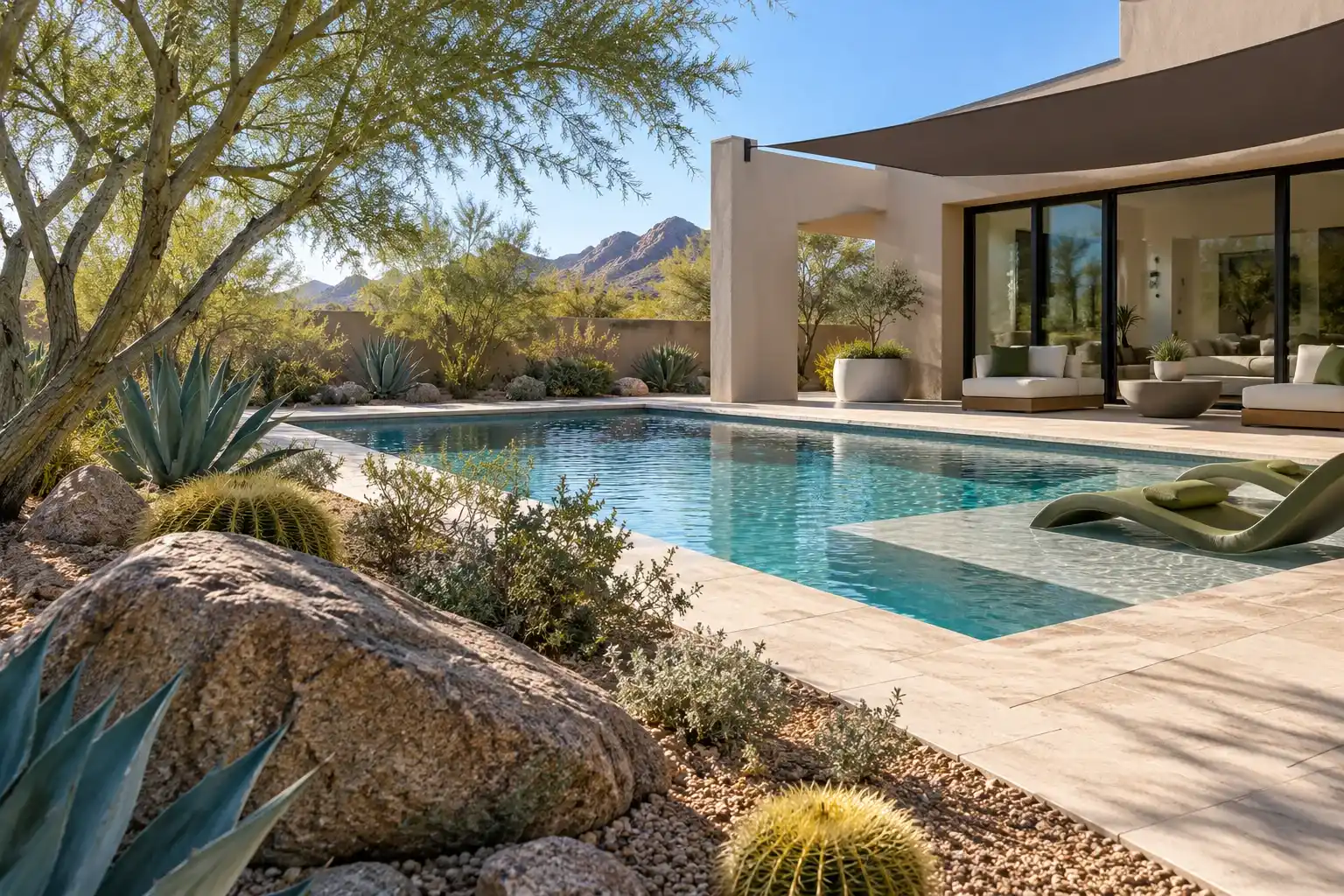
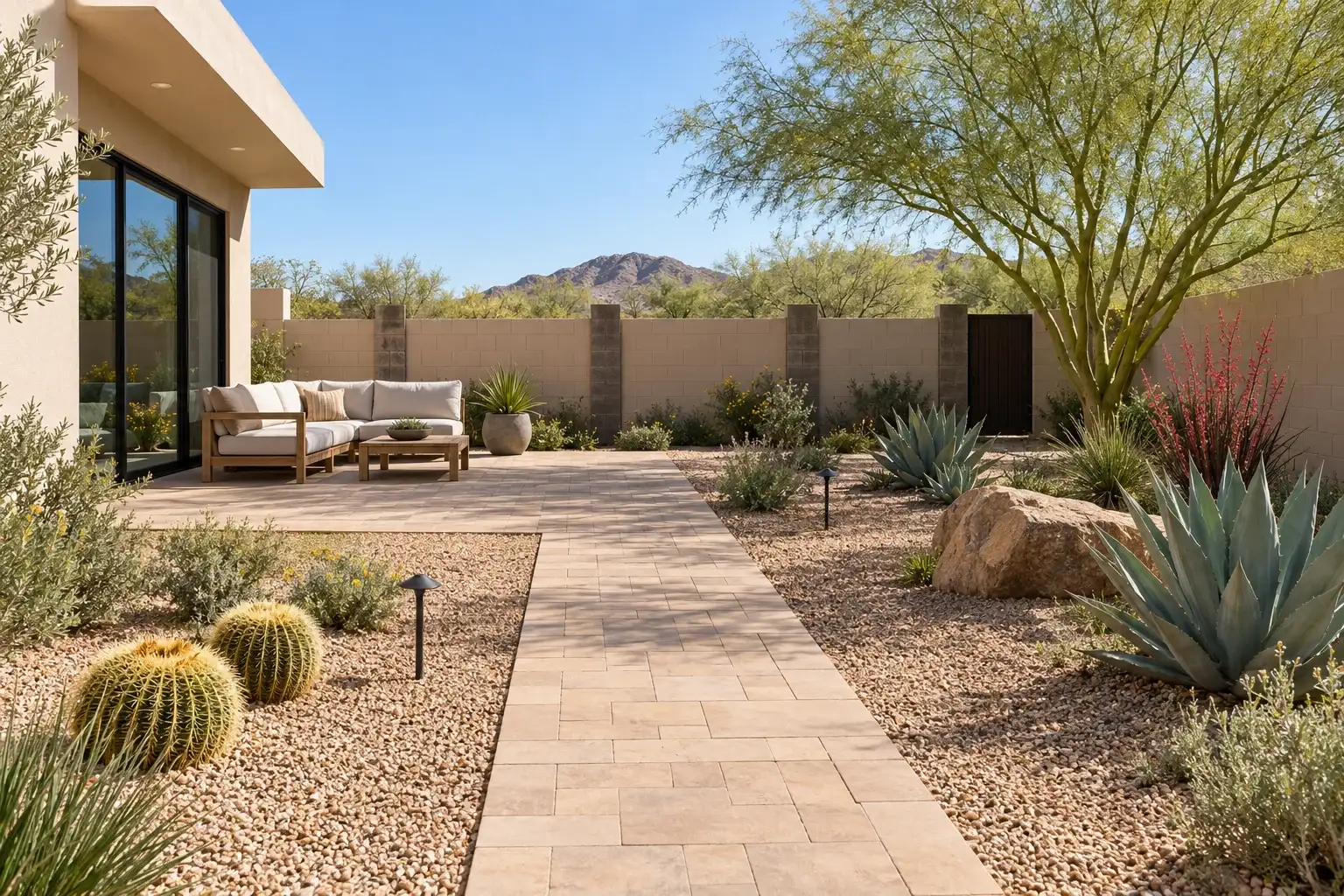
Blossoms, seed pods, leaves and dust. University of Arizona Cooperative Extension advises picking plants with a minimum of litter, or plants that drop all their leaves at one time so you only clean up once a year, and planting anything with a small amount of seasonal litter downwind of the pool (University of Arizona Extension (opens in a new tab)). The same guide says a pool and its deck reflect a tremendous amount of the already intense Arizona sun, so the plants beside the water take direct sun plus light bouncing off the surface.
That combination, reflected heat plus no litter, is why the list below is heavy on succulents and shrubs and has no flowering vines.
Good to know
The short list, compared
| Plant | Mature size | Water | Fails when |
|---|---|---|---|
| Red yucca | 3 ft tall, 5 ft wide | Very low | Soil stays wet at the crown |
| Desert spoon | 4 ft tall, 4 ft wide | Low | Shaded by a wall or tree |
| Octopus agave | 4 ft tall, 5 ft wide | Very low | Frost below 20 F, or foot traffic |
| Texas sage | 6 ft tall, 6 ft wide | Very low | Sheared into a box, or overwatered |
| Cascalote | 20 ft tall, 20 ft wide | Low | Planted too close to the deck and pool wall |
| Damianita | 2 ft tall, 2 ft wide | Low | Heavy soil that holds water |
Sizes and water ratings are from the AMWUA plant pages linked under Sources.
Good to know
1. Red yucca (Hesperaloe parviflora)
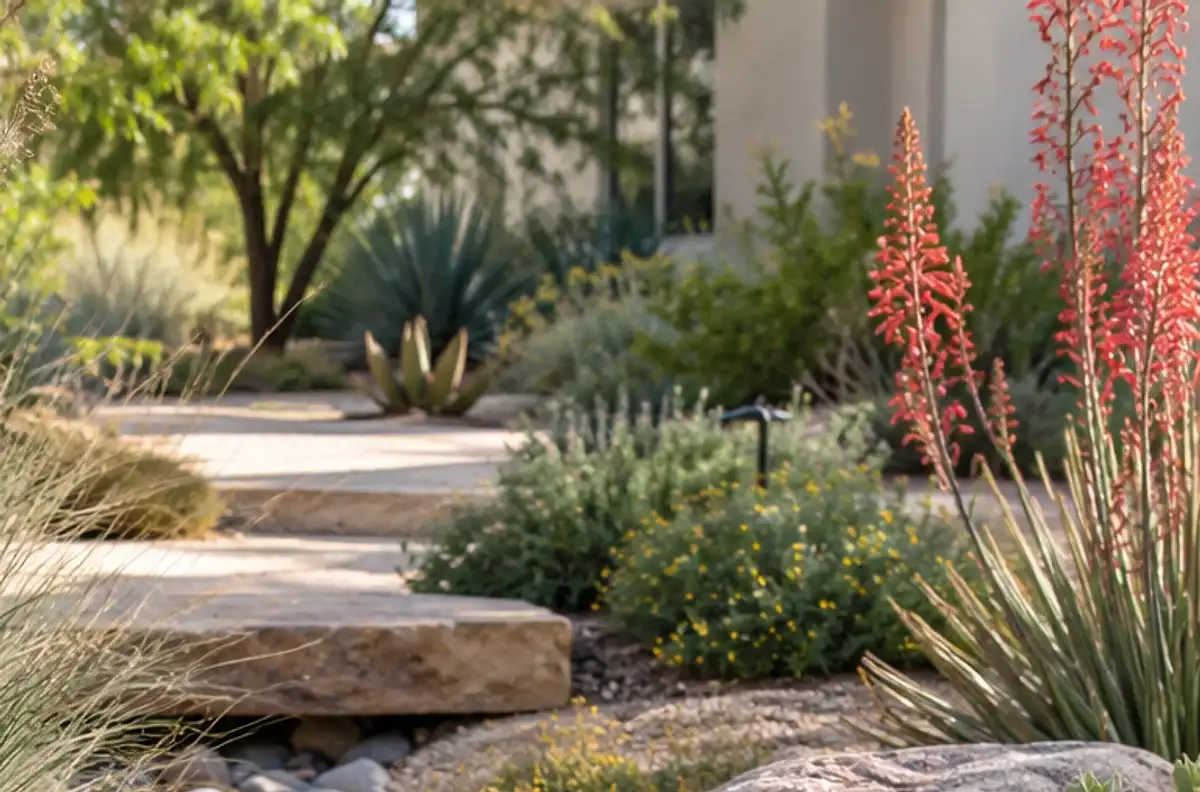
A succulent with dark green leaves in an upright rosette and coral-red flower spikes from spring to summer. AMWUA rates its litter as low, lists it as pool friendly and gives it no thorns.
Best for: the strip between the coping and the first planting bed. Fits: full sun or reflected sun, gravel or decomposed granite, drip on the same zone as the agaves. Skip it if: the soil is lawn soil that stays wet, or the space is a walkway, since the leaf tips are stiff. Arizona note: very low water and cold hardy to 10 F (AMWUA (opens in a new tab)). In Maricopa County the average first frost runs from November 21 to December 12 depending on the part of the valley, and the average last frost from February 7 to April 3 (source (opens in a new tab)).
Good to know
2. Desert spoon (Dasylirion wheeleri)
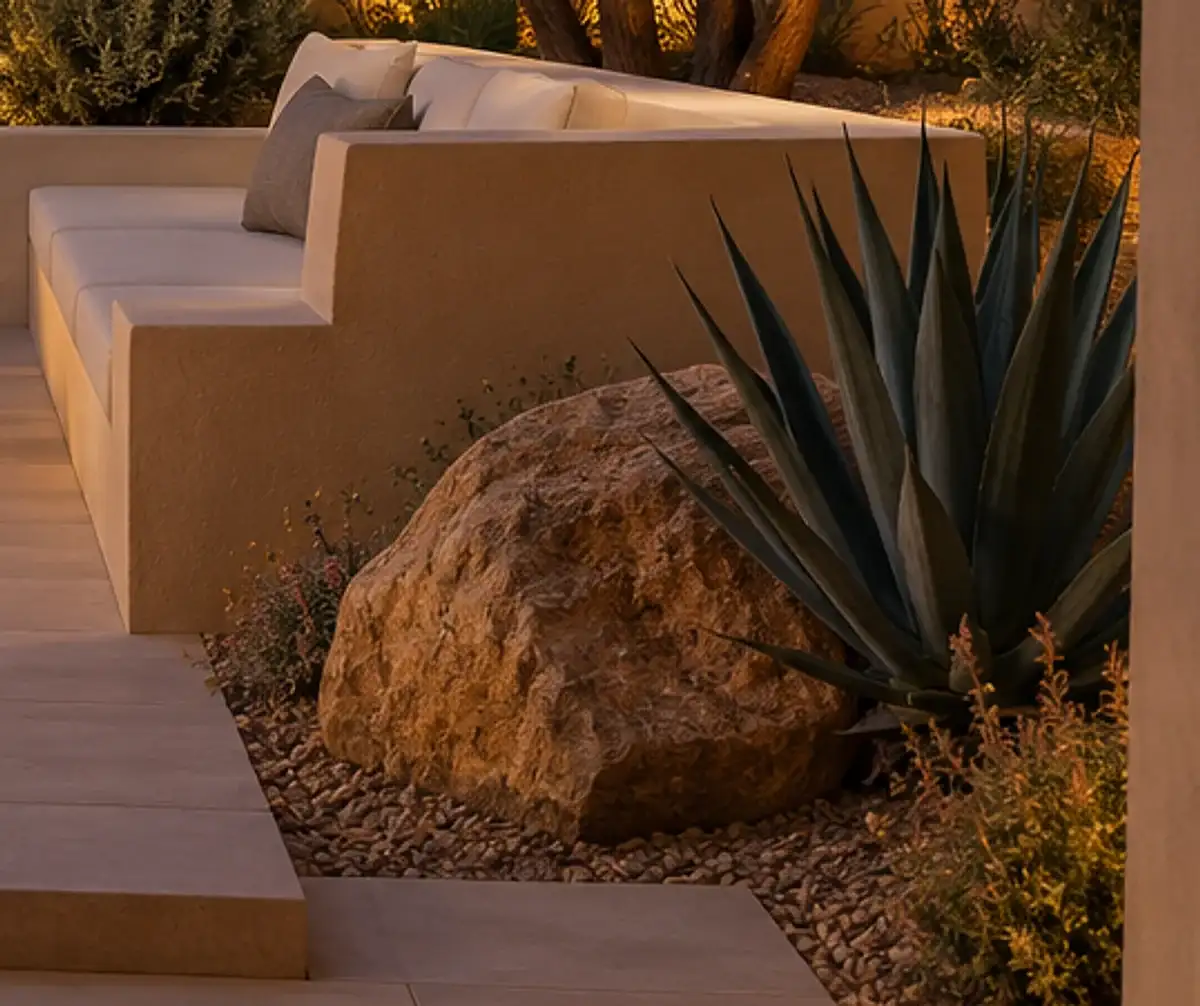
A grey-green rosette with fine teeth along each leaf and a tall cream flower stalk in late spring. It reads as sculpture rather than shrub.
Best for: a single specimen at a corner of the deck where a boulder or a wall gives it a backdrop. Fits: full sun, fast drainage, a bed wide enough that the rosette does not overhang the walkway. Skip it if: the spot is shaded most of the afternoon, or someone in the household will brush past it bare-legged. Arizona note: low water, AMWUA rates it for full sun rather than reflected sun, and it lists sawtooth leaves, so it should sit back from the coping and from any path.
Good to know
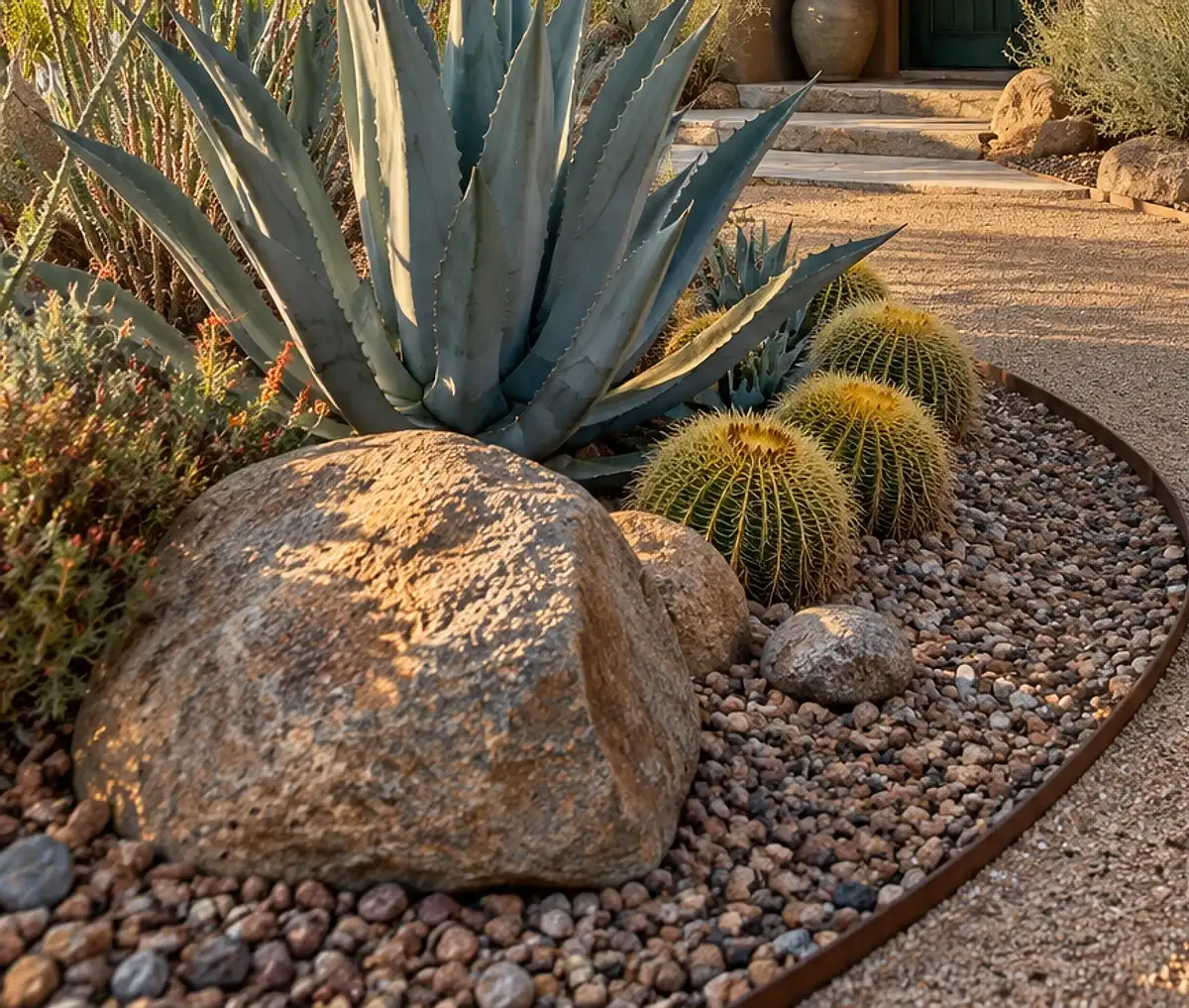
3. Octopus agave (Agave vilmoriniana)
A light green agave with an open rosette and smooth leaf margins. AMWUA lists soft leaf tips and a fast growth rate.
Best for: filling a blank vertical space beside a wall or a water feature where a shrub would look soft. Fits: full or partial sun, gravel mulch, a bed that stays dry between waterings. Skip it if: the site freezes below 20 F in a hard winter, or the space doubles as a path. Arizona note: very low water, fast growth and hardy to 20 F (AMWUA (opens in a new tab)).
Good to know
4. Texas sage (Leucophyllum frutescens)
A rounded green to gray shrub that flowers in response to monsoon rains, in white, pink or purple. AMWUA rates its litter as low and lists it as pool friendly, and notes it is allergenic.
Best for: the outer edge of the pool area, where a 6 foot mass blocks a sight line and softens the wall behind it. Fits: full or reflected sun, any soil that drains, a space where it can keep its natural shape. Skip it if: the HOA expects a sheared hedge, because shearing removes the flowers and hollows the middle. Arizona note: very low water, hardy to about 10 F, and it flowers in response to monsoon rain rather than on a schedule.
Good to know
5. Cascalote (Caesalpinia cacalaco)
A slow to moderate growing small tree with dark green evergreen foliage and yellow flower spikes from winter to spring. AMWUA rates its litter as seasonal and its thorns as medium, and does not tag it pool friendly, so it is the plant on this list to place back from the water.
Best for: afternoon shade on the west side of a pool deck, where a tree has to hold its leaves. Fits: full sun and a planting area set back from the deck and the pool wall. Skip it if: the yard needs shade in a hurry, since it is slow to size up, or the space is too narrow for a 20 foot wide canopy. Arizona note: low water and hardy to about 20 F, so it wants the protected side of the house in the coldest part of the valley.
Good to know
6. Damianita (Chrysactinia mexicana)
A mounding 2 foot groundcover with fine dark green foliage and golden yellow daisylike flowers in spring and fall. It is the edging plant, filling the gap between gravel and wall.
Best for: the narrow strip along a wall or a raised planter where nothing else fits. Fits: full or reflected sun, rocky soil, a drip emitter and no lawn irrigation. Skip it if: the soil is heavy clay that holds water, or the spot is in shade. Arizona note: low water, slow growth and hardy to 0 F, and AMWUA lists it as pool friendly (AMWUA (opens in a new tab)).
How it works
Why this order, and not another one
The list runs from the water outward: the two structural succulents that sit closest to the coping, then the agave that fills a vertical gap, then the shrub that screens the boundary, then the tree that shades the deck, then the edging that finishes the base of the wall. That order follows the way a resort pool is read, from the water line to the horizon, and the irrigation zones then line up with the beds.
A narrow yard that needs privacy starts with Texas sage and skips the tree.
Water
Which plants should stay away from the water?
Plants that drop leaves, flowers or fruit for much of the year, such as flowering vines and shrubs that bloom for months, fruiting citrus and ficus. Mesquite and palo verde are common desert trees, but small leaves and seasonal flowers can end up in the water, so they belong well back, with any seasonal litter falling away from the pool.
Planning
What decides the final layout?
Three things: how much deck the pool has, which direction the afternoon sun hits the water, and where the equipment pad sits. A plant that looks right on the north side will fry on a west-facing deck.
A local contractor reads the sun path and the deck dimensions on site before choosing sizes. Call (480) 757-2074 or use the form and we call you back, then go over the pool deck with you. The wider layout is in the resort backyard guide, the deck surface is covered under patios and pavers, and the installation scope that sets the beds is landscape installation.
3 questions
Questions people ask
Still have a question? Call (480) 757-2074 and describe the yard.
Do succulents drop leaves into a pool?
Very few. The extension guide calls cacti and succulents excellent poolside choices because they thrive in high light, need minimal irrigation and produce almost no litter.
Is bougainvillea a bad choice by a pool?
It flowers for long stretches, and flowers that come off can land in the water or on the deck. It belongs on a wall away from the coping.
How far from the pool should a tree go?
Far enough that the mature canopy and roots clear the deck and the pool wall, and with any leaf drop falling away from the water. A contractor reads the mature size on site and sets the distance.