Guide 05 · 5 min read
Artificial Turf in Arizona Heat
Artificial turf in a Scottsdale yard is a heat question before it is a design question.
Climate
How hot does artificial turf get in direct sun?
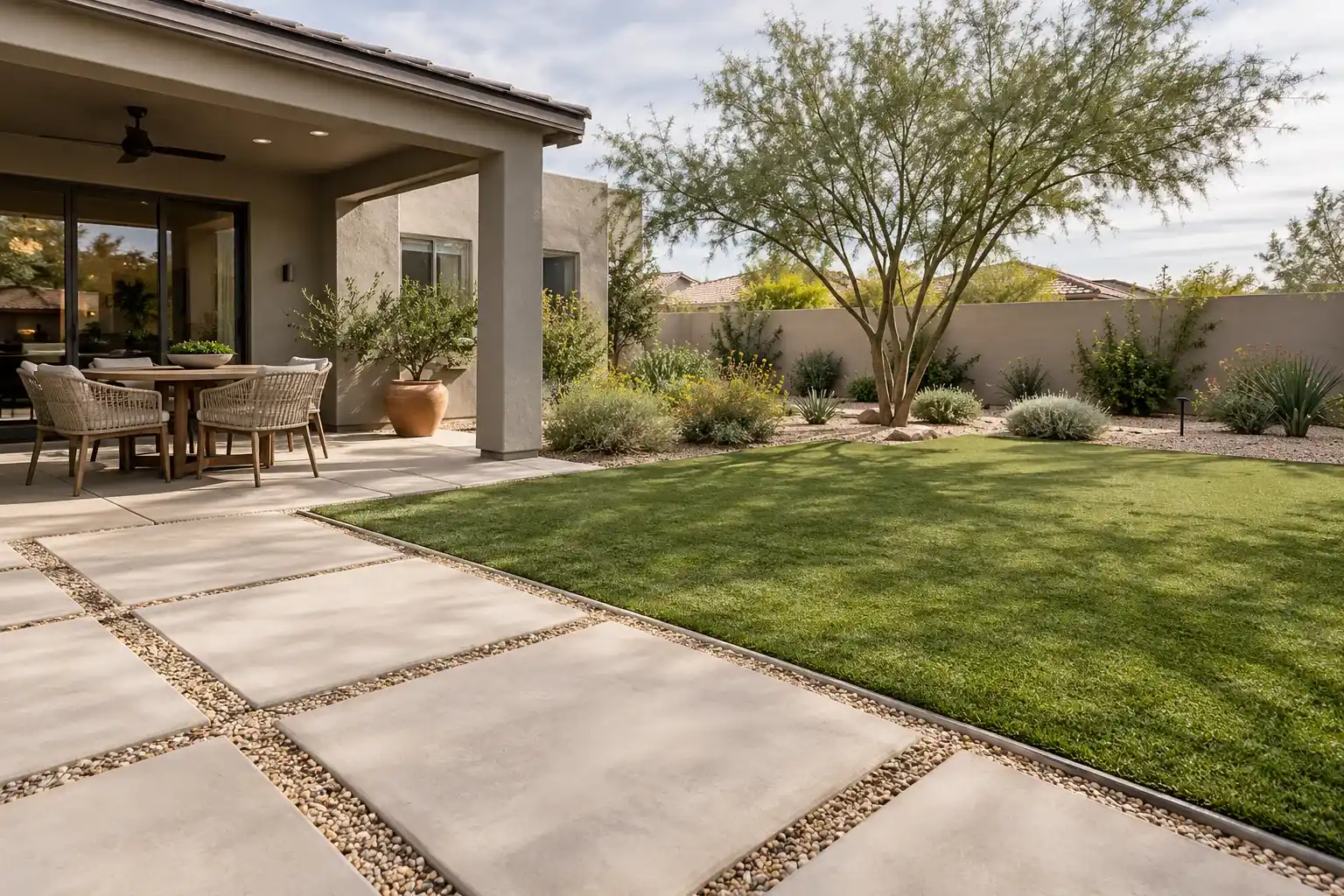
The surface runs hotter than the air: UA Extension says artificial lawn surfaces can reach 120 to 180 F on a hot day and can measure more than 86 F hotter than natural grass under the same conditions (UA Extension, converting turf areas (opens in a new tab)). A synthetic blade does not transpire, so the heat that grass would shed through water stays in the plastic and the backing, and the panel radiates it back. Phoenix averages 111 days at 100 F or higher and 21 days at 110 F or higher in the 1991 to 2020 normals (NWS Phoenix, extreme heat (opens in a new tab)). Bare feet find that fast, and a paw pad sits on the surface rather than above it, so dogs feel it too. A pool deck is the hardest placement: turf between the coping and the house can reflect heat onto both and stay warm after sunset. Measure the surface with an infrared thermometer at 2pm before you commit.
Climate
What happens to the fiber, backing and infill over years of sun?
What the sun takes first is color, then flexibility. Ultraviolet light breaks the polymers that hold the pigment, so dark green blades can drift toward blue gray, and the tips can stiffen where the fiber is thinnest. Backing decides whether the panel stays flat: it is the layer that holds the stitch, and a backing that goes brittle lets seams open and edges curl. Infill is the heat lever. Black crumb rubber tends to run hotter underfoot than silica sand, so a rubber filled panel can be unusable at 3pm in July. Depth matters as much as material: too little infill and the fiber leans, wears at the tip and holds heat closer to the backing.
Costs
How much does the base and drainage work decide?
A great deal. Turf is a carpet over a drainage layer: UA Extension describes removing soil to a depth of 3 to 4 inches to install and compact a gravel base (UA Extension, converting turf areas (opens in a new tab)), over a subgrade graded to a discharge point. Caliche decides how that goes. It is a calcium carbonate cemented layer that restricts roots and drainage, and the extension drainage test for planting holes asks for a hole that loses at least 4 inches of water in 4 hours; a spot that drains slower points to a base designed around slower drainage (UA Cooperative Extension, managing caliche (opens in a new tab)). Compaction is the second half, because aggregate dumped and raked is a pile, not a base. Edge restraint stops the panel creeping. In a monsoon storm the question is where the water leaves the yard, not how fast the base soaks it up.
Good to know
Does shade change the calculation?
Shade lowers the surface number, but it does not make turf a cool material. A ramada, a patio cover or a tree canopy that blocks the sun from 1pm to 4pm takes the worst hours off the panel, and turf in full shade most of the day behaves like a different product. The trade is real: shade keeps the surface damper, and a tree that shades turf can drop litter and send roots into the same base. For a yard that is already too hot, the order is shade first, then a lighter infill top dressing, then converting the hottest panels to pavers or gravel. A west facing pool deck with no cover is the panel to remove. Turf on the east side of a house is a different calculation, and usually a fine one.
Rules
What do Scottsdale HOA rules say about artificial turf?
Homeowners associations have the legal authority to enact and enforce their own maintenance and design standards, so in an HOA the approval for turf comes from the association's design review (City of Scottsdale, community association resources (opens in a new tab)). Under A.R.S. 33-1819, once the developer's control period ends, an association that allows natural grass generally cannot prohibit artificial turf, but it can adopt reasonable rules on installation and appearance, including the location, the percentage of the property covered and the turf quality (A.R.S. 33-1819 (opens in a new tab)). The statute has exceptions, including areas the association must maintain or irrigate and communities with unique vegetation to preserve. In practice, ask the design review committee for 4 answers in writing before you order material: the approved color range, the pile height, where seams may fall, and how runoff leaves the lot. Then read the approval against the panel you are buying, because a color approved on paper and a color in the sun are not the same green. Rules on installation and appearance still apply, so material ordered before the approval is read can end up unusable.
Water
Is artificial turf a real water saving over real grass?
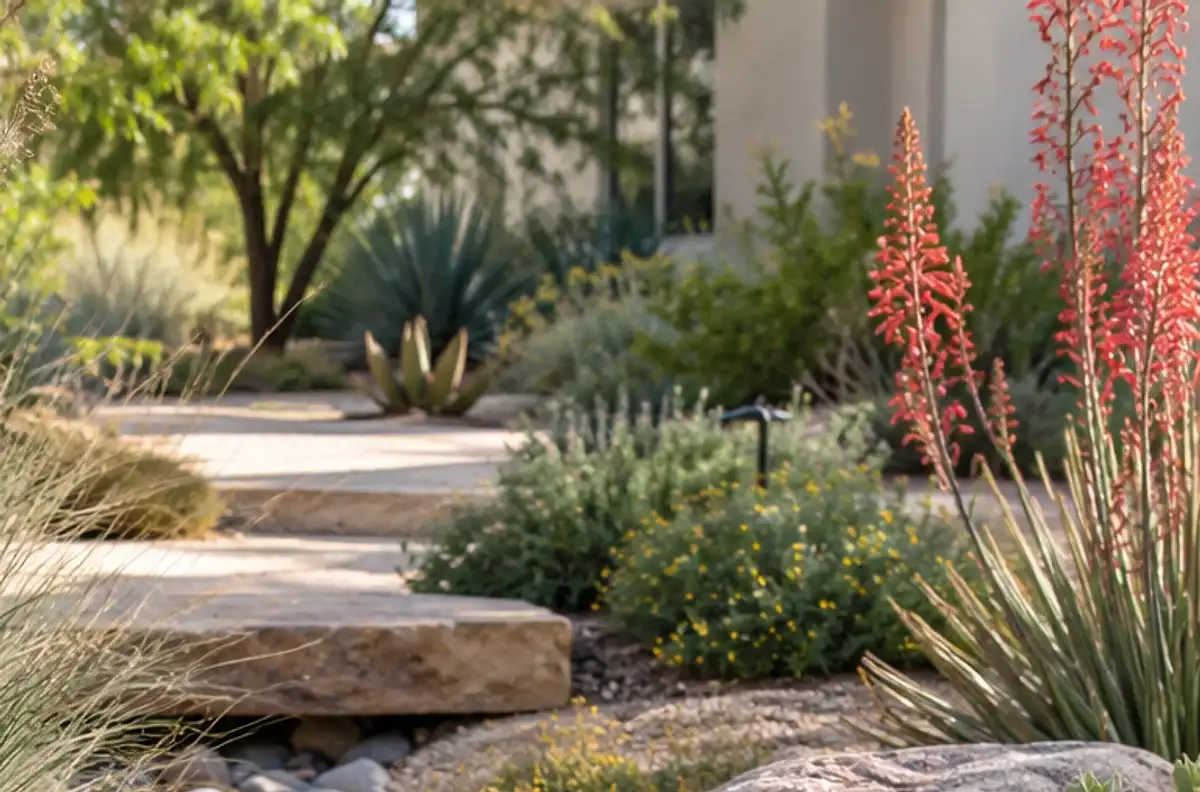
A Bermuda lawn with an overseed takes more than 55 inches of irrigation a year, and an average xeriscape takes under 18, so a conversion can cut outdoor use by about half (UA Cooperative Extension, turf versus xeriscape (opens in a new tab)). Artificial turf takes no irrigation for the grass itself, but it is not maintenance free: UA Extension lists regular debris removal, brushing, clean edges, weed control and periodic rinsing, and the surface still heats the yard. The honest comparison is against the grass you would actually keep. If the lawn is a small patch for a dog, turf removes the irrigation and the mower. If it is 2,000 square feet of Bermuda that nobody walks on, gravel and plants can cut the lawn's water use by about half and stay cooler underfoot than turf.
4 questions
Questions people ask
Still have a question? Call (747) 243-2089 and describe the yard.
Is artificial turf too hot for a dog's paws?
It can be, in July and August. A paw pad sits on the surface, so the heat a bare foot feels is the heat the dog feels. Put your hand on the panel at 2pm before you let a dog out on it, and keep a shaded strip or a paver path from the door.
Will the color fade in Arizona?
Yes, gradually, and the darker the blade the more visible the shift. Pigment is what ultraviolet light attacks first. A lighter color and a good backing can slow the change, but a surface rarely holds its first-day color. The shade a panel settles toward is worth knowing before it is bought.
Can turf go straight over dirt?
No, unless the dirt is already a compacted, graded and draining base. Turf on native soil can move with it, hold water in the low spots and open at the seams. UA Extension describes a compacted gravel base set 3 to 4 inches into the soil, and the base is a large part of a turf job.
Does turf need water?
Not for the grass, but the surface needs rinsing. Dust, pollen and pet waste sit on the fiber, and a rinse keeps the panel from holding odor. UA Extension lists periodic rinsing among the regular care for artificial turf, plus cleanup water after a dog.
Keep reading
- Artificial Turf: for base depth and install scope.
- Landscaping Cost: for the published turf ranges.
- Trees That Grow in Scottsdale: for canopy that shades a patio.
- Desert Landscaping vs Xeriscape: for cooler alternatives.
- Irrigation and Sprinkler Repair: for everything else that gets watered.
- Artificial Turf vs Sod in Scottsdale:
- Drip Irrigation vs Sprinklers in Scottsdale: